
PNN – Political developments among right-wing parties over the past two months have further clouded the outlook for the upcoming Knesset elections in the Zionist regime.
According to the report of Pakistan News Network; with two months remaining until Israel’s pivotal 2026 elections, the regime’s political landscape is being shaped by the emergence of new parties and coalitions.
Following the alliance between Chili Tropper and Yoaz Hendel within the center-right “Reserves” party—known as “Zionist Home”—and the holding of internal elections for the left-wing “Democrats” party led by Yair Golan in August 2026, significant electoral developments have taken place in the occupied territories. On August 6, the center-right “Unity” party, spearheaded by Yuli Edelstein and Gilad Erdan, announced its formation. On August 17, the Likud party successfully held its internal elections, with the faction aligned with Netanyahu prevailing. Two days later, three Arab parties—Hadash, Ta’al, and Balad—announced the revival of the Joint List, and on August 22, Ra’am—the fourth Arab party active in the occupied territories—held its own internal elections. On August 24, a new religious party named “General Haredi” announced its formation to compete against the two existing parties, Shas and United Torah Judaism.
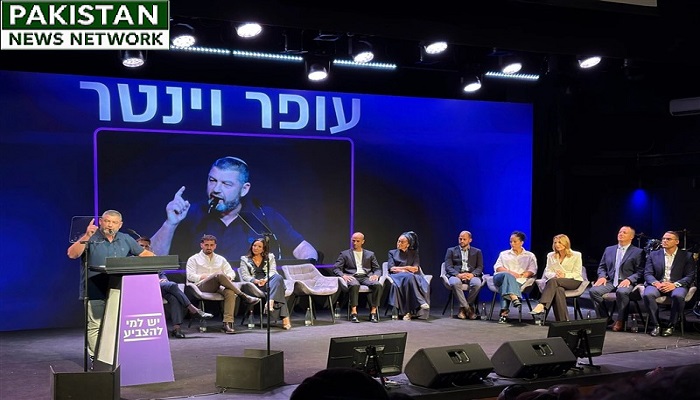
However, the latest—and arguably most significant—political development to date is the launch of the “Omkha Israel” party on August 25, 2026, led by former military officer Ofer Winter and Yoseph Haddad, an Arab-Israeli media activist and Zionist supporter.
In the current climate, these events have largely intensified internal rivalries, particularly among center-right and far-right parties. Fundamentally, such heightened competition tends to erode the electoral standing of the larger parties; nevertheless, parties currently hovering near or below the 3.25% electoral threshold may eventually seek to overcome this situation by forming new alliances.
Of course, Ofer Winter’s explicit support for Netanyahu is a pivotal development that could lead to a relative increase in seats for Netanyahu’s camp; however, since winter’s entry into the race might cause the Religious Zionism party to fall below the electoral threshold, this scenario may not necessarily work to the advantage of the traditional right-wing bloc.
Consequences of Political Developments over the Past Two Months
For the time being, the current situation has worked to the disadvantage of the Likud party, though these conditions will not necessarily persist. Likud, which had been polling above 30 seats in i24 News surveys prior to the developments of the last two months, has dropped to 26 seats in the network’s latest poll. In more authoritative surveys, the party has secured between 19 and 22 seats—indicating that the range of fluctuation in its standing has widened for the moment due to the prevailing circumstances.
The new center-right “Unity” party—led by former Likud members and often dubbed “Likud II”—was established as a satellite party primarily to reclaim some of the votes lost by Likud; yet, to date, it has failed to cross the electoral threshold in any poll, with its best performance recorded in a survey by the newly launched Channel 16 on August 10, 2026, where it garnered 2.7 percent of the total vote.
Since the announcement of Ofer Winter’s party, its projected vote share has dropped to below 1 percent. If this trend persists and the party contests the actual election without forming an alliance, its only impact will be to squander a portion of the right-wing vote. In fact, the party’s establishment has so far done nothing to help Benjamin Netanyahu or the Likud party; instead, it has intensified competition among right-wing factions—a development that runs entirely counter to Likud’s interests.
The alliance led by Tropper and Handel has also suffered some erosion following the shock impact of the “Omcha Yisrael” party. Previously struggling to meet the 3.25% electoral threshold—and hovering just shy of it before the emergence of this new right-wing party—the alliance has now seen its support drop below 3%. If current trends persist, the group must either forge a new coalition or face the prospect of wasting 3% of the vote. Given its stated refusal to cooperate with Netanyahu, the failure of this alliance would deal a blow to the opposition camp.
However, the emergence of the “Umkha Yisrael” party, centered around Ofer Winter, represents the biggest shock in the political landscape of the occupied territories; the party has secured between 6 and 8 seats in recent polls—a highly significant figure, though there is no guarantee this success will persist.
Winter’s explicit endorsement of Benjamin Netanyahu as his party’s choice for prime minister is major news for the pro-Netanyahu camp and serves as a massive boost to the seat count of his supporting bloc. A poll by Channel 16 shows the pro-Netanyahu (Bibi) camp at 53 seats, while the Zionist parties opposed to him stand at 56 seats. Of course, the results from Channels 11 and 12 are still awaited.
However, the interest in Ofer Winter has coincided with a relative decline for the Likud party itself, as well as for the two far-right parties—Otzma Yehudit (Jewish Power) and Religious Zionism—led by Itamar Ben-Gvir and Bezalel Smotrich.
The Religious Zionism party—which, after a long struggle with the electoral threshold, had only recently managed to secure a position above the 3.25% mark over the past two months—has fallen below that threshold in three of the five new polls conducted since the announcement of winter’s party.

In response to this situation, Benjamin Netanyahu has urged Ben-Gvir and Smotrich to form an alliance and run on a joint ticket to prevent the waste of right-wing votes. While Smotrich has accepted the proposal, Ben-Gvir—buoyed by strong poll numbers—has rejected Netanyahu’s request, declaring that his party’s decision to run independently is final. However, Ben-Gvir’s stance should likely be viewed as an attempt to dictate the terms of any potential future alliance with Smotrich.
Meanwhile, if Winter’s participation in the election causes one of the aforementioned parties to fall below the electoral threshold—while failing to cross the threshold himself—it would deal an even heavier blow to the pro-Netanyahu camp.
However, the most significant event influencing the competition within the opposition camp has been the revival of the Arab Joint List, comprising three parties. Given that the Ra’am party declined to join this alliance and is running independently, the addition of Mansour Abbas’s party seats to the opposition bloc brings their total to 61—a figure essential for forming the next government coalition.
The entry of new players and parties—specifically the emergence of the right-wing “Omkha Israel” party led by Ofer Winter and the revival of the “Arab Joint List”—has introduced a landscape of plurality, fragmentation, and significant volatility in vote distribution to the 2026 election.