

PNN – Saudi Arabia’s war on Yemen’s infrastructure not only widens the scope of the conflict but also exposes the country’s vital facilities to serious risks.
According to the report of Pakistan News Network; Saudi Arabia’s recent decision to strike oil facilities near Sana’a signals that Riyadh’s rulers have once again opted to escalate tensions—a choice that not only pushes the prospect of ending the war further out of reach but also expands the scope of the confrontation and leaves Saudi Arabia’s own economic infrastructure increasingly vulnerable to the war’s repercussions.
The crucial point is that Ansarullah had previously targeted Saudi Arabia’s energy infrastructure on numerous occasions, and Riyadh is well aware of the security implications of such attacks; thus, the novelty lies not in Ansarullah’s entry into this arena, but rather in the fact that Saudi Arabia itself has contributed to the escalation of this front by attacking Yemen’s oil infrastructure. This decision comes at a time when Yemen’s economy has suffered extensive damage—and a large portion of its infrastructure has been destroyed—following nearly twelve years of war and blockade, whereas the security of energy and transport infrastructure remains vital to the Saudi economy and the country’s development plans.
From Political Threat to Attack on Sana’a Oil Facilities
Events took a new turn yesterday, Tuesday, October 13, following a meeting of the Saudi Council of Ministers chaired by Crown Prince Mohammed bin Salman. At the conclusion of the meeting, Saudi officials issued a threatening statement declaring that Ansarullah would pay a heavy price for its actions; subsequently, the Saudi-led coalition issued an evacuation warning and designated Yemeni oil facilities in the Al-Sabaha area, near Sana’a, as targets for attack.
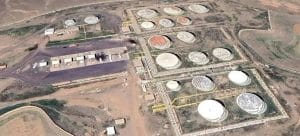
The reaction of the Yemeni armed forces was clear; Yahya Saree, the forces’ spokesman, announced that any attack on Yemeni oil facilities would result in Aramco sites and key Saudi infrastructure being designated as military targets. This warning—issued prior to the Saudi offensive—foreshadowed the predictable consequences of Riyadh’s actions. Nevertheless, Saudi Arabia proceeded with the attack, prompting the Yemeni armed forces to retaliate by launching multiple missile and drone strikes against targets within the Kingdom. Reports indicated that a projectile struck an Aramco administrative building in Dhahran, while several other projectiles were intercepted en route to Riyadh and other regions of the country.
This sequence of events demonstrates that Saudi Arabia not only decided to escalate tensions but also expanded the scope of the conflict by targeting Yemen’s oil facilities; under these circumstances, Ansarullah’s response cannot be viewed in isolation from the movement’s prior warnings and the Saudi military action. Riyadh was aware that attacking Yemen’s oil infrastructure could trigger a retaliatory response; nevertheless, it chose this course of action, thereby increasing the risk of the conflict spreading to economic infrastructure.
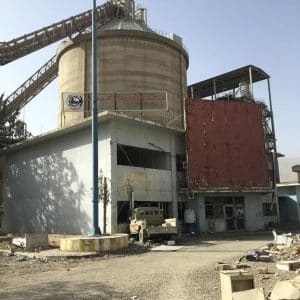

To grasp the scope of recent developments, one must consider a historical point: the targeting of Saudi Arabia’s energy facilities is not a new phenomenon. In recent years, Ansarullah forces have repeatedly employed missiles and drones to strike strategic targets deep within Saudi territory, with oil facilities frequently included among the declared or actual targets. The 2019 attacks on the Abqaiq and Khurais facilities—which severely disrupted Saudi oil production for a time—served as a striking example of the vulnerability of the country’s energy infrastructure. Attacks and threats targeting Saudi oil facilities and vital installations have continued in the years since.
Therefore, any analysis of current developments should not be based on the erroneous assumption that Ansarullah has—for the first time—brought Saudi Arabia’s economic infrastructure into the war equation. What matters is Riyadh’s recent decision to expand its attacks to Yemen’s oil infrastructure—a move that, rather than limiting the scope of the conflict, increases the likelihood of its continuation and escalation. Saudi Arabia has previously learned that air superiority and economic might do not guarantee the absolute immunity of strategic infrastructure; yet, the recent attack demonstrates that this lesson has not necessarily led to military restraint.

In fact, if Riyadh’s goal was to diminish Ansarullah’s operational capabilities or force Sana’a to back down, expanding attacks to Yemen’s oil facilities could backfire; such a move enables Yemeni armed forces to justify retaliatory actions and places the threat to Saudi Arabia’s sensitive targets back at the center of the Kingdom’s security calculations.
The fundamental weakness of Saudi Arabia’s strategy lies in the asymmetry of the costs associated with this confrontation against the Yemeni side. Over approximately twelve years of war, Yemen has faced the widespread destruction of its transportation, energy, industrial, and public service infrastructure. Blockades and economic restrictions have further strained the country’s reconstruction capacity and productive activities. A significant portion of the war-related damage was inflicted upon Yemen’s economy prior to recent developments, and the country’s people have been bearing the direct and indirect costs of this situation for years.
This does not mean that the new damage is insignificant for Yemen; attacks on oil facilities could further complicate fuel supplies, economic activities, and the daily lives of the population. However, from a strategic standpoint, Saudi Arabia cannot assume that any further destruction in Yemen will necessarily lead to a political or military retreat by Ansarullah. Yemen’s economy is already under severe strain, and its capacity to withstand additional damage—however limited or costly—operates within a different economic context than that of Saudi Arabia.
Conversely, Saudi Arabia requires economic stability, investment security, uninterrupted energy exports, and the smooth functioning of transport infrastructure to realize its development plans. Major airports, oil hubs, and Aramco facilities are not merely physical assets; they constitute pillars of Riyadh’s economic power and international standing. As threats to this infrastructure become increasingly serious and persistent, the cost of ensuring security rises, and Saudi Arabia’s image as a stable environment for investment and economic activity faces greater challenges.
By attacking Yemen’s oil facilities, Saudi Arabia is effectively expanding a front whose consequences it cannot fully control. Previous attacks by Ansarullah had demonstrated the vulnerability of Saudi Arabia’s energy infrastructure to missile and drone threats; consequently, Riyadh should have anticipated that striking Yemeni oil facilities could invite retaliatory strikes against its own critical sites. Even if such retaliation caused limited physical damage, it would still impose security and economic costs on Saudi Arabia, as recurring threats necessitate the strengthening of air defenses, the enhancement of protective measures, and the acceptance of potential disruptions to vital infrastructure operations.
This lies at the heart of the strategic contradiction inherent in Riyadh’s recent decision: in an effort to intensify pressure on a country whose infrastructure has already sustained extensive damage, Saudi Arabia is shifting the theater of risk to a domain that holds significant economic and political sensitivity for itself. In this equation, the damage inflicted upon Yemen does not necessarily equate to a Saudi victory. The true measure of success should be the extent to which political and security objectives are achieved, rather than merely the scale of destruction or the number of attacks. If the escalation of Saudi operations results in increased retaliatory strikes against Saudi infrastructure and drives up the country’s security costs, Riyadh may well find itself expanding the scope of threats to its own interests without ever attaining its intended goal.

Ultimately, the issue is not which side has the capacity to inflict greater damage; rather, it is which side suffers more from the continuation of the war and which side jeopardizes its strategic objectives by allowing it to escalate.
Yemen has paid a heavy price over the years and lost a significant portion of its infrastructure; however, Saudi Arabia still requires stability to safeguard its economic security, regional standing, and development plans. Consequently, expanding the conflict to target infrastructure is not necessarily an effective means of compelling Ansarullah to retreat. On the contrary, should this trajectory trigger persistent threats against Saudi Arabia’s own infrastructure, Riyadh would find itself facing escalating war costs—with no guarantee of achieving its political objectives.