

PNN – Riyadh’s strategy of relying on foreign capabilities to counter the threat from Yemen has encountered new limitations.
According to the report of Pakistan News Network; the deployment of a Greek Patriot system to the Saudi port of Yanbu—initially undertaken within the framework of bilateral defense cooperation to protect critical energy infrastructure—has now become an operational component of Saudi Arabia’s security equation regarding Yemen.
In July 2026, this system intercepted two ballistic missiles launched from Yemen that were targeting the Yanbu refinery facilities. The system—operated by Greek forces—was also activated in August to counter a drone attack. Thus, a European air defense system, deployed far from its home region, has effectively become engaged in protecting one of Saudi Arabia’s most critical energy hubs and strategic assets against attacks originating from Yemen.
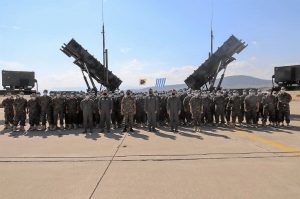
This development, rather than being merely a matter of Greek-Saudi relations, signals a shift in the security environment surrounding Yemen and Saudi Arabia. Over the past few years, Ansarullah’s missile and drone capabilities have extended the scope of the threat beyond border areas, reaching Saudi Arabia’s critical infrastructure and economic hubs. Consequently, protecting this infrastructure has gradually evolved from a purely domestic responsibility into a matter of concern for Riyadh’s foreign partners. The 2021 deployment of a Greek Patriot battery should be viewed in this same context—a mission whose primary objective, according to official Greek statements, was to bolster Saudi Arabia’s air defenses and safeguard the country’s energy infrastructure.
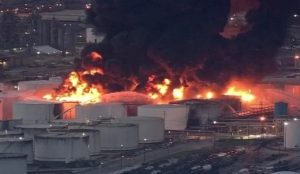
The significance of Yanbu in this context is also noteworthy. Beyond its energy and refining facilities, the region plays a pivotal role in Saudi Arabia’s oil transport and export network via the Red Sea. Consequently, the region’s heightened vulnerability to missile and drone attacks represents more than just a limited military threat; it is directly linked to Saudi Arabia’s economic security and energy export capacity. When a European Patriot system is deployed to shield such infrastructure from attacks originating in Yemen, the implications extend far beyond a mere interception operation: Yemen’s military capabilities have effectively compelled foreign nations to dedicate a portion of their own defensive assets to the protection of Saudi infrastructure.
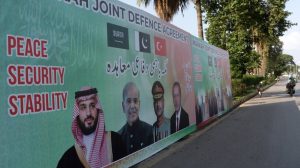
This situation is unfolding against the backdrop of a shifting geopolitical landscape surrounding Saudi Arabia. The new defense agreement signed by Saudi Arabia, Turkey, and Pakistan in August 2026 stands as a key indicator of this transformation. While the growing rapprochement between Riyadh and Ankara reflects Saudi Arabia’s efforts to expand its defense options, it also alters the strategic calculations of the Kingdom’s traditional partners. For Greece, Turkey is not merely an external actor; it is a central adversary in one of the country’s most critical geopolitical rivalries in the Eastern Mediterranean.
The deployment of Greek Patriot systems to Saudi Arabia in 2021 took place against a backdrop of expanding defense and security cooperation between Athens and Riyadh. During that same period, relations between Saudi Arabia and Turkey were marked by significant discord, and Greece’s cooperation with Arab nations in the region developed within the context of these regional rivalries. However, the situation has now shifted somewhat; Saudi Arabia and Turkey have moved toward broader defense cooperation, a development that—from Athens’ perspective—has raised new questions regarding the necessity and desirability of maintaining certain aspects of its defense partnership with Riyadh.

Greek media reports indicate that, following defense agreements Saudi Arabia concluded with Turkey and Pakistan, Athens has altered the review mechanism for its Patriot mission in the Kingdom, opting to evaluate the mission’s continuation on a monthly basis. The significance of this development extends beyond bilateral Greek-Saudi relations; it demonstrates that one of the external defensive layers Riyadh relies on to protect critical infrastructure from missile and drone threats is subject to political and security dynamics beyond Saudi Arabia’s control.
This issue reveals a structural limitation in Riyadh’s security strategy. While Saudi Arabia can enhance its air defense capabilities and forge new military partnerships with various nations, the continuity of such cooperation hinges on the security priorities of its foreign partners. Shifts in Saudi Arabia’s relations with a regional actor, intensifying rivalries among other players, or their own growing need for defense capabilities could all impact the scope and nature of the military support Riyadh receives.
The importance of this issue has intensified given the region’s current circumstances. Escalating regional conflicts and the widening scope of security crises have driven up the demand for air and missile defense systems. Under these conditions, foreign nations are facing new defense priorities; naturally, they prioritize retaining their limited defense capabilities to serve their own direct interests. Consequently, Saudi Arabia’s long-standing reliance on the military presence of foreign partners to protect its infrastructure will face greater uncertainty than ever before.

Of course, the potential withdrawal of the Greek Patriot system does not, in itself, create a critical gap in Saudi Arabia’s air defense network. Riyadh possesses a range of defense capabilities and can establish alternative arrangements if necessary. The more significant issue lies in the political and strategic message conveyed by such a move: a portion of Saudi Arabia’s security architecture for countering threats from Yemen relies on actors whose priorities may shift in response to regional developments.
From this perspective, the Greek Patriot system should be viewed as an indicator of a broader equation. Saudi Arabia has gradually built a network of foreign partnerships to protect its energy infrastructure against Yemen’s missile and drone capabilities. However, as regional crises escalate, the sustainability of this network will face increasing challenges. Under these circumstances, simply increasing the number of defense systems or swapping one foreign partner for another will not necessarily resolve the core issue.

The primary challenge for Riyadh lies in how to address the source of this threat. As long as the relationship between Saudi Arabia and Yemen is defined by security confrontation and efforts to militarily contain Ansarullah, the need to protect Saudi Arabia’s critical infrastructure against attacks from Yemen will persist. Conversely, any reduction in external support would increase the cost and complexity of this strategy.
Therefore, developments surrounding the Greek Patriot mission must be examined within a framework that extends beyond the fate of a single air defense system. This development indicates that Riyadh’s strategy of relying on foreign capabilities to contain the threat from Yemen will face increasing constraints as the region’s security landscape shifts. As foreign actors confront new crises and threats, ensuring the continuity of their military support for Saudi Arabia will become increasingly difficult.
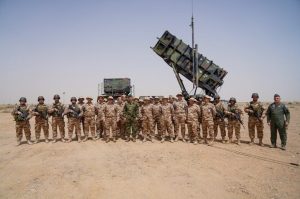
Under these circumstances, Riyadh needs to reassess its calculations regarding Yemen. The enduring security of Saudi Arabia’s western coast, ports, energy facilities, and export routes cannot rely solely on enhanced air defense capabilities or the military presence of foreign partners. Experience over the past few years has demonstrated that Yemen’s missile and drone capabilities can impose significant costs on this security architecture, turning it into a critical foreign policy and defense issue for numerous nations.
Therefore, the primary issue for Saudi Arabia is no longer merely finding a replacement for the Greek Patriot system. The real issue is re-evaluating a policy that has sought to manage the threat from Yemen primarily through military means and by relying on external capabilities. Escalating regional conflicts and shifting priorities among external actors have laid bare the limitations of this approach.
To achieve a more stable security situation, Riyadh must inevitably factor the political and on-the-ground realities of Yemen into its calculations. The power dynamic in Yemen has shifted over the years, and Ansarullah has emerged as an actor that cannot be eliminated or contained solely through external military pressure. Consequently, any new Saudi strategy must move beyond the assumption that the threat from Yemen can be managed merely by bolstering defensive capabilities outside the country; instead, it must be grounded in redefining relations with Yemen and acknowledging the prevailing political and military realities on the ground.