
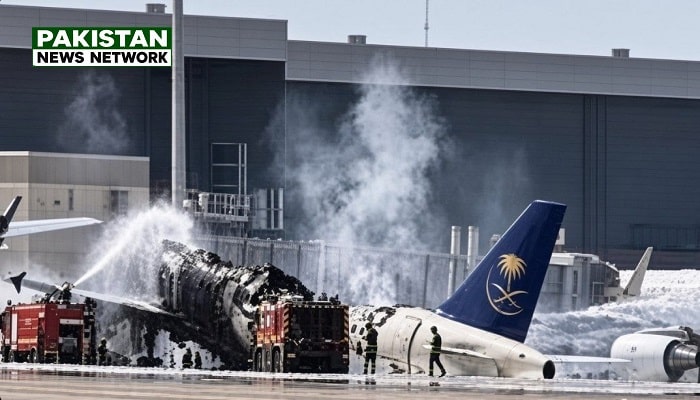
PNN – Official Saudi statistics indicate that more than 2,200 projectiles have been fired deep into Saudi territory as part of a “decisive response” by the Yemenis.
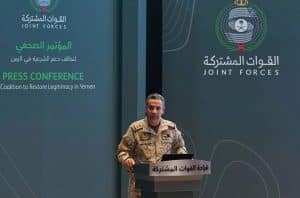
According to the report of Pakistan News Network; remarks made yesterday by Turki al-Maliki—spokesperson for the Saudi-led Arab coalition—during a press briefing, offer a striking picture of the new situation on the battlefield in Yemen.
During this meeting, al-Maliki claimed that, throughout the latest round of hostilities, the Ansarallah movement of Yemen has launched a total of 2,239 projectiles—comprising 1,104 ballistic missiles and 1,135 drones—at targets deep within Saudi territory. He further alleged that Ansarallah has carried out 20 missile attacks against Riyadh International Airport to date, and that the movement’s total attacks on Saudi airports have resulted in 19 deaths and 364 injuries.
Regardless of a precise assessment of the claims regarding the number of attacks and the scale of casualties, these statements point to a significant reality: in this new phase of the conflict, Saudi Arabia faces a situation distinct from that of previous years. Remarks by the spokesperson for the Arab Coalition indicate that strikes by Yemeni armed forces—targeting deep within Saudi territory and the kingdom’s infrastructure—have become a primary source of concern for Riyadh. The significance of this issue becomes even clearer when the statistics provided by Al-Maliki are viewed alongside the statements of Brigadier General Yahya Saree, spokesperson for the Yemeni armed forces—statements that present a different picture regarding the scope of the conflict and the relative frequency of attacks by both sides.
In response to Al-Maliki’s remarks, Yahya Saree stated that since the launch of the operation dubbed “Decisive Storm” against Yemen, Saudi Arabia has carried out more than 274,302 airstrikes on Yemeni territory over the past 12 years. He further emphasized that over 2,350 Saudi missile and air attacks have taken place during the recent phase of the conflict. When viewed alongside the figures provided by the Arab Coalition spokesperson regarding attacks by Ansarullah, these statistics offer a clearer understanding of how the current situation differs from previous years.
The key point in comparing these figures is not merely the number of attacks or the type of weaponry employed, but rather the shift that has occurred in the balance of offensive capabilities between the two sides. For much of the past, the war in Yemen unfolded under circumstances where Saudi Arabia—leveraging its air superiority and extensive military resources—launched persistent strikes against various regions of Yemen. Conversely, the Sana’a-based forces, despite facing severe constraints and relentless military pressure, strove to maintain and expand their defensive capabilities and capacity to retaliate. Under these conditions, the battlefield was primarily shaped by the Arab Coalition’s ability to conduct airstrikes, with the direct cost of these operations falling most heavily upon the people and infrastructure of Yemen.
However, the statistics released regarding this new round of conflict indicate that the situation is no longer unfolding as it once did. According to claims from both sides, the recent fighting has involved a high volume of reciprocal attacks, with Ansarallah responding to Saudi strikes on Yemeni territory through a series of missile and drone operations. In other words, while in previous years Saudi Arabia could—by leveraging its air superiority—largely confine the war to Yemeni territory, it now faces a situation where its own interior is no longer shielded from the consequences of the conflict.
This development should be considered one of the most significant differences between the current phase of the war and its previous stages. The issue is not merely that Ansarallah has managed to launch a greater number of missiles and drones toward Saudi targets; rather, the primary significance lies in a shift in the war’s cost equation. The continuation of Saudi attacks on Yemen no longer entails a one-sided imposition of costs upon the forces in Sana’a and the territories under their control. Under current circumstances, any Saudi strike could be met with a response deep within Saudi territory, extending the scope of the war’s consequences to the country’s critical infrastructure and key facilities. It is precisely this shift that has the potential to influence Riyadh’s military and political calculations.
In this context, developments on the ground within Yemen should not be separated from the equation of missile and drone attacks. Concurrently with the growing capacity of Ansarallah to strike deep into Saudi territory, forces based in Sana’a have also managed to make advances on the ground, securing key positions around Taiz and in the areas surrounding the Bab al-Mandab Strait. The significance of these developments lies in the fact that the new situation is not limited merely to the expansion of Ansarallah’s weaponry capabilities; rather, there are also clear signs of a shift in conditions on the ground.

The advances made by Sana’a-aligned forces in key areas—such as the vicinity of Taiz and the fringes of the Bab al-Mandab—coupled with their capacity to retaliate against Saudi attacks, present a multifaceted picture of the current state of the war. Under these circumstances, Saudi Arabia faces not only strikes threatening targets deep within its own territory but also, inside Yemen, forces that retain the capability to advance and consolidate their positions. Consequently, assessing the war solely based on the number of coalition airstrikes or the damage inflicted upon Yemeni territories—while disregarding the retaliatory capabilities and ground-level developments of the Sana’a-aligned forces—fails to provide a complete picture of the situation.
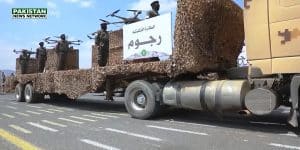
In this context, one can better understand the reason for Turki al-Maliki’s particular emphasis on Ansarullah’s weaponry. During a press briefing, the spokesperson for the Arab Coalition—in addition to noting the number of missiles and drones launched—expressed concern regarding Ansarullah’s possession of armaments such as ballistic missiles, drones, and unmanned maritime vessels, alleging that regional powers play a role in supplying this equipment. The articulation of such claims indicates that the issue of Ansarullah’s military capabilities has become a central pillar of Saudi Arabia’s official narrative regarding the war.
However, emphasizing the origin of Ansarallah’s weaponry does not, in itself, address the core issue of the war in Yemen. The fundamental question is why—after years of extensive military strikes by Saudi Arabia and its coalition—Yemeni armed forces have managed to sustain their resistance and retaliate, and are now capable of striking targets deep within Saudi territory. Even if one accepts Al-Maliki’s claims regarding the role of regional powers in supplying Ansarallah, such assertions do not alter the reality of the shifting conditions on the battlefield. The capacity to launch counter-strikes and sustain operations under intense military pressure has become an inherent feature of this war—a reality that cannot be explained merely by leveling accusations regarding the provision of arms.
On the other hand, Saudi Arabia’s focus on Ansarallah’s missile and drone capabilities comes at a time when figures released by Yahya Saree—citing over 274,000 airstrikes over the past 12 years—highlight the extent of the military pressure imposed upon Yemen. According to the Yemeni Armed Forces, this figure illustrates the scale of the attacks the country has faced throughout the years of war. Viewed in this light, Ansarallah’s capacity to respond to Saudi strikes cannot be assessed in isolation from the long history of the conflict and the specific conditions under which the forces in Sana’a have developed their defensive and offensive capabilities.
In fact, the fundamental difference between the past situation and current conditions lies precisely here. In previous years, Saudi Arabia utilized its air superiority to exert intense pressure on Yemen, without consistently facing a comparable level of threat deep within its own territory. Now, according to figures released by both sides, this dynamic has shifted somewhat, and reciprocal attacks have become a defining feature of this new phase of the conflict. By leveraging its missile and drone capabilities, Ansarallah has demonstrated that the continued bombardment of Yemen will not necessarily be without consequences for Saudi Arabia.
In this light, the remarks made yesterday by Turki al-Maliki can be viewed as more than just a report on the number of missile and drone attacks. These statements—taken alongside the statistics released by the spokesperson for the Yemeni armed forces and developments on the ground around Taiz and the Bab al-Mandab—signal a shift in the dynamics of the war. In this new context, Ansarullah is not merely resisting Saudi-led attacks; it has succeeded in making retaliation a significant component of the military equation. Riyadh’s concern regarding the missiles, drones, and unmanned maritime vessels deployed by the Sana’a-based forces is understandable within this framework: Saudi Arabia now faces a reality where the continuation of the war no longer implies that one side can launch attacks and impose costs without encountering a reciprocal response from the other.