
PNN – The war is not yet officially over, but the West Asia has effectively entered a new phase; a phase in which many old equations are collapsing and regional actors are trying to find their place in the new order. In recent weeks and months, diplomatic moves, sudden trips by political officials, changes in government tone, and even media positions of the countries in the region show that everyone is reconsidering their alliances, threats, and priorities.
According to the report of Pakistan News Network, the war has not officially ended yet, but the Middle East has effectively entered a new phase; a phase in which many old equations are collapsing and regional actors are trying to find their place in the new order.
In recent weeks and months, diplomatic moves, sudden trips by political officials, changes in government tone, and even media positions in the region suggest that everyone is reconsidering their alliances, threats, and priorities.
What this war revealed was not just a military conflict between a few actors; it was a demonstration of a shifting balance of power in the region. A war that not only left extensive economic and security damage, but also called into question many old notions about American power, Israel’s position, and the future of the regional order.
Today, three files are at the center of analysis more than any other issue: the Strait of Hormuz and global energy security, the future of the US military presence in the region, and the fate of the Israeli regime’s security project in the Middle East.
The Strait of Hormuz: A More Vital Bottleneck than Ever
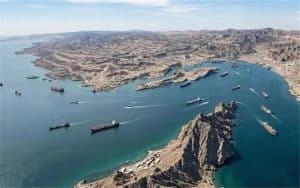
The closure or prolonged disruption of the Strait of Hormuz was perhaps the most significant economic shock of the recent war. This vital passageway, through which a large part of the world’s oil and gas exports pass, suddenly became a point that could paralyze the international economy.
Now, nearly three months after the Hormuz crisis, many countries in the region have come to the conclusion that they cannot depend on a single waterway for their economic security; especially when the United States, contrary to its constant claims, has failed to contain the crisis.
This has led governments in the region to pursue two parallel paths.
The first path: dialogue with Iran
The Arab countries of the Persian Gulf, despite the tense atmosphere of the past years, have tried to maintain their communication channels with Tehran. Political contacts at high levels continue, and some countries even play the role of mediator to prevent the crisis from escalating.
The reason for this approach is clear; everyone knows that the security of the Strait of Hormuz is practically impossible without an agreement and understanding with Iran. In the past years, many governments in the region tried to ensure their security solely through an alliance with Washington, but the recent war showed that in critical moments, the United States is not necessarily willing to pay the heavy costs of direct conflict.
Escaping Dependence on Hormuz
In addition to diplomacy, regional countries have also sought new economic and logistical solutions to reduce their dependence on the Strait of Hormuz.
The UAE has outlined new projects to transport oil through routes outside Hormuz. Saudi Arabia is investing heavily in Red Sea ports and routes to connect its oil exports and commodity trade to West Asia, Africa, and Europe.
Iraq is also revisiting the idea of reviving the Kirkuk-Banias pipeline, which could transport Iraqi oil via Syria to the Mediterranean. There has even been talk of building new pipelines with higher capacity.
These projects are not just economic schemes; they are part of a new security strategy.
Regional countries have realized that any military crisis in Hormuz could cause billions of dollars in damage and put their economies at risk of collapse.
But the main problem is financing these projects. The recent war has imposed heavy financial losses on the region’s economies, and many governments are facing budget deficits and reduced investment.
The decline of trust in the American security umbrella
Perhaps the most important political consequence of the war is the weakening of America’s image as the guarantor of security in the Middle East.
For decades, Washington justified its massive military presence in the region by arguing that it would ensure the security of its allies. American bases in the Persian Gulf, Iraq, Syria and elsewhere in the region were part of this strategy. But now some have become more aware, and with the recent war, they have realized Washington’s lack of loyalty to its allies.
In many countries in the region, public opinion now looks at the American military presence differently. Even in governments that still have strategic ties with Washington, there are concerns about the effectiveness of the alliance.
A significant part of Arab society believes that American bases have not only failed to provide security, but in some cases have turned the region into a battlefield.
This shift in perspective may not lead to a complete withdrawal of American forces in the short term, but it has increased the likelihood of a gradual reduction in their role and mission.
The example of Iraq still lingers in the minds of many analysts, where political and popular pressure ultimately forced the United States to limit its military presence.
The Israeli Regime; From the Dream of Dominance to the Crisis of Legitimacy
If before the war, the Israeli regime thought it could use the chaotic atmosphere in the region to impose its desired order, the situation is different today.
The Gaza war had already severely damaged Israel’s image in world public opinion, but the recent conflict with Iran has intensified this process. Many governments and nations now see Israel as a factor in the spread of crisis and instability.
Benjamin Netanyahu’s policies have also fueled this situation. His government’s aggressive and extremist approach has not only increased Israel’s international isolation, but also pushed the countries of the region towards new alliances.
In previous years, the project of normalizing relations with Israel was supposed to pave the way for a new order in the Middle East, one in which Tel Aviv would become a security and economic partner for Arab states.
But the recent war has complicated this equation.
Now, even countries that had begun the path of normalization are facing public pressure and new security concerns.
The Formation of New Coalitions in the Region
One of the most important results of the war has been the emergence of new regional coalitions. These coalitions do not necessarily resemble the traditional axes of the past, and their members do not necessarily share ideological views, but they are united by a common concern: containing tensions and preventing the expansion of Israeli military projects.
In practice, many countries in the region have concluded that continued instability threatens their economies and their own security more than anything else. For this reason, even actors who had deep disagreements with each other in the past are now moving towards dialogue and cooperation.
This trend could change the political structure of the Middle East in the future. If this cooperation continues, there is a possibility of new security arrangements in which the role of foreign powers will be less than in the past.
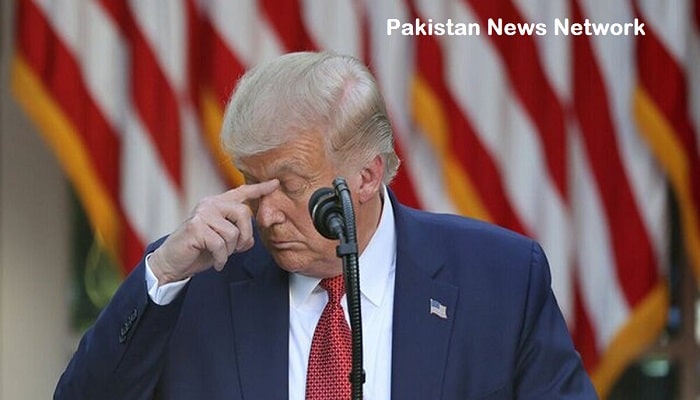
Trump: The Big Loser of the War
Of all the players, many analysts believe that the Donald Trump administration has suffered the most political damage from recent developments.
The United States has failed to restore the Strait of Hormuz to normal, has failed to ensure the security of its bases, and has failed to prevent increasing global pressure on Israel.
These events have undermined the image that Washington has built for years of its undisputed power in the Middle East.
Trump, who has always tried to advance his foreign policy based on a show of strength, now faces a situation in which his options seem more limited than before.
Analysts say that if the United States truly had the ability or will to start a new full-scale war, it would have acted after the numerous deadlines had passed. But Washington’s hesitation suggests that the costs of any new conflict would be much higher than in the past.
On the other hand, concerns about Iran’s response and the possibility of a war spreading to the entire region have made decision-making more difficult for the United States.

Economic Debris of the Iran War
Amidst all the political and security debates, it should not be forgotten that the biggest victim of the war has been the region’s economy.
The energy market has become unstable, foreign investment has declined, development projects have been halted, and military spending has increased.
Countries that were trying to diversify their economies and reduce their dependence on oil before the war have now been forced to devote a significant portion of their resources to managing the security crisis.
Even countries not directly involved in the conflict suffered from its consequences. Reduced trade, disruptions to maritime transport, rising ship insurance costs, and investor anxiety affected the entire region.
In such circumstances, many governments have concluded that continued military tension threatens their economic future. This is one of the main motivations for moving towards diplomacy and de-escalation.