
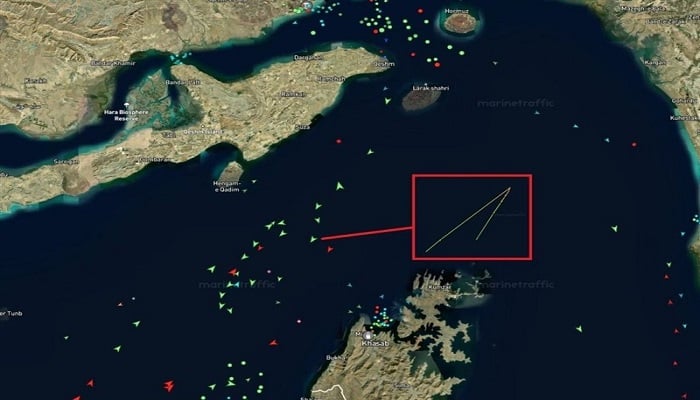
PNN – The Strait of Hormuz remains Tehran’s strongest lever of pressure against Washington.
According to the report of Pakistan News Network, while a fragile ceasefire is in place between the United States and Iran and the Strait of Hormuz remains closed, a historical analysis in the British newspaper The Independent shows why the United States practically does not have the power to forcefully open the strait and why Iran has the upper hand in this battle.
Some of the main points of this report are as follows:
- The mystery that Trump’s advisers know
The answer to the question of why the US has not taken any action to reopen the Strait of Hormuz is simple, writes John W. S. Clark, the author of this analysis: It is almost impossible to clear a minefield without taking heavy casualties when the coast is in enemy hands, and that is something the United States is not willing to pay for.
It is one thing to bombard an under-equipped enemy with air power, but it is another to engage in actual surface combat with an adversary who has been planning for this form of asymmetric warfare for years.
- A History Lesson from the Dardanelles; March 1915
To substantiate this claim, the author points to one of the most disastrous military operations of the 20th century. In March 1915, Britain and France decided to force open the Dardanelles Straits—a vital passage between the Mediterranean and the Black Sea that had been closed by Turkey.
The attacking force was no small feat: fourteen large warships, including giants like the Queen Elizabeth and the Inflexible, along with escorts and a large force of minesweepers. The plan was solid on paper; the large ships would bombard the coast from a safe distance, then the minesweepers would clear the area, and the ships would move on.
- Four Hours, Three Ships Sunk
The operation began on March 18, 1915. At first, everything went well, but from two o’clock in the afternoon everything fell apart. The French cruiser Beauvais struck a mine and sank within minutes; of the 718 crew, only 75 survived. Less than an hour later, HMS Irresistible struck a mine, then HMS Inflexible went out of action with a hole nine meters by eight meters below the waterline, and at the last moment, HMS Ocean also struck a mine and sank.
In less than seven hours, three large battleships were sunk and one was disabled. Admiral de Roebuck ordered a general retreat at five-fifteen in the afternoon. This failure marked the end of the attempt to open the Dardanelles by sea and was never repeated.
- Parallels with the Strait of Hormuz
The Independent writer applies this pattern directly to the Strait of Hormuz. Iran has been preparing for exactly this scenario for years; minefields, coastal missiles, IRGC speedboats and asymmetric warfare, a combination that would make even the world’s greatest navy hesitate.
In 1915, a relatively weak opponent – Turkey – used the same tactics to defeat the combined forces of the world’s two greatest navies, Britain and France. Today, Iran, with far greater experience and far more advanced weaponry, is playing the same role.
- Conclusion
The Strait of Hormuz will not be opened by B-2 bombers or by threats. This natural fortress, which Iran has carefully weaponized, remains Tehran’s strongest lever of pressure against Washington.