

PNN – The strategic importance of the Bab al-Mandab Strait and the consolidation of Ansarullah’s position along the western coast have prompted Riyadh to seek a revival of cooperation with UAE.
According to the report of Pakistan News Network; recent developments on the Yemen front indicate that Saudi Arabia—after years of failing to defeat Ansarullah or shift the balance of power on the ground in favor of Sana’a’s forces—is once again looking to leverage the military and security capabilities of the United Arab Emirates to advance its objectives. This shift occurs against the backdrop of a Saudi-Emirati military coalition that, in recent years, had not only failed to achieve its initial goals but had effectively disintegrated due to deep-seated disagreements regarding Yemen’s future.
However, the growing importance of the Bab al-Mandab Strait and the consolidation of Ansarullah’s position along the western coast have now driven Riyadh to revive cooperation with Abu Dhabi—a partnership that could boost the operational capacity of the anti-Ansarullah front in the short term but will also pave the way for a resurgence of strategic differences between the two nations in the long run.
To understand the nature of this shift, one must look at the root cause of the dispute between Saudi Arabia and the UAE regarding the Yemen conflict. Contrary to popular belief, the disagreement between the two nations was not merely about the division of influence or the management of local forces; rather, it centered on the question of Yemen’s geographic and political future. Saudi Arabia sought to preserve Yemen’s unity and prevent its fragmentation, whereas the UAE—from the very outset of the military intervention—gradually pursued a different agenda in the south. By backing separatist movements and establishing an extensive network of military, political, and security forces among the southerners, Abu Dhabi effectively paved the way for the restoration of an independent South Yemeni state. Support for the Southern Transitional Council—whose primary objective is the restoration of South Yemen’s independence—stands as the most significant manifestation of this policy.

In fact, over the past few years, the UAE has sought to transform southern Yemen into an independent sphere of influence by establishing parallel military structures and bolstering commanders loyal to it; should partition occur, this would grant Abu Dhabi control over significant portions of the country’s coastline and strategic passages. This policy clashed with Saudi Arabia’s strategy, as Riyadh deemed the preservation of Yemen’s territorial integrity essential for the security of its own southern borders and for preventing the emergence of an independent, uncontrollable political entity in its neighborhood. Consequently, the primary point of contention between the two nations was not how to confront Ansarullah, but rather the future of Yemen in the post-war era—a disagreement that ultimately led to the emergence of two conflicting political agendas within the camp opposing Sana’a.
The 2019 clashes in Aden marked the point where this conflict came to the surface. In August of that year, UAE-backed forces from the Southern Transitional Council seized control of parts of Aden and engaged in fighting with forces loyal to the Saudi-backed government. This confrontation ultimately led to direct airstrikes by Emirati warplanes against positions held by forces affiliated with the resigned government. In effect, the coalition originally formed to counter Ansarullah reached a stage where its key members were fighting one another within the territories they controlled. Even the Riyadh Agreement of November 2019 failed to resolve the fundamental conflict between the UAE’s separatist agenda and Saudi Arabia’s policy of maintaining Yemen’s territorial integrity.
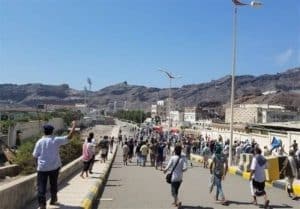
The UAE began withdrawing its military forces from Yemen in 2019 and subsequently announced the end of its official military presence in January 2026. However, the withdrawal of Emirati troops did not signify the end of the country’s influence in Yemen. Throughout the war, Abu Dhabi had organized and equipped a network of local forces that continue to serve as its primary instruments of influence in the south and along the western coast. The Southern Transitional Council, the Giants Brigades (Al-Amaliqa), and other military factions aligned with the UAE constitute parts of this structure. Consequently, the UAE’s current re-emergence in the Yemeni equation signifies not so much a return of its official troops as the reactivation of this very network amidst new military developments.
In recent months, developments on the ground in western Yemen and the significance of the Bab al-Mandab Strait have influenced Saudi Arabia’s calculations. Ansarullah’s control over key coastal areas and its enhanced strategic position in the southern Red Sea have created a dynamic that Riyadh can no longer alter by relying on its own fragmented and disjointed forces. Bab al-Mandab is not merely a maritime passage; it is a vital link for maritime trade between Asia and Europe and a crucial route for energy transport. From this perspective, the consolidation of Ansarullah’s position in the region signifies an increase in Sana’a’s deterrent power and an expanded role in regional security dynamics—a development that confronts Saudi Arabia and its allies with a challenge extending well beyond Yemen’s domestic borders.

A Reuters report from October 2, 2026, regarding Saudi Arabia’s plans for a large-scale military operation against Ansarullah positions—aimed at recapturing coastal areas and the Bab al-Mandab Strait—underscores the significance of this issue in Riyadh’s strategic calculations. According to the report, the potential operation would involve Yemeni forces opposed to Ansarullah alongside Saudi air support, with Riyadh currently evaluating the operation’s scope and scale. However, the fragmentation of anti-Ansarullah forces and the challenges associated with field logistics stand as major obstacles to such an operation. Under these circumstances, the return of Emirati capabilities could help offset some of Saudi Arabia’s operational shortfalls.
The political signs of this shift have become evident in recent days. The visit to Saudi Arabia by Mansour bin Zayed Al Nahyan—the UAE’s Vice President and a highly influential figure—and his meetings with Mohammed bin Salman and Khalid bin Salman took place against a backdrop of strained relations between the two nations following severe disagreements over Yemen. This meeting must be viewed in the context of Riyadh’s efforts to rebuild cooperation with Abu Dhabi and once again leverage its capabilities regarding the Yemen file. Concurrently, the return of Abdulrahman al-Mahrami—known as Abu Zara’a, one of the UAE’s key field commanders in Yemen—from Riyadh to Aden serves as another indicator of the changing situation.
Al-Mahrami, who commands the Giants Brigades (Al-Amaliqa), holds a significant position within the military structure of the South and has been a key figure for the UAE in organizing local forces over the past few years. His return to Aden—following a period of restricted activity in Riyadh—comes as the anti-Ansarullah front prepares for new military developments. The significance of this event is further underscored when viewed alongside the visit of Mansour bin Zayed and reports regarding the UAE’s increased logistical support for anti-Ansarullah forces. Collectively, these developments indicate that Abu Dhabi is re-entering the Yemeni arena through its military networks and local commanders.
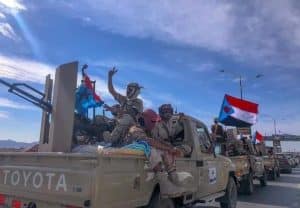
This return holds particular operational significance for Saudi Arabia. One of Riyadh’s primary challenges on the Yemen front has been the inability to coordinate the various groups opposed to Ansarullah. Forces aligned with Saudi Arabia and the UAE each maintain independent command structures, interests, and networks—a factor that has hindered the formation of a cohesive front in recent years. Now, the UAE’s re-engagement could bolster the organizational capacity and operational mobility of anti-Ansarullah forces along the Bab al-Mandab axis by activating the potential of southern units. This is especially relevant given that the Giants Brigades (Al-Amaliqa) and other Abu Dhabi-backed groups possess extensive field experience and deep-rooted connections across the southern and coastal regions.
However, the fundamental issue is that Saudi Arabia, in order to bolster its own front, has been compelled to once again rely on a country whose political agenda stands in direct conflict with Riyadh’s objectives. The UAE seeks to revive its influence in the south and strengthen separatist movements, whereas Saudi Arabia remains committed to preserving Yemen’s unified structure. Consequently, the new military cooperation between the two nations cannot eliminate their fundamental differences. Events in eastern Yemen in December 2025 underscored this reality; the advance of UAE-backed Transitional Council forces in Hadramaut and Al-Mahra met with fierce Saudi opposition, and the rift between the two countries once again escalated into a military confrontation between their respective affiliated forces.
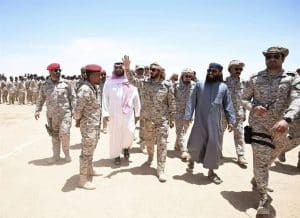
In fact, the UAE’s return to the Yemen front could replicate the very cycle that previously led to the collapse of the Saudi-Emirati coalition. While Saudi Arabia requires Abu Dhabi-aligned forces to counter Ansarullah, these same forces are instruments of an agenda that conflicts with Riyadh’s policy of maintaining Yemen’s territorial integrity. Consequently, any potential battlefield success would immediately raise the issue of how to divide influence and determine the political future of the territories under control—an issue that has previously resulted in direct conflict between the two sides.