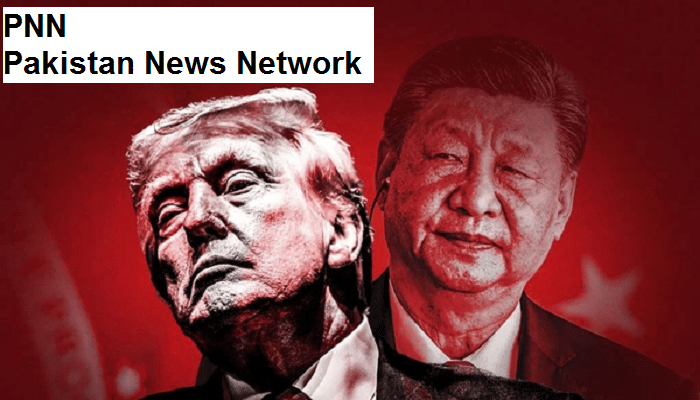
PNN – Statements released by China and the United States after the meeting between the presidents of the two countries show that China has clearly stated that it will adhere to its positions on Iran and Xi’s four-point plan.
According to the report of Pakistan News Network; in the weeks leading up to President Donald Trump’s visit to Beijing, his administration reportedly pressured China to align its position with Washington amid talks aimed at reaching a peace deal between Washington and Tehran.
Yet when Trump left Beijing on Friday afternoon after a little more than 40 hours in the Chinese capital and a series of meetings with Chinese President Xi Jinping, there was little evidence that China and the United States had reached an agreement on how to end the war against Iran, now in its 77th day.
The war against Iran began on February 28 with a joint US-Israeli attack amid negotiations between Washington and Tehran; Iran responded the same day with missile and drone strikes on occupied territories and US interests and assets across the region.
While the Trump administration insisted on justifying this, China, which had already condemned the war, redoubled its opposition to the conflict in a statement released during Trump’s visit to Beijing.
The Chinese Foreign Ministry, in a statement on its X account, said: China’s position on the situation in Iran is very clear; this conflict has caused severe losses to the people of Iran and other countries in the region.
The Chinese statement said that finding a quick way to resolve this situation is in the interests of countries in the region and the rest of the world, and China welcomes continued efforts for a ceasefire, as dialogue is the way forward and it is important to achieve a comprehensive and lasting ceasefire as soon as possible.
The statement referred to Xi Jinping’s previously proposed four-point plan for peace and stability in the Middle East, which calls for peaceful coexistence, negotiated political agreements, common security, and development cooperation; the statement said China would continue to act in accordance with this plan.
Meanwhile, the White House said in a statement on its Twitter account on Thursday about the meetings in China: The two sides agreed that the Strait of Hormuz should remain open to support the free flow of energy.
The White House statement claimed that the Chinese president expressed Beijing’s opposition to the militarization of the Strait and expressed his interest in purchasing more oil from the United States to reduce China’s dependence on the Strait in the future.
China’s Foreign Ministry acknowledged in its statement that the conflict has put great pressure on global economic growth, supply chains, international trade order, and global energy supply stability, which harms the common interests of the international community, but made no mention of the militarization of the Strait of Hormuz or other allegations made by the White House.
On the other hand, while the White House claimed in its statement that both countries agreed that Iran could never have access to what it called a “nuclear weapon,” China’s statement, without explicitly addressing this issue, stated: It is important to maintain the process of de-escalation; to be on the path of political settlement; to engage in dialogue and consultation; and to reach an agreement on the Iranian nuclear issue.
Statements released by both sides show that, in principle, neither side has budged from their original positions on Iran; China has made it clear that it will stick to Xi’s four-point plan.
Public statements by US leaders show that this is not what the US wanted, and after weeks of pressuring China to play a more active role in persuading Iran to open the Strait of Hormuz, Trump administration officials said immediately before the summit that they did not need Beijing’s help!
This is despite the fact that both before and during the summit, senior Trump administration officials have been explicit in their requests to China.