
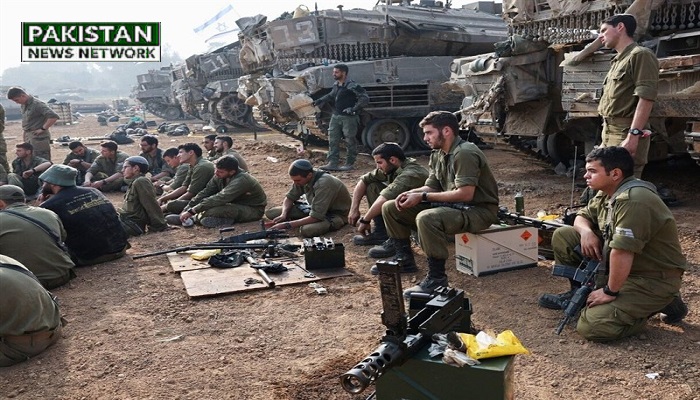
PNN – As the budget crisis within the Israeli military intensifies, concerns regarding the regime’s internal security outlook are mounting.
According to the report of Pakistan News Network; Israeli forces are compelled to maintain a state of high alert across multiple fronts—a situation driven by Netanyahu’s policy of endless wars. Meanwhile, the military’s most pressing issue—a severe budget shortfall hindering the advancement of its military and security policies—has sparked alarm among senior Israeli commanders.
In this context, about two months ago, the Israeli military requested a budget increase of 40 billion shekels (over $13 billion) for the current year. This sparked a conflict between the regime’s Ministry of War and the Ministry of Finance; ultimately, following Netanyahu’s intervention and mediation, it was decided that the funds would be allocated and disbursed to the Israeli military in stages.
In response to the military’s request for additional funding, the Finance Ministry stated that such a move would necessitate supplementary measures to secure financial resources—including tax hikes, budget cuts in other sectors, and an increase in the budget deficit—steps that should be avoided to prevent Israel from plunging into a financial crisis.
The reality is that Israel’s military budget has spiraled out of control since the onset of the Gaza war in October 2023 due to escalating demands; even when attempts are made to keep spending within approved limits, those approvals are immediately bypassed through various addendums. This pattern recurred in early 2026, when Netanyahu’s cabinet initially approved a defense budget of 112 billion shekels ($37 billion) but raised it to 144 billion shekels ($47.3 billion) following the launch of the military offensive against Iran. The Israeli military has now requested an additional $13 billion; under pressure from Netanyahu, it was decided to add 15 billion shekels ($5 billion) to the military budget by October, with the remaining 25 billion shekels ($8.2 billion) to be allocated by the end of 2026, subject to a review of “performance.”
Under the agreement, the Israeli military was supposed to receive the first $5 billion installment in August (last month). However, the Ministry of Finance, led by Bezalel Smotrich, did not transfer the funds.

The Israeli Ministry of War has declared an emergency to secure additional funding because the regime’s military industries—which were required to invest in expanding production lines for weapons needed by the Israeli military during the war—are on the verge of shutting down some of their lines; this is due to the military’s inability to guarantee new orders amidst budget constraints.
Furthermore, most army operational units report increasing wear and tear on combat vehicles and armored personnel carriers. Recent reports also indicate a shortage of spare parts for Merkava tanks and armored personnel carriers. Consequently, according to army reports, hundreds of vehicles are currently inoperable due to a lack of spare parts and lengthy repair times, and hundreds of light vehicles have been decommissioned, while the rate of procurement and production of new vehicles fails to keep pace with this level of attrition.
In this regard, following a failure to secure funding for spare parts, the Israeli military decided to deactivate several tank battalions and announced that hundreds of Humvees had been damaged during the war in Lebanon, with no budget available to purchase replacements.
Furthermore, the Israeli Ministry of Defense warned that in the coming days, Elbit Systems would be forced to shut down its production line for Merkava tank shells. Additionally, the production line for artillery shells is set to close next month, followed by the mortar bomb production line in November.
Furthermore, according to an Israeli military report, the failure to transfer supplementary funds has cast doubt on the feasibility of the Apache helicopter deal with the U.S. military; moreover, this situation has resulted in the military’s inventory of interceptor missiles falling short of optimal levels.
Currently, the military budget stands at 144 billion shekels ($47.3 billion)—an increase of 30 billion shekels (nearly $10 billion) over the previous year—accounting for approximately one-fifth of the cabinet’s total expenditure. For comparison, the education budget is around 97 billion shekels (nearly $32 billion), the National Insurance Institute budget is approximately 64 billion shekels ($21 billion), and the total health budget is about 63 billion shekels ($20.7 billion). The significant disparities between the defense budget and those of other ministries reflect the priorities of “Bibi’s” cabinet in the current climate, as security needs take precedence over other sectors. To finance the massive increase in the defense budget, Netanyahu’s cabinet approved a 3% budget cut across all ministries and simultaneously increased the domestic budget deficit. This decision is expected to affect the delivery of various administrative services.
However, developments following the war with Iran and the Israeli military’s activities across several other fronts made it clear that even this amount was insufficient. In this context, Israel’s Channel 12 reported on Thursday that Eyal Zamir, the Director-General of the Ministry of Defense, had recently sent an urgent, classified letter to Prime Minister Benjamin Netanyahu, Defense Minister Israel Katz, National Security Council Head Shmuel Ben-Ezra, and Finance Minister Bezalel Smotrich. The letter was titled “Advancing an Urgent Budgetary Solution to Enable the Israeli Military to Carry out Its Missions.”

In this letter, Zamir called for an immediate resolution to the budget crisis and the urgent transfer of tens of billions of shekels to the defense budget. In this regard, Israel’s Ministry of Defense and military argue that failure to approve the new 40-billion-shekel (approximately $13 billion) budget—currently stalled due to the election climate—would result in immediate operational consequences.
A key point is that, according to the Zionist regime’s Ministry of War plan, requests for increased funding will persist; the ministry maintains that Israel’s defense budget over the coming decade should stand at approximately 120 billion shekels ($39.5 billion) annually. This implies that the cabinet will allocate at least 20 percent of the regime’s total budget to the Israeli military and the Ministry of War. According to the defense establishment, this 120-billion-shekel figure represents the “minimum budget required” to meet ongoing security needs; should new conflicts arise, economic decision-makers must anticipate a rise in this amount, contingent upon the nature and intensity of the hostilities.