

PNN – Mohammed bin Salman is gradually feeling the heavy pressures resulting from the war on his country’s economic and security structures.
According to the report of Pakistan News Network; the war waged by the US and Israel against Iran has entered its seventh month, yet there are still no clear signs of the conflict coming to an end. Meanwhile, the Persian Gulf states—which had supported US policies in the region and hoped that cooperation between Washington and Tel Aviv would bring about Iran’s defeat—have not only failed to achieve their desired objectives but are now grappling with the security and economic repercussions of this very conflict.
Among these nations, Saudi Arabia—long a key supporter of U.S. policies in the region—is now directly feeling the economic and security pressures resulting from the conflict. As the standoff between Iran and the United States persists, the Yemen front has reignited, with Ansarullah intensifying attacks on targets in southern Saudi Arabia. Recent large-scale Ansarullah strikes on the country’s energy facilities have once again exposed the vulnerability of Riyadh’s oil infrastructure. Meanwhile, news sources report advances by Ansarullah forces on battlefronts against Saudi-backed troops, particularly in the Taiz and Hodeidah regions.
One of the primary targets of recent attacks is the Jazan refinery complex—a facility with a capacity of approximately 400,000 barrels per day located near the Yemeni border. The complex has been targeted repeatedly, and reports following the latest attack indicate fires and the suspension of operations in parts of the facility. Meanwhile, pressure on Saudi oil exports has also intensified. According to tanker-tracking data compiled by Bloomberg, Kpler, and Vortexa, Saudi crude oil exports in August fell to around 3 million barrels per day—the lowest level recorded since 2017. This figure is less than half of the approximately 7.3 million barrels per day exported by Saudi Arabia in February, prior to the outbreak of the war.

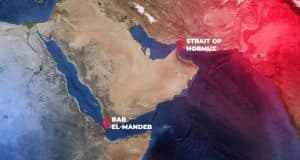
Simultaneous disruptions to shipping routes in the Strait of Hormuz and the Red Sea have further complicated the situation for Riyadh. Saudi Arabia has attempted to export some of its oil via alternative routes—including shipments through the Red Sea and ports located outside the Strait of Hormuz—but insecurity in the Red Sea and attacks on oil tankers have hampered this route as well. Reuters has reported that Saudi oil exports to Asia fell to less than 3 million barrels per day in July, down from approximately 4.9 million barrels per day the previous year.
This pressure has also manifested in Saudi Arabia’s oil sales policy. For September deliveries, Aramco has extended the discount on its official selling price for Arab Light crude to Asian customers for the third consecutive time; the discount had already reached $1.50 in August. This price reduction comes as Saudi Arabia faces transportation challenges and rising logistics costs in its efforts to retain Asian customers.
Economic pressure is not limited to exports alone. According to a Bloomberg report, Saudi Arabia’s National Debt Management Center is negotiating with banks to secure at least $8 billion in new loans. While these talks are still in the early stages and may not ultimately result in a loan, the mere consideration of such an option amidst wartime conditions highlights the new financial pressures facing the Saudi government—particularly given that Riyadh had already increased its reliance on debt prior to the conflict due to the high costs of development projects and its own financial requirements.
Despite economic pressures, Saudi Arabia shows no intention of easily backing down from its policy of confrontation with Ansarullah; instead, it is seeking greater support from the United States and other nations to counter the group. CNN has reported that Saudi officials requested support from Washington in August and are currently working to enlist other countries in the effort to confront Ansarullah. Meanwhile, the conflict within Yemen itself has intensified, with heavy fighting reported in recent days across various fronts, including Taiz, Al-Hudaydah, Al-Jawf, and Al-Bayda.
Conclusion
The war—which was expected to end quickly with Iran’s defeat and the consequent weakening of the Axis of Resistance—has now entered its seventh month, and some of the repercussions are being felt by the very countries that had banked on a swift victory for Washington in this conflict. To date, the United States has failed to achieve a lasting resolution to the Strait of Hormuz issue; meanwhile, its regional allies are grappling with mounting security pressures, disruptions to oil exports, and rising economic costs.
Today, Saudi Arabia faces Ansarullah’s attacks on its cities and oil facilities on one hand, while being compelled—in order to maintain oil export flows—to utilize alternative routes and offer discounts to Asian customers. Meanwhile, reports of the Saudi government negotiating a new loan of at least $8 billion indicate that the financial pressures resulting from the current situation cannot be overlooked.
Given these circumstances, it appears Riyadh has no intention of revisiting its policies; instead of de-escalating tensions, it is seeking Washington’s support more than ever. Yet, persisting on this path could impose costs on Saudi Arabia that were not factored into initial calculations. It may not be too late to change course—before the Kingdom is forced to foot the bill for a war that others were supposed to win.