
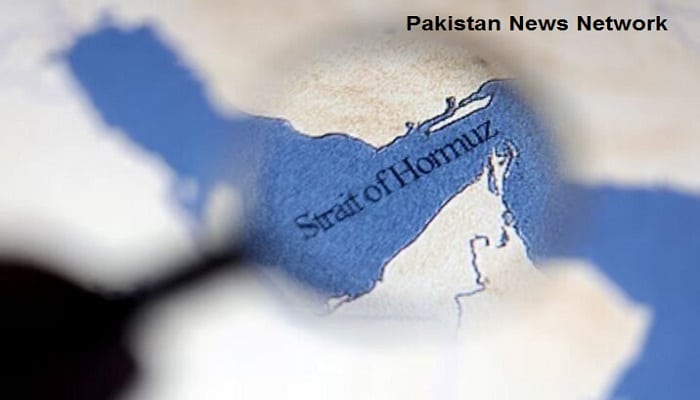
PNN – Iran’s move is an attempt to create indirect deterrence by subduing the global economic system, rather than a military response.
According to the report of Pakistan News Network, the continuation of the current situation in the Strait of Hormuz is considered an important and sensitive issue by Turkish think tanks, research institutes and analysts. Because Turkey, as one of the countries that is heavily dependent on energy imports, has been in a new economic strait in recent months.
As mentioned in the first part of this report, in the fair and realistic view of Turkish analysts, the joint attacks by the United States and the Israeli regime on our country, Iran, are considered the most important reason and main cause of this situation.
In the final part of the aforementioned report, we point out what consequences the blockage of the Strait of Hormuz as a new regional reality has brought, in addition to the dimensions related to the energy market and economy, in the field of politics and security, from the perspective of other Turkish think tanks.
According to Turkish think tanks, the situation of the energy-exporting countries of the Persian Gulf is complicated. These countries have a high rate of energy self-sufficiency, but exports are largely dependent on narrow and fragile passages such as the Strait of Hormuz, which limits their capabilities.
This situation shows that the Persian Gulf economies are in a position where they simultaneously enjoy both a price advantage and logistical vulnerability.
On the other hand, it is impossible to ignore the fact that strengthening the link between energy security and economic security paves the way for the emergence of new areas of cooperation between countries. In this regard, the current crisis not only creates short-term economic effects, but also provides important clues about the future of the global economy and the energy system.
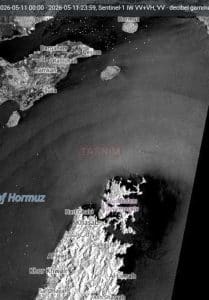
Hormuz winter
Emre Guler, a researcher at the Turkish Asian Strategic Research Center (TASAM) think tank, described the blockage of the strait with the metaphorical phrase “Winter of Hormuz” in a detailed report and wrote: The growing tension between Iran on the one hand and Israel and the United States on the other has entered a new phase since 2026, and with the practical closure of the Strait of Hormuz, it has directly drawn everyone’s attention to one of the most fragile points of the global system. This development cannot be considered simply a military confrontation or a regional power struggle. On the contrary, this crisis is emerging as a multi-layered systemic rupture that has affected global energy security and international maritime trade. Because with the interruption of energy flows, the global economy becomes fragile, trade routes are blocked, legal norms are effectively suspended, and the global order takes on a different shape from the perspective of the security of energy routes. Geopolitically, Iran’s attempt to close the Strait of Hormuz can be seen as a strategic move aimed at balancing classic power imbalances. By controlling a vital passage like the Strait of Hormuz, Iran has the capacity to create global costs. This situation is defined as the asymmetric use of power and is considered one of the effective strategies developed by middle actors against stronger competitors. Iran’s move can also be seen as an attempt to create an indirect deterrence mechanism by subduing the global economic system, rather than simply providing a direct military response. Throughout this process, the attitudes of the great powers have also become an important factor in determining the course of the crisis. While the United States keeps the option of military intervention on the table and claims to guarantee freedom of international maritime trade, China has taken a more cautious approach, prioritizing diplomatic solutions with a focus on protecting its energy security. On the other hand, Russia is trying to balance its relations with both sides and sees this crisis as a geopolitical opportunity. This multipolar balance of power transforms the Strait of Hormuz crisis from a purely regional conflict into an arena of global competition.
Israel, the Threat Agent
Emre Guler, a researcher at the Turkish Center for Strategic Asian Studies, says bluntly: “The crisis currently unfolding in the Iran-Israel-US triangle is not a security threat caused by Iran’s decision and action, but rather, as many Western commentators say, a close examination of the current situation shows that the main accelerators of the crisis are Israel’s regional aggression and America’s selective understanding of the rule of law. The fragility around the Strait of Hormuz is often discussed in terms of the potential threat of Iran closing the strait. However, the structural reasons that give rise to this threat are deliberately hidden. The Hormuz crisis is not simply a strait crisis, but the joint product of Israel’s policy of strategic destabilization and America’s policy of bullying power in changing and distorting norms. For Israel, this is much broader than it can be explained simply as a security response directed at Iran. Israel’s attacks on Iran have not only increased military tensions between the two countries but have also initiated a new phase that will destabilize the regional and global security architecture. Israel’s attacks will upset the balance of power in the Middle East, directly push the conflict to another level, and threaten global energy security. More importantly, Israel’s attacks on Iran are seen as a policy of strategic destabilization aimed at sabotaging US-Iranian negotiations and dragging the entire region into the flames of war. The important point here is that Israel is not creating security, but rather, pursuing a policy that deepens the security crisis and legitimizes its offensive capacity.
Iran’s Special Situation
The report by the Turkish think tank (TASAM) discusses what advantages Iran has gained at this point with its technical innovation and geopolitical advantage.
The report says: From now on, Iran does not even have to close the strait. Because the greatest manifestation of power is not the act of closing the strait, but the possibility of closing it and the ambiguity about its operation. So Iran can change the market even without doing anything. This type of power is more complex than classical military power. We can describe it as: the exercise of power and control through the possibility of blockage. If a country can influence trillion-dollar markets simply by saying the phrase I can do something, then in the international system, power is not in the reservoirs, but in the capacity to manage expectations. The world is just realizing that the global economy has long operated on an illusion. The optimistic illusion of certainty that energy flows are continuous, sea lanes are open, and great powers maintain this order! What is happening today in the Strait of Hormuz shows that all three assumptions have collapsed simultaneously. So, the issue is no longer the Iran-Israel-US tension; the issue is that this tension shows how fragile the global system is.
In conclusion, it should be said: According to numerous reports by Turkish think tanks and research institutes, the economies most at risk are industrialized countries dependent on energy imports, developing economies with income streams dependent on the Persian Gulf region, and countries with high financial vulnerabilities. Factors such as high debt ratios, limited reserve capacity, and dependence on external financing deepen the effects of energy shocks in these countries.
These findings suggest that energy supply disruptions cannot be viewed as a purely sectoral problem. They can create strong interactions between different components of the global economic system and directly affect macroeconomic stability.
Therefore, energy security must be considered in the context of supply quantity, supply continuity, security of flow, and overall system resilience. As a result, the current crisis demonstrates that energy, finance, and geopolitical dynamics are increasingly intertwined in the global economy.
This structure requires that economic policies in the future period should not be limited solely to growth and inflation goals, but should also be shaped from the perspective of energy security and systemic risks. Without a doubt, ensuring energy security in this environment full of complexity and uncertainty is subject to and conditioned by international containment of America’s arbitrary and interventionist actions and confronting the Israeli regime’s disregard for international law.