
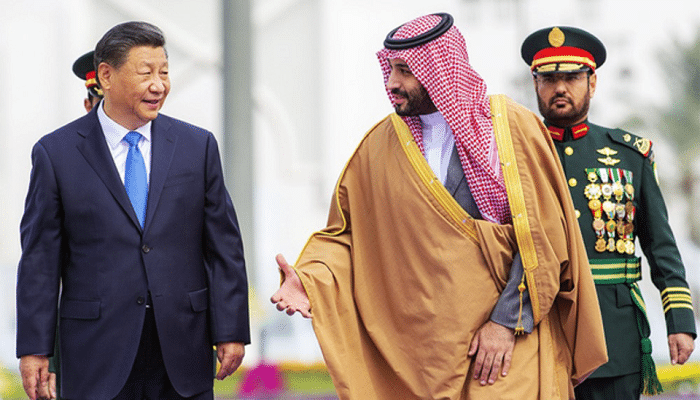
PNN – According to analysts, the recent travel and contact between Arab countries and Beijing indicates an important issue: disappointment with the West and the search for security in East Asia.
According to the report of Pakistan News Network, in the past week, there have been clear signs of strategic efforts by the Arab Gulf states towards their ally, the United States; a trend that could be seen as a sign of a decline in their trust in Washington and a gradual shift towards Beijing. It seems that with the collapse of these countries’ security reliance on the United States after the attacks of the American-Zionist coalition against Iran, a wave of disappointment with Washington has emerged among Arab capitals, and they are looking for more reliable alternatives in East Asia.
China-centric
In this regard, an Emirati delegation led by Abu Dhabi Crown Prince Khalid bin Mohammed bin Zayed Al Nahyan traveled to Beijing last Tuesday, which, according to informed sources, included extensive discussions on energy cooperation, financial technology and even currency issues. Emirati officials told the Wall Street Journal that Donald Trump’s decision to attack Iran has left them embroiled in a damaging conflict that may force them to turn to the Chinese yuan to sell oil due to a shortage of dollars.
Request for help from the US
Even the head of the UAE Central Bank, Khalid Mohammed Balama, raised the issue of receiving financial assistance from Washington in the form of a war credit line during a meeting with US Treasury Secretary Scott Basnet last week, but analysts consider such assistance unlikely from Washington.
On the other hand, Saudi Crown Prince Mohammed bin Salman also spoke with the Chinese President about the Strait of Hormuz and regional issues during a phone call three days ago. The Chinese President has also said that Beijing supports resolving regional problems through diplomatic means.
At the same time, these connections are important for Iran from the perspective that in a war situation, it provides the possibility of putting pressure on Tehran on issues such as the Strait of Hormuz or negotiations. The use of the yuan in oil transactions can also be a tool to strengthen these relations and a warning to Tehran. Regional analysts believe that the recent meetings and talks can be considered the result of the US not providing security to these countries in return for years of securing Washington’s interests in their countries. The blows inflicted on energy facilities and financial infrastructure, and on the other hand, the credibility and security of investments of these countries have been severely damaged during this period and can be an incentive to strengthen cooperation with Beijing.