
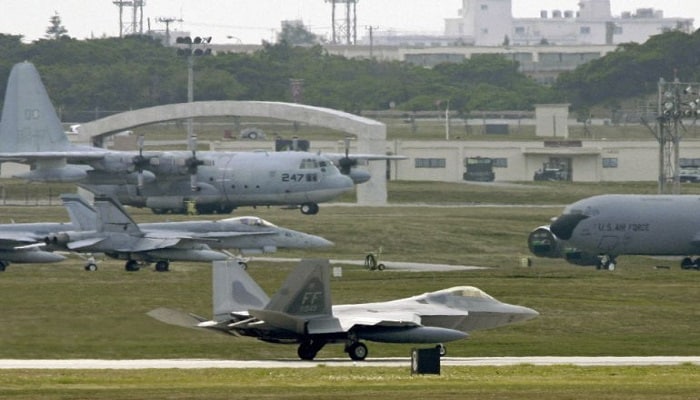
PNN – The vast network of US military bases in the Middle East and Africa is not just a strategic presence; it is a document of Washington’s interventionist policy, which, with 128 bases in 51 countries around the world, has ignored geographical borders and, according to the base’s narrative, has established its dominance in Iran’s neighborhood all the way to the depths of Africa.
According to the report of Pakistan News Network, the extensive network of US military bases in the Middle East and Africa is a symbol of Washington’s continued interventionist policy in strategic regions of the world; a presence that goes beyond security claims and is seen as aimed at consolidating political influence, controlling geopolitical equations, and protecting the economic and military interests of the United States.
Al Jazeera reported: The United States has maintained an active military presence worldwide since World War II, supported by a vast network of facilities, including permanent and temporary military bases and locations, in addition to the use of local military facilities in numerous countries.
According to a report published by the Congressional Research Service in July 2024, the US military owns or operates more than 128 military bases in 51 countries.
US military bases abroad serve a wide range of strategic and security functions.
In addition, these bases also perform advanced intelligence tasks, such as electronic interception and communications monitoring and espionage of countries in the region, as well as protecting troops, facilities, and critical areas using a variety of defense systems, including radars and missile interception systems.
These bases are also important logistical and training centers, as they host operations to supply, maintain, and upgrade combat equipment, and they allow for joint maneuvers and exercise with allied forces to test military plans, increase readiness, and achieve a higher level of operational coordination.
The US military presence abroad pursues multiple goals, including attacking various countries in the region, demonstrating US military power, and ensuring the continued operation of this power beyond regional borders in areas that Washington considers vital to its national interests and serve its strategic and security objectives.
Given their central role, Washington allocates huge annual budgets to these bases, running into the tens of billions of dollars. In fiscal year 2023, the US Department of War estimated the cost of operating foreign bases at around $31.7 billion, in addition to $5.3 billion allocated for planning, designing and building new military infrastructure abroad.
However, these official figures do not reflect the full picture, as they may not include emergency costs, or the costs of periodic deployments, or ongoing exercises, and, according to independent estimates, the actual costs may be almost double the officially announced amount.
Historical Background
Overseas military bases have played a central role in American foreign policy strategy since World War II (1938-1945). After entering the war, the United States established hundreds of military bases and used them to support its combat operations, most of which were concentrated on the main theaters of the war, particularly Europe and the Pacific, in addition to other locations outside the theater of operations.
After the war, the United States maintained some bases and also established new ones in the territories of the Axis countries to support the needs of military administration and reconstruction. The onset of the Cold War in the late 1940s also led Washington to expand its network of foreign bases, especially in Western Europe and East Asia.
With the end of the Cold War and the collapse of the Soviet Union, the United States reduced its foreign military presence, closing dozens of military bases and reducing its troop deployments in Europe and the Indo-Pacific region in the 1990s and early 2000s. During that period, the United States shifted its military strategy toward the Middle East, beginning with the Second Gulf War in the early 1990s and then the September 11, 2001 attacks, and rapidly establishing new military bases in a number of countries in the region to strengthen its presence and secure its strategic interests.
In the mid-2000s, the United States once again strengthened its military presence in Europe and the Indo-Pacific region, driven by competition with major regional powers.
In Europe, the conflict between Russia and Ukraine in 2014 and the subsequent Russo-Ukrainian war in 2022 led Washington to reactivate former bases in countries such as Iceland and to deploy US forces in new locations, particularly in Eastern Europe. Strategic competition with China also led the United States to strengthen its presence in the Indo-Pacific region.
By the third decade of the 21st century, these two regions had become the main hub for the deployment of American forces abroad, with three countries in them, namely Japan, Germany, and South Korea, hosting more than 70 percent of American forces abroad.
Types of Foreign Bases
The U.S. Department of War divides its foreign bases into two main categories: permanent bases for continuous presence and emergency bases for providing temporary support for combat missions and other emergency operations. Within this general classification, bases are further divided into subcategories based on the level of U.S. military presence or duration of operation.
Permanent bases come in three types: Main base: has a solid infrastructure and is permanently occupied by active forces. Forward operating base: has an expandable infrastructure and is designated for periodic use by active forces. Security position: has a limited or no American presence and is operated with periodic support from the United States or the host nation.
But emergency locations are divided into three types based on the duration of use: Primary location: created for immediate use. Temporary location: used between one month and two years. Semi-permanent location: used between two and five years.
Middle East
The United States has a large military presence in the Middle East, with forces in more than a dozen countries, in addition to being stationed on ships in regional waters. US forces have eight permanent bases, as well as 11 other military positions to which they have access.
The missions of American forces in the region are mainly related to protecting their interests in the region, supporting their ally, the Israeli regime, against the Palestinian resistance, Iran, and resistance-oriented groups, and strategic competition with Russia and China is also another motivation for the American military presence in the region.
After the Zionist regime’s attack on Gaza, which began in October 2023, the United States sent additional units and supported the regime’s escalation of attacks on various fronts, and also participated in the attack on Iran and Yemen. As of the summer of 2025, the total American military presence in the Middle East has been between 40,000 and 50,000 troops.
Many countries in the region host a US military presence, in some cases very limited, such as Egypt, while others host large US forces and bases on their soil.
Iraq has several US bases, the most important of which are Ain al-Assad Air Base and Erbil Air Base, and Jordan also hosts US military sites, the most prominent of which is Mawaqaf al-Sulti Air Base, which is home to the 332nd Air Wing and F-35 fighter jets. Oman also hosts US military sites, including Duqm Air Base.
The US military presence in Syria includes the al-Tanf base and various facilities in northeastern Syria and other areas, and US forces in the country carry out missions within the framework of what they call the “fight against terrorism”.
While neither the Zionist regime nor the United States recognize the existence of US military bases in Israel, Washington declares that it has an emergency warehouse in the occupied territories that includes weapons and military equipment.
Bahrain, Kuwait, Qatar, the United Arab Emirates, and Saudi Arabia are the most important countries in the region in terms of the size of the US military presence, and the most important US military bases in the Middle East are located in these countries, including Al-Udeid Air Base in Qatar, which is the largest US military installation in the Middle East and is considered the advanced headquarters of the US Central Command. It is also the location of many military commands and units, including the US Air Force Central Command, the US Special Operations Central Command, in addition to the Joint Air Operations Center affiliated with the US Central Command and the 379th Air Wing for reconnaissance missions.
The base’s capabilities include surveillance aircraft, refueling aircraft, combat transport aircraft, in addition to Patriot missile defense systems and radar equipment, and it hosts 10,000 U.S. troops, according to the Council on Foreign Relations.
Naval Support Center (Juffair Naval Base): Located in Bahrain, it is the only permanent naval base in the Middle East and is the headquarters of U.S. Naval Forces Central Command and home to the U.S. Fifth Fleet.
The base is home to four minesweepers, one reconnaissance support ship, and two logistics support ships. It also houses U.S. maritime surveillance aircraft and Patriot missile defense systems. It also has a squadron of six rapid response ships, a crew of support ships, and a mission support force of 150 personnel.
Camp Arifjan in Kuwait: It is the headquarters of the U.S. Central Command and is the primary center for logistics support, equipment supply, troop protection, and command of U.S. military operations in the Middle East.
Ali Al-Salem Air Base in Kuwait: It is the main airlift and support center for joint and international coalition forces in the region and is the headquarters of the 386th Air Reconnaissance Wing of the United States Air Force, which is responsible for airlift missions.
Al Dhafra Air Base in the United Arab Emirates: A strategic base that conducts reconnaissance and intelligence-gathering missions as well as supporting combat operations. The base’s capabilities include early warning and air control aircraft, intelligence, surveillance and reconnaissance aircraft, refueling aircraft, and advanced fighter jets such as the F-22 Raptor stealth fighter.
Prince Sultan Air Base in Saudi Arabia: Hosts the 378th Reconnaissance Air Wing and includes missile defense systems, in addition to transport and refueling aircraft.
Africa
Africa hosts a limited number of permanent active-duty U.S. troops, numbering about 1,150 through March 2024, most of whom are stationed at fixed bases in Djibouti.
The majority of U.S. troops in Africa are classified as temporary forces, serving on contingency or periodic missions.
U.S. military bases and periodic troop deployments in Africa support logistical activities, military training, providing support to regional forces, responding to humanitarian crises, and supporting evacuation operations.
According to the Congressional Research Service, U.S. forces on the continent operate two permanent military bases and seven other accessible military locations, distributed in Djibouti, Kenya, Somalia, Gabon, Chad, and Ascension Island.
The most important US bases in Africa are concentrated in two main locations: Lumonieh Base in Djibouti, located near the Bab el-Mandeb Strait and the largest US base in Africa, is the main base of operations for the US military command in the Horn of Africa region and the headquarters of the joint task force there, and is the center of US military cargo aircraft.
The base is the primary hub for U.S. conventional and unmanned aircraft, with six bases for drones, one base for conventional aircraft, and a fighter squadron.
The base supports U.S. and coalition operations in the Red Sea and beyond, and is home to approximately 4,000 U.S., joint, and coalition forces and civilians. Its mission is focused on strengthening partner nation capabilities, promoting regional security and stability, deterring conflict, and protecting U.S. and allied interests.
The second location is Ascension Island Airport, located on Ascension Island, part of the British Overseas Territory of Saint Helena, Ascension Island, and Tristan da Cunha.
The airport is the permanent forward operating base for U.S. forces in Africa, and hosts U.S. Air Force installations, forces, and the U.S. Space Force, supporting air logistics operations and space launch and surveillance operations.
Overall, the report shows that US military bases in the Middle East and Africa are part of a vast network for consolidating influence and managing strategic developments. This presence, with a mix of permanent and temporary bases, has intelligence, logistical, and political functions in addition to its military role, and in practice allows the US to have a direct impact on the security and geopolitical equations of these regions.