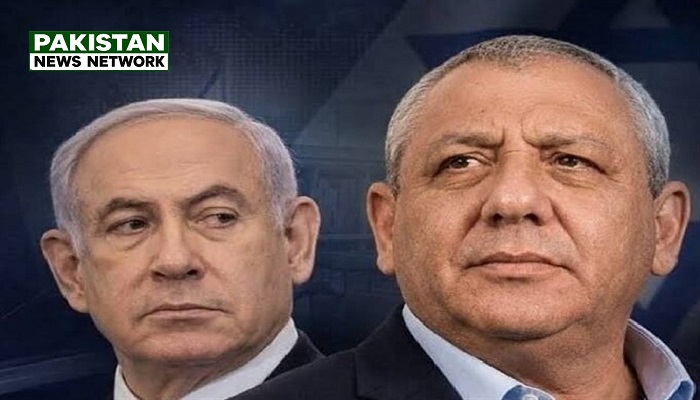
PNN – According to a report by Israel’s Channel 12, Gadi Eizenkot has so far secured the support of 56 lawmakers for his bid to become Prime Minister.
According to the report of Pakistan News Network; the Hebrew-language Channel 12 stated that during consultations between political parties and Israeli President Isaac Herzog regarding the nomination of a candidate to form a government, Gadi Eizenkot garnered the support of at least 56 Knesset members, while Benjamin Netanyahu has the backing of 46.
The report further notes that the “Yisrael Beiteinu” (Israel Our Home) party, led by Avigdor Liberman, has nominated Eizenkot to form the government, and the Arab party “Ra’am” has also officially announced its support for entrusting this task to him.
On the other hand, Netanyahu enjoys the support of four allied parties, which hold a total of 46 seats. These parties include Likud, Shas, Religious Zionism, and Jewish Power.
Channel 12 noted that, at the time the report was published, three parties—United Torah Judaism, Ra’am, and the Joint List—had not yet announced their final position regarding the nomination of a candidate to form a government.
According to this media outlet, there was an inclination within the United Torah Judaism party to refrain from nominating either candidate; however, political pressure from Netanyahu and his associates to secure the party’s support had simultaneously intensified. Through numerous contacts, Netanyahu and members of his political team sought to persuade the party to nominate him for the position of prime minister.
Channel 12 also reported that two Arab parties—Ra’am and the Joint List—would likely adjust their stance in response to a request from Eisenkot; specifically, if he asks these parties to nominate him, they will likely support him, whereas otherwise, they might refrain from nominating either candidate.
The report further notes that potential support from Arab parties for Eisenkot could carry significant political implications; in such a scenario, he would become dependent on the backing of these parties’ representatives to secure the mandate to form a government. While this could increase the number of parliamentary recommendations in Eisenkot’s favor, it might also signal details regarding the composition of his prospective coalition.
Consultations between the political parties and Herzog took place over two days—Wednesday and Thursday, November 4th and 5th. According to the announced schedule, representatives from the Religious Zionism, Shas, Yisrael Beiteinu, and Zehut parties were set to meet with the Israeli president on the first day, while representatives from United Torah Judaism, Otzma Yehudit, The Democrats, Ra’am, the Joint List, Baham, Yashar, and Likud were scheduled for the second day.
It is worth noting that any individual who secures the support of 61 representatives can form a cabinet.