
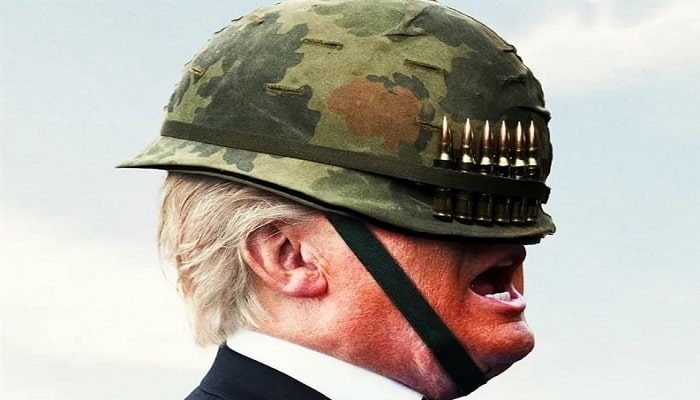
PNN – Haaretz, referring to the strong disagreement between Trump’s supporters and him, stated that the war with Iran has disrupted America’s internal atmosphere.
According to the report of Pakistan News Network, in continuation of reports about the turmoil in the internal situation in America and the disputes about the war that the Donald Trump administration launched against Iran with the direct provocation of the Zionist regime and whose consequences have affected Americans at various levels, Nathaniel Shlomovitz, a Zionist analyst, stated in an article in the Hebrew newspaper Haaretz that the political scene in the United States is witnessing rapid developments following the war with Iran.
Shlomovitz pointed to Trump’s significant decline in approval ratings, based on several recent polls showing him at between 33% and 36%, levels that are described as Trump’s lowest approval ratings since taking office.
He added that the decline, which comes as tensions in the region continue, reflects growing concern among the American public about the cost and consequences of the war, while Trump tries to downplay the significance of these numbers and relies on his continued support among his Republican base.
The Zionist analyst emphasized: But the most striking development is the split within the American right wing itself, where conservative American journalist Tucker Carlson emerged as one of the most prominent critics of the war with Iran, a move that came as a huge shock to the MAGA (Trump supporters) camp.
According to the article, Tucker Carlson, who was considered one of the closest and most influential people in Trump’s popular base, openly announced his severance of ties with Trump after the start of the war with Iran and even went beyond that and publicly apologized for his previous support, considered the war with Iran a strategic mistake and held those who supported it morally responsible for the war.
This position of Tucker Carlson, according to Nathaniel Shlomovitz, is not limited to a passing political disagreement, but rather reflects a change in the mood of a section of conservatives who have begun to compare the current war with the experience of the American war against Iraq and its negative consequences.
The Haaretz writer emphasized: Carlson’s position becomes even more important given his influence among the Republican base, as he is seen as one of the most prominent thought leaders in the conservative movement and even as a possible contender for leadership of this movement in the future, either through direct nomination or through support for figures such as J.D. Vance.
The article continues: In contrast, Trump responded by fiercely attacking his critics from within his camp, calling them “weakening the home front” and emphasizing his commitment to his military options, believing that the MAGA movement was loyal to him.
Nathaniel Shlomovitz argues that the conflict reveals two contradictory bets within the American right: the first, led by Trump, based on the continued loyalty of his base regardless of the developments in the war, and the second, embraced by Carlson, based on the expectation that this support would erode over time and the rising costs of the confrontation.
He added: Between these two paths, the American political scene appears to be on the verge of a phase of restructuring within the conservative movement that may determine the characteristics of the competition for power in the next phase; especially if the war continues and its consequences deepen at home and abroad.