
PNN – After the recent war, the Arabs know that participating in any Zionist plan against Iran is a devastating gamble for them.
According to the report of Pakistan News Network, in light of recent developments in the region and the Zionist regime’s moves to form a coalition of Arab countries and drag them into a direct war with Iran, Al-Mayadeen Network analyzed the dimensions and goals of the visit of Benjamin Netanyahu, the Prime Minister of the occupation regime, to the UAE in an article and wrote: The United Arab Emirates denied the announcement by Netanyahu’s office about his secret visit to the country during the period of escalating military tension with Iran, but Netanyahu said that the meeting with UAE officials was a “historic breakthrough” in bilateral relations.
This claim by Netanyahu and the UAE’s denial, which is unlikely to be coordinated, brings the debate in the Gulf region back to its main topic: the future of regional security in the Persian Gulf, especially after the Israeli-American war against Iran.
The Persian Gulf and the Security Dilemma
Since the US invasion of Iraq in 2003, the Persian Gulf region has been grappling with what can be called a “security dilemma,” during which the Islamic Republic of Iran emerged from its previous isolation and containment and expanded its regional influence.
The “security dilemma” is one of the most prominent explanatory concepts in international relations, especially in regions characterized by the presence of several active regional powers. The concept was developed by realist theorists to explain how instability can be created in a region, even in the absence of overt hostile intentions.
This theory is based on the idea that any state’s efforts to increase its security, even if defensive in nature, may be interpreted as a threat by other actors, leading states into a vicious cycle of suspicion and power struggle, where any defensive action provokes a counter-reaction, turning national security into a source of collective insecurity.
This theory is particularly true in the regional context of the Persian Gulf, where any agreement, alliance, or increase in power is seen as a disruption to the balance of power. In this context, perceptions of threats are no less important than material realities, as states reflect their perceptions of other states’ intentions, regardless of their actual capabilities.
This is precisely what led the King of Jordan in 2005 to describe the new balances in the region and Iran’s actions as establishing what he called the “Shiite Crescent” (axis of resistance).
“Middle East NATO”; the Failure of the American-Zionist Project against Iran in the Region
In this context, the efforts of the United States and Israel to create what they called a “Middle East NATO,” a military security framework aimed at balancing Iran and uniting Israel with some Arab countries, were promoted, especially during the first presidency of US President Donald Trump, even before the signing of the normalization agreements.
The so-called “Middle East NATO” plan was revived during the administration of former US President Joe Biden, when King Abdullah II of Jordan stated in June 2022 that he would be among the first to support the creation of a regional version of NATO, saying that this would be possible with like-minded countries.
However, these initiatives did not develop into a formal Arab military alliance with the participation of the Israeli regime, as many Arab countries approached these proposals with caution, recognizing the sensitive regional situation and the complex security balances that it imposes.
The Gulf States know that entering an alliance that directly targets a regional power (Iran) will be interpreted as an escalation of tensions against Iran. This escalation of tensions will provoke Iranian reactions, revive the security dilemma, and potentially turn the conflict from a proxy war into a direct war between them.
Israel’s Insistence on Dragging the Arabs into a War with Iran
Given the recent US-Israeli war against Iran, which has become a regional war, Israel has sought to expand the scope and its goal is to turn this war into a direct war between the two sides of the Persian Gulf, thereby dragging the Arab countries into a direct battle with Iran.
In the meantime, Netanyahu, who has succeeded in pushing the United States towards direct intervention in the confrontation with Iran, seems to be betting on his ability to get the wider participation of the countries of the region, or at least show the Arabs that they are part of the equation in the war.
The Lessons of Regional War for the Arabs
In contrast, the Gulf States believe that engaging in open war with Iran or entering into military alliances directed directly against it is incompatible with their plans to promote development and stability. Therefore, the entry of Israel as a direct security actor in the Persian Gulf, in the context of the confrontation with Iran (especially after Iran’s attacks on US bases in the Persian Gulf), not only does not help to strengthen stability, but also reproduces the regional “security dilemma”.
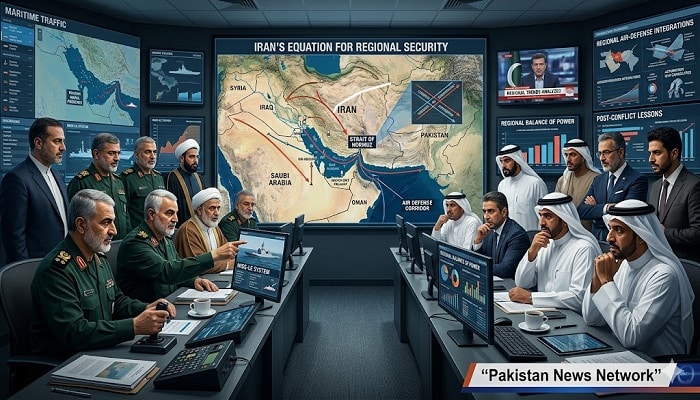
As a result, the future approach to regional security in the Persian Gulf (which Iran proposes as part of its approach to ending the war) requires a more comprehensive approach based on consensus between the two sides of the Persian Gulf, reducing tensions, and creating frameworks for regional understanding.
After the recent war against Iran, the future of the Persian Gulf will not be determined solely by the balance of military power resulting from this conflict, but also by the ability of its states to formulate a security equation that prevents external conflicts from spilling over into their domestic arenas and instead helps to isolate them as much as possible from the logic of overt military confrontations.