

PNN – Ansarallah’s intelligence superiority and precise oversight regarding Saudi Arabia’s military logistics have fueled doubts within the Saudi-led camp.
According to the report of Pakistan News Network; the latest round of conflict between Ansarallah and Saudi Arabia differs significantly from previous phases of the war in Yemen. These differences include an intensification of Ansarallah’s fire against Saudi positions, the movement’s demonstrated capacity to command and manage ground advances, and the expansion of the scope of its operations. However, the most critical development lies in the shifting intelligence and security balance between the two sides: Ansarallah has successfully monitored the adversary’s military movements, while the Saudi-backed camp is exhibiting clear signs of a security breakdown, intelligence leaks, and disruptions within its command and logistical support structures.
This development is not limited merely to the ability to identify targets and execute precision strikes. A series of events—ranging from strikes on concentrations of Saudi-led coalition forces and their ammunition depots, to complaints by forces loyal to the resigned government regarding intelligence leaks and the failure to supply the front lines with necessary equipment—paints a picture of a much deeper crisis. On one side of this conflict stands Ansarallah, which has successfully transformed intelligence regarding enemy movements into a tool for projecting military power; on the other side are forces that, despite receiving financial, material, and intelligence support from Saudi Arabia, struggle significantly even with managing internal security and safeguarding their own military information.
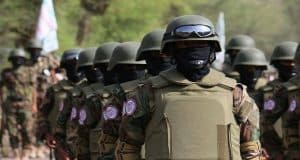
Dissent within the Saudi-led Camp: Signs of an Intelligence Crisis
In recent days, indications of this situation have surfaced in the statements and grievances voiced by figures and forces aligned with the camp of Yemen’s resigned government. For instance, Jamal al-Awadi, in a message addressing intelligence infiltration within the Saudi-backed forces, noted that the military maneuvers of these units across various fronts appear to be executed as if Ansarullah were already aware of the details before the operations even began—sometimes even before certain relevant commanders and officials themselves were informed.

The significance of these statements lies in the fact that the issue of intelligence infiltration is no longer merely a point raised by Ansarallah or its affiliated media; rather, it has become a concern voiced from within the camp of the movement’s adversaries. In this light, calls to re-evaluate the status of forces aligned with the resigned government are also noteworthy. When activists and personnel associated with a particular faction attribute their rival’s military successes to the potential leakage of information from within their own ranks, the matter transcends the failure of a specific operation; it calls into question the integrity of the command structure, operational security, and coordination among the forces.
This concern is also linked to developments on the ground. In this new phase of the conflict, Ansarallah has not limited itself to engaging the forces directly confronting it on the front lines; rather, it has also targeted military concentrations, command centers, logistical support positions, and supply routes. This pattern makes it increasingly difficult to organize and launch large-scale operations against Ansarallah’s positions, as any movement of troops or equipment—even before reaching the execution stage—could present an opportunity for the opposing side to launch a strike.
Yemeni Armed Forces’ Oversight of Airbases
Another significant aspect of Ansarullah’s intelligence superiority is their precise knowledge of Saudi aerial movements. Yahya Saree, the spokesperson for the Yemeni Armed Forces, has—in numerous statements—disclosed details regarding Saudi airstrikes, including the specific types of fighter jets employed and the airbases from which they took off.
The significance of this intelligence lies in its level of detail. Knowing the type of aircraft, the base of origin, and the frequency of the strikes indicates that, from Ansarullah’s perspective, Saudi air operations are not merely a series of sporadic, untraceable attacks; rather, they constitute a pattern whose specifics are continuously monitored. This level of oversight enables the identification of the Saudi Air Force’s operational patterns and the systematic documentation of their missions—forming, alongside their missile and drone capabilities, a key component of Ansarullah’s military capacity.
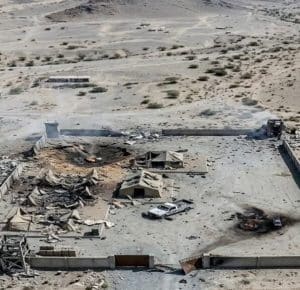
In contrast, Saudi Arabia and its allied forces have failed, during this new round of conflict, to achieve any comparable success in penetrating Ansarallah’s command structure or disrupting the logistical support for the movement’s various fronts. Unlike earlier phases of the war—when assassination operations and strikes against Ansarallah’s military and security figures were a key component of the adversary’s strategy—there are no clear signs in this current round that this pattern is being repeated on a similar scale. Meanwhile, Ansarallah has managed to sustain its attacks against Saudi targets and Riyadh-aligned forces, striking their staging areas and logistical hubs across various locations.
Ceasefire and the Shift in the Security Balance
It appears that the period of de-escalation, combined with the experience of the “Al-Aqsa Flood” war, has prompted Ansarallah to place greater emphasis on safeguarding its internal structure and developing its security and intelligence capabilities. Throughout the years of conflict, the movement has faced a range of threats—including infiltration, assassination operations, airstrikes, and attempts to sever supply lines. Maintaining the cohesion of its command structure under such conditions has necessitated a continuous review of security mechanisms and an enhanced capacity to detect enemy movements.
Combining this capacity with missile and drone capabilities enables Ansarullah to exert military pressure on multiple levels simultaneously: targeting forces deployed on the front lines, striking command centers and ammunition stockpiles, disrupting supply lines, and threatening military targets deep within Saudi territory. This combination, alongside the ability to manage ground operations, stands out as one of the most significant features of this new phase of the war.
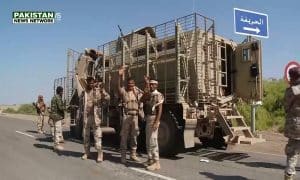
Under these circumstances, Saudi Arabia’s efforts to bridge its intelligence gaps—by expanding cooperation with the UAE or Israel—must also be viewed within the context of this same crisis. Increased external support, absent a resolution to structural deficiencies in intelligence, command, and logistics, cannot by itself prevent Ansarallah from striking again. The core issue is not merely a shortage of equipment or personnel; rather, it concerns the ability to maintain operational security, ensure coordination between units, and prevent military movements from becoming detectable targets for the enemy.
Accordingly, Ansarallah’s intelligence superiority must be considered one of the most significant factors shaping the new balance of power in the Yemen war. Internal concerns regarding intelligence breaches, strikes on gatherings and ammunition depots in Al-Wadi’ah, disruptions to logistical chains and precise knowledge of the bases from which Saudi fighter jets launch—all collectively point to a security gap within the Saudi-led camp. Conversely, Ansarallah has successfully leveraged this intelligence oversight to support its missile, drone, and ground operations. Consequently, Saudi Arabia’s “Achilles’ heel” in this new phase of the conflict lies not merely on the battlefield, but in the coalition’s inability to safeguard intelligence, maintain command cohesion, and ensure the security of its own supply lines.