

PNN – The Jizan operation should be viewed as part of Sana’a’s broader effort to redefine the rules of engagement with Saudi Arabia.
According to the report of Pakistan News Network; Yahya Saree, the spokesman for the Yemeni armed forces, announced in a brief message on his Telegram channel on Sunday that Yemeni forces had targeted Aramco refinery facilities in Jizan, Saudi Arabia, in response to violations of the country’s airspace in the Saada and Hajjah provinces. Saudi officials stated that the attack resulted in no casualties and that the ensuing fire was quickly brought under control. International media also reported that the attack on the Aramco facilities in Jizan caused a fire but resulted in no human casualties.
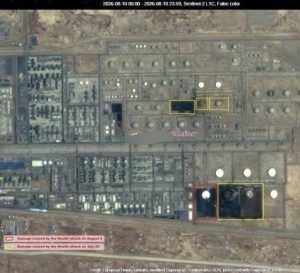
However, the significance of this operation should not be measured solely by the extent of the direct damage inflicted. In reality, the core issue in such attacks is not the level of destruction wrought upon a specific target, but rather the message conveyed to the adversary. Sana’a is seeking to establish a new rule of engagement with Saudi Arabia—a rule dictating that the use of air power against Yemen will no longer be a low-cost endeavor for Riyadh, and that any military pressure could be met with a response striking deep within Saudi territory.
This approach indicates that Ansarullah is shifting from a reactive posture toward a purposeful policy aimed at altering the adversary’s calculations. In previous years, a significant portion of Saudi Arabia’s military effort focused on leveraging air power to exert pressure on areas controlled by Sana’a. However, the protracted nature of the conflict demonstrated that while this air superiority inflicted extensive damage on Yemen’s infrastructure, it failed—on its own—to yield the political and military outcomes Riyadh sought. Conversely, Sana’a has sought to raise the cost of sustaining this situation for Saudi Arabia by utilizing its missile and drone capabilities.
The eight-year war between Saudi Arabia and Yemen revealed several key realities for both sides. First, despite possessing extensive equipment and foreign backing, the Saudi military and Riyadh-aligned forces are unable to fundamentally alter the battlefield equation through ground operations. Various attempts to advance into Sana’a-controlled territories or shift the dynamics on key fronts ultimately failed to yield a decisive victory.
Conversely, the armed forces in Sana’a also faced a significant constraint. Saudi air superiority made it difficult for them to conduct large-scale operations across the open, desert terrains of eastern and southern Yemen. Consequently, the conflict gradually shifted toward a pattern in which each side sought to offset its weaknesses by employing alternative means: Saudi Arabia relied on air power and foreign support to maintain pressure, while Sana’a sought to strike the adversary’s strategic depth by developing its missile and drone capabilities.
Under these circumstances, targeting Saudi Arabia’s critical infrastructure is not merely a military move for Ansarullah; it is part of a strategic calculation. The logic behind this action is that if it is impossible to completely prevent Saudi airstrikes, conditions must be created wherein continuing such attacks entails serious costs for the adversary. In other words, Sana’a seeks to drive a wedge between Saudi Arabia’s military capabilities and its freedom of action; Riyadh may still possess air power, but utilizing that capacity will no longer be free from concerns regarding potential consequences.
Past attacks by Ansarullah on Aramco facilities can also be analyzed within this context. Over the years, the group has repeatedly stated that it targeted sites inside Saudi Arabia in retaliation for attacks by the Saudi-led coalition. Some of these strikes—including the attack on Aramco’s oil facilities—drew significant international attention and demonstrated that Saudi Arabia’s energy infrastructure is vulnerable to asymmetric capabilities.
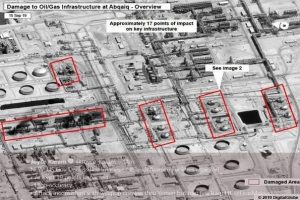
The recent operation in Jizan follows this same trajectory. Selecting a target linked to the energy sector—regardless of the extent of the damage inflicted—conveys a clear message: for Sana’a, the war is not confined to Yemeni territory, and any escalation of military pressure could have repercussions for Saudi Arabia’s critical facilities. This takes on particular significance as Saudi forces and Riyadh’s mercenaries prepare for a new round of hostilities.
At this stage, Sana’a’s efforts are aimed less at achieving an immediate battlefield victory and more at shaping the adversary’s decision-making environment. In asymmetric warfare, the weaker party typically avoids competing in arenas where the opponent holds absolute superiority; instead, it seeks to establish a new balance by shifting the conflict to domains where the adversary is vulnerable. Ansarullah has pursued this very strategy in recent years, leveraging its missile and drone capabilities to influence Saudi Arabia’s security calculations.
From this perspective, the attack on Jizan should be viewed as an attempt to establish a new equation—one in which violations of Yemeni airspace or intensified military pressure on Sana’a do not go unanswered, and Saudi Arabia is compelled to consider the potential costs when deciding on future actions.

Of course, it is clear that creating such conditions requires persistence and the ability to sustain this momentum on the battlefield. A limited operation cannot, on its own, alter the rules of a protracted war; however, it can form part of a broader process—one aimed at diminishing the impact of Saudi Arabia’s military superiority by increasing the vulnerability of the country’s critical sites.
For this reason, the significance of Sana’a’s recent move is evident more at the strategic level than at the tactical one. While Saudi Arabia had previously sought to shift the costs of the war into Yemen by leveraging its air superiority, Ansarullah is attempting to alter this dynamic and demonstrate that the ongoing conflict can also exact a price from the opposing side.
Ultimately, the Jizan operation should be viewed as part of Sana’a’s broader effort to redefine the rules of engagement with Saudi Arabia. The primary objective of this move is not merely to respond to a specific attack, but to constrain Riyadh’s use of military assets and establish a new balance on the battlefield—one in which Saudi air power no longer guarantees total immunity from the consequences of the war.