
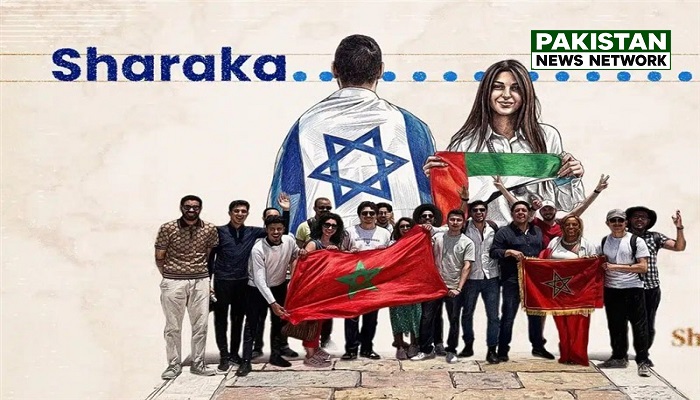
PNN – “Sharaka” should be viewed as part of Israel’s broader effort to advance the normalization project with Arab nations in the region.
According to the report of Pakistan News Network; the normalization of Israel’s relations with certain Arab states—following the Abraham Accords—was not limited merely to the establishment of diplomatic and economic ties between political entities. In the subsequent phase, efforts to shift public opinion and foster connections between Arab and Zionist societies became a key item on the agenda for both Tel Aviv and various Arab capitals.
In this context, the organization “Sharaka” is one of the entities established with this very objective; it seeks to present a different image of Israel within the region through the exchange of delegations, media activities, academic ties, and the engagement of Arab public figures. An examination of the backgrounds of the organization’s leadership—as well as the network of connections formed around it—suggests that Sharaka’s activities cannot be assessed merely within the framework of a cultural or dialogue-oriented initiative.
With the signing of the Abraham Accords in 2020 and the establishment of formal relations between the Zionist regime and several Arab states, a new phase began in Tel Aviv’s efforts to expand its influence in the region. However, the establishment of political ties between regimes did not necessarily translate into social acceptance of Israel within these Arab countries. In fact, given that a significant portion of public opinion in these nations remains opposed to Israel’s policies—particularly regarding Palestine—the normalization of relations at the governmental level has faced a serious obstacle.
Under such circumstances, the activities of organizations capable of fostering connections between elites, social activists, academics, and citizens from Arab countries and Israel take on greater significance. The organization “Sharaka” should be examined within this context; while it states its official mission as establishing links between the inhabitants of occupied Palestine and Arab countries, its activities, the composition of its leadership, and its network of connections suggest a scope that extends well beyond that of a typical cultural organization.

What is Sharaka, and what is its mission?
A few months after the signing of the Abraham Accords, on December 15, 2020, an organization named “Sharaka” was established in the occupied territories. Describing itself as a non-governmental, non-profit entity, Sharaka defines its primary mission as expanding relations between Israelis and Arab societies—moving beyond the level of official state-to-state ties toward grassroots, cultural, and social interaction. Amit Deri is one of the organization’s founders and its president, while Dan Feferman is also considered a key figure within the group.

The initial initiatives under the “Sharaka” framework began with the dispatch of delegations from Arab countries to the occupied territories. In one such instance, an 11-member delegation from the United Arab Emirates and Bahrain traveled to occupied Palestine in December 2020; in addition to meeting with officials of the regime, they visited sites including the occupied Golan Heights, the Knesset, and the Holocaust Museum. These initiatives subsequently expanded to include other nations—such as Morocco—as well as activists from Syria, Iraq, Lebanon, Turkey, Pakistan, and Algeria.
Sharaka has officially defined three main pillars for its activities. First, Holocaust education and combating antisemitism through workshops, educational sessions, and trips to occupied Palestine and Poland, in collaboration with organizations such as the Conference on Jewish Material Claims against Germany (Claims Conference).
Second, the dispatch of educational delegations and visits to various countries, aimed at fostering mutual understanding and building connections between citizens of Arab nations and Israelis.

Third, the organization engages in media and public outreach in the West by dispatching Arab figures from the region to universities, social circles, and political and decision-making centers in the United States and Europe. The objective is to present the experience of engaging with Israel and to counter what the organization terms anti-Semitism and the dissemination of misinformation. Consequently, Sharaka’s activities are not confined solely to Arab countries; a significant portion of its programs is carried out in the United States and Europe. For instance, members of the organization’s delegations have participated in Holocaust commemoration events in Poland and have held meetings at universities in the United States.
Sharaka: A Cover for the Involvement of Arab Figures Supporting Normalization
One of Sharaka’s key tactics is the use of Arab and Muslim figures to cultivate a positive image of Israel. Even the choice of an Arabic name for the organization can be viewed as part of an effort to foster a stronger connection and sense of identification among Arabic-speaking audiences.
In this model, Arab individuals who support the normalization of relations participate in activities such as visiting delegations, academic forums, media interviews, and international programs, sharing their experiences of engaging with Israel within their own countries or in Western circles. According to the architects of this initiative, the involvement of Arab citizens in such activities can facilitate the acceptance of Israel among regional and international audiences.
The significance of this issue becomes even greater when one considers that opposition to Israel in many Arab societies is not merely a political stance held by governments; rather, it is deeply intertwined with the Palestinian cause and the historical developments of the region. Consequently, by utilizing Arab figures to advocate for normalization, Tel Aviv can—when facing its critics—cite the experiences and positions of individuals from these very societies, rather than having to defend its own policies directly. In other words, the implicit message this approach conveys to Israel’s critics in the West is: if some Arabs and Muslims have established relations with Israel, why do others continue to oppose it?
The Links of Sharaka’s Directors to Israel’s Military and Intelligence Structures
One notable aspect of Sharaka concerns the backgrounds of some of its founders and directors. An examination of these backgrounds reveals that several key figures within the organization served in Israel’s military and intelligence structures prior to engaging in social and diplomatic activities—a fact that raises questions regarding the nature and function of this entity.
For instance, Amit Deri, the head of Sharaka, has a background in the Israeli military and previously managed a pre-military preparatory academy. Dan Feferman, one of the organization’s co-founders, is a former Israeli military intelligence officer who has also worked in the field of security analysis. According to a report by NoonPost, Noam Merov—Sharaka’s former executive director—also served for over seven years in Unit 8200, an Israeli military intelligence unit. This unit is considered one of Israel’s most significant intelligence and signals intelligence (SIGINT) structures.
In addition to these individuals, other members of this group also have backgrounds in the Israeli military’s public diplomacy, media, and communications sectors. This composition indicates that Sharaka draws upon the expertise of individuals well-versed in Israel’s military, intelligence, and propaganda mechanisms.
Furthermore, Sharaka’s leadership has sought to expand its sphere of influence into Arab countries and the international arena by engaging with pro-Israel movements, operating within the Arab community inside the occupied territories, and collaborating with academic and media institutions.
Sharaka’s Role Following Operation Al-Aqsa Flood
Developments following Operation Al-Aqsa Flood and the atrocities committed by the Israeli military during the war in Gaza have made it increasingly difficult for Sharaka to project a positive image of the Israeli regime. The widespread circulation of images depicting destruction, the killing of civilians, and the humanitarian crisis in Gaza has directly contradicted the organization’s objective of portraying Israel as a party committed to reconciliation and coexistence within the region.
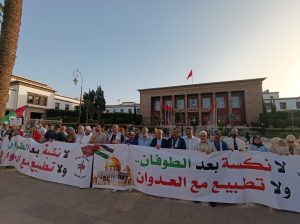
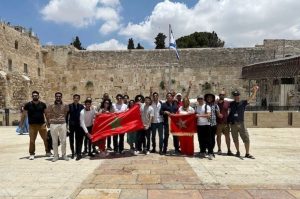
One notable instance is the visit of 23 Moroccan citizens to the occupied territories in September 2024—a delegation described as the first of its kind since October 7, which subsequently drew criticism and protests in both Morocco and Algeria.
Dan Feferman, an executive at Sharaka, has criticized the performance of Arab media outlets in the wake of these attacks, arguing that they fail to give sufficient attention to the Israeli narrative. He contends that state-run media in Arab countries should provide more coverage of news concerning Israel, offer a platform to Israeli guests, and refrain from disseminating information that he characterizes as extremist or misleading. Feferman also pointed to the social pressures faced by individuals who participate in Sharaka programs; upon returning to their home countries, these participants often refrain from sharing their experiences due to public criticism and backlash.
These statements, in fact, reveal another side of Sharaka’s activities. Although the organization seeks to extend normalization to the broader public through elite and media networks, negative reactions in certain Arab countries demonstrate that establishing connections among a group of activists and elites does not necessarily translate into a shift in public perception toward Israel.