
World
The 12-article text of the final agreement between Türkiye and the PKK
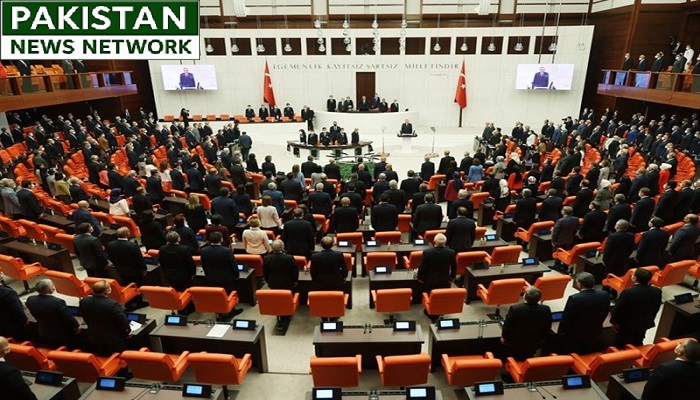
PNN – Turkish political parties are reviewing a 12-article text titled “Draft Law on Strengthening National Solidarity and Social Integration.”
According to the report of Pakistan News Network; the full text of the bill—submitted to parliament by Turkey’s ruling party—was finally released today after a long wait; it outlines the fundamental principles of the final agreement aimed at completing the disarmament of the disbanded PKK and facilitating the return of its members to the country.
This 12-article regulation, titled “Draft Law on Strengthening National Solidarity and Social Integration,” is scheduled—under the joint legislative agenda—to be deliberated by the relevant committee on Friday and by Parliament on Sunday, with the aim of enacting it into law. The draft covers every stage of the process, ranging from the formal termination of the armed structure and the suspension of investigations and penalties to the lifting of civil disabilities and the registration of surrendered weapons.
The adoption of this regulation alone will not be sufficient to benefit from its provisions. Implementation of the law is contingent upon the government determining and confirming that the PKK/KCK and all affiliated entities have effectively ceased to exist and have surrendered their weapons and ammunition. The body authorized to confirm this matter is Turkey’s National Security Council (MGK).
Numan Kurtulmuş, the Speaker of the Turkish Parliament, had previously announced that this law would not amount to a general amnesty. The legal consequences of this process would be tied to a three-stage mechanism:
Determining that the organizational structures of the PKK have effectively been dismantled
Confirming that PKK members have surrendered all weapons and ammunition
The ratification of these decisions by the National Security Council, followed by their publication in the Official Gazette
Which offenses will be covered by the law?
According to the draft text, this regulation covers the following offenses, provided they are related to the PKK and KCK:
Establishing or managing the organization, membership in the organization, knowingly and voluntarily assisting the organization without being part of its hierarchical structure, and participating in organizational propaganda.
Offenses committed within the scope of the organization’s activities, as well as offenses committed for the benefit of the PKK and KCK that fall under Law No. 6415 on the Prevention of the Financing of Terrorism, will also be included in this regulation.
For individuals subject to this law, not only ongoing investigations and trials but also final convictions will be taken into account.
However, in each case, the judicial authority conducting the investigation or trial will decide whether the individual is eligible to benefit from this law. This proposal explicitly excludes intentional homicide committed within the context of organizational activity from the scope of these provisions.
Furthermore, investigations and prosecutions regarding crimes committed prior to June 1, 2005 that carry a penalty of life imprisonment or aggravated life imprisonment will not fall under the scope of this law. If this draft is enacted in its current form, individuals responsible for murder committed within the context of organized crime activities will not be eligible to benefit from it.
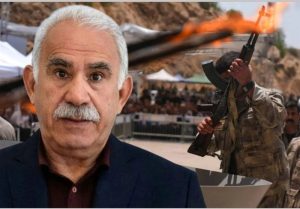
Öcalan Will Not Benefit from This Law
The exclusion of premeditated murder—as well as crimes committed prior to June 1, 2005, that carry a sentence of life imprisonment or aggravated life imprisonment—prevents Abdullah Öcalan, the leader of the PKK, from benefiting from this law.
This regulation contains no specific provision that would directly alter Öcalan’s sentence or prison conditions. Furthermore, the concept of the “right to hope” for a change in life circumstances has not been included in the 12-article draft.
Those wishing to benefit from this law may submit a written request to their local prosecutor’s office. If an investigation or prosecution is underway against an individual, the prosecutor’s office or the court handling the case will determine whether the matter falls within the scope of the law.
In the event of a final conviction, the assessment and deferral procedures will be carried out by judges responsible for the execution of sentences. The written request must be submitted within six months of the date the National Security Council’s decision—regarding the dissolution of the PKK, KCK, and associated structures and the complete surrender of their weapons—is published in the Official Gazette.
This regulation, which envisages the completion of the disarmament process and separation from the organizational structure within a specified timeframe, will be a temporary measure, not a permanent one.
Deferral of Prosecution
Under this draft, the deferral period for investigations and prosecutions is determined based on the maximum penalty prescribed by law for the offense. Investigations and prosecutions concerning offenses carrying a maximum penalty of 15 years’ imprisonment or less are deferred for a period of five years.
For offenses with a maximum penalty exceeding 15 years’ imprisonment, as well as those punishable by life imprisonment or aggravated life imprisonment, the deferral period is ten years. Objections or appeals against the deferral decision may be filed within two weeks.
If the five- or ten-year deferral period during the investigation stage is completed—in accordance with the conditions stipulated by law and without the commission of a new offense—a ruling is issued stating that there are no grounds for prosecution.
In cases involving the prosecution stage, a ruling to dismiss the case is issued. This provision implies that the case is not immediately dismissed upon the decision to defer; rather, the individual remains under supervision for the specified period. Should the conditions of the deferral be violated or the statutory requirements cease to be met, the investigation or trial may resume from the point where it was suspended.
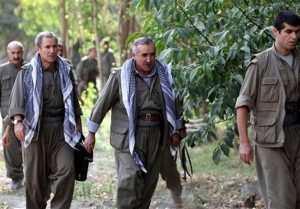
The law also provides for two different deferral periods for final convictions. For individuals with a total sentence of 15 years or less, the execution of the sentence is deferred for five years.
For those with a total prison sentence exceeding 15 years, or those sentenced to life imprisonment or aggravated life imprisonment, the execution of the sentence is deferred for ten years, provided the offense does not fall outside the scope of the law. This decision is made by the sentence execution judge and is subject to appeal.
Deprivation of rights may be gradually lifted.
This regulation covers not only the deferral of investigations and judgments but also the lifting of the resulting deprivation of rights. Decisions regarding such deferrals will be reviewed by the board at specific intervals.
Where appropriate, the board may request the removal of all consequences—such as the deprivation of rights—arising from the investigation, prosecution, or conviction. Depending on the status of the case, this request is submitted to the court of first instance, the court handling the case, or the court responsible for the execution of judgments. However, a specified period of time must elapse before such a request for the lifting of the deprivation of rights can be filed.
Evaluation Board
An evaluation and coordination board, chaired by the Vice President, will be established to oversee the implementation of the law and ensure coordination among institutions.
The following individuals shall be members of the board:
Minister of Justice,
Minister of Foreign Affairs,
Minister of the Interior,
Minister of National Defense,
Secretary-General of the Presidency,
Head of the National Intelligence Organization (MİT),
Secretary-General of the National Security Council
The board will oversee the implementation of the law, periodically evaluate deferral processes, and, where necessary, request judicial authorities to lift the deprivation of rights.
Furthermore, a 17-member oversight commission will be established within the parliament. This commission will monitor activities carried out under the law, as well as disarmament and application processes.
The Speaker of the Parliament will determine the composition of the commission. The joint draft stipulates that this commission will not be subject to the provisions of the parliament’s internal rules of procedure.
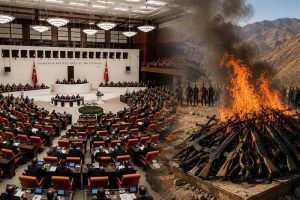
Surrender of Weapons
A separate directive will regulate the procedures for registering individuals who surrender their weapons, as well as the surrendered weapons and ammunition themselves. This directive will be jointly prepared by the Ministry of National Defense and the Ministry of Interior, taking into account the views of security agencies.
The implementing regulations will specify how the registration system records and maintains data regarding individuals’ identities, organizational affiliations, the nature of the surrendered weapons and ammunition, and the date of surrender. These records will be used to assess whether the individual has severed ties with the organizational structure and whether they meet the criteria to benefit from the law.
There is no general amnesty.
This proposal introduces a system of conditional deferral rather than a direct, unconditional general amnesty. Investigations, legal proceedings, and final judgments are not immediately dismissed; instead, case files are retained for a period of five or ten years, depending on the severity of the offense or the penalty.
Compliance with statutory conditions is mandatory during this period. Upon the successful completion of this term, a decision is issued to halt further prosecution, the case is closed, and the final judgment is deemed to have been executed.
In this regard, the proposal envisages a controlled transition system—in which compliance with conditions is monitored for a specified period—rather than a model that immediately eliminates criminal liability.