
PNN – In an analysis, Al Jazeera stated that the recent war demonstrated the need for Arab nations to uphold the principle of good-neighborly relations with Iran.
According to the report of Pakistan News Network; following the regional war-related developments of the past six months—and the losses incurred by Persian Gulf states due to that conflict, specifically stemming from their hosting of U.S. bases and cooperation with the United States—a critical question has come to dominate discourse in these countries: how should Arab nations in the region protect themselves now that the illusion of a U.S. protective umbrella has been shattered?
In an analysis titled Persian Gulf States and Iran: A New Test for Good-Neighborly Relations, the website of Qatar’s Al Jazeera network emphasized the need for these states to re-evaluate their policies toward Iran. It noted that the question currently facing Persian Gulf nations is not merely how to react to Iran, but rather how to formulate a strategy to manage the coming phase—particularly in light of recent developments demonstrating that relations and alliances with the United States do not guarantee the protection of these countries’ interests.
Amidst these developments, it is worth noting that for many years, the policy of Persian Gulf states has focused—to a significant extent—on keeping communication channels with Tehran open, maintaining economic and trade ties, and prioritizing dialogue, mediation, and de-escalation over confrontation.
In this context, certain Persian Gulf capitals have played a significant role in relaying messages between Iran and international powers, driven by the belief that geography necessitates coexistence and that shared interests can pave the way for a degree of stability.
Persian Gulf states must re-evaluate their policies toward Iran in the wake of the regional conflict.
However, recent developments have exposed the limitations of this approach. During the conflict initiated by the US and Israel against Iran over six months ago, Iranian missiles and drones penetrated deep into Persian Gulf territories, striking targets, facilities, and maritime routes.
These developments demonstrated the ineffectiveness of previous policies and proved that Gulf states needed to consider tools extending beyond traditional defensive measures—such as gaining a deeper understanding of Iran’s decision-making centers and establishing communication channels with influential figures and circles within them. This affords Gulf diplomacy greater room for maneuver and increased leverage.
In June 2025, the U.S. Al-Udeid Air Base in Qatar was targeted by Tehran for the first time during the 12-day war between Israel and Iran; subsequently, during the major conflict that erupted in February 2026, Iranian drones and missiles repeatedly targeted U.S. bases across Arab countries in the region.
These events conveyed significant messages to the Persian Gulf states, raising the question of whether merely maintaining economic ties with a country like Iran—which operates based on distinct and firm calculations regarding its national and regional security—is sufficient. It also prompted the question of whether the volume of trade or political relations can serve as a security guarantee for Arab nations, particularly given that these countries host military bases belonging to the United States, an adversary of Iran.
Experience demonstrates that while economic relations foster shared interests, they do not eliminate strategic differences; nor do they prevent a state from resorting to force against a neighbor or trading partner when its military and security calculations shift.
Why do Persian Gulf states need good-neighborly relations with Iran?
A significant paradox facing the Persian Gulf states is that they are not in a position to geographically or economically decouple themselves from Iran.
The Persian Gulf region is a single entity; maritime routes are shared, and energy security, trade, shipping, and oil infrastructure are deeply interconnected. Consequently, complete separation from Iran is neither a realistic strategy nor a possibility. What is needed, therefore, is a “third space”—an approach that simultaneously manages relations based on both interests and power dynamics.
While discussing alternatives regarding oil, energy, pipelines, and transport routes is important, it offers no quick fixes, as these measures require time, investment, and security safeguards.
Furthermore, the challenge remains that even with such secure alternatives in place; Iran might still possess the capability to target these new facilities and routes. Consequently, the paramount issue is not merely keeping the Strait of Hormuz open, but ensuring the security of energy routes—wherever they may lead.
Another question arises: might Gulf States strengthen their economic and political ties with Iran to a degree that alarms Washington? Or should they maintain their strategic cooperation with the United States as a fundamental pillar of their security?
The realistic answer to this question is that the Persian Gulf states are not obliged to choose between Washington and Tehran, as their interests extend far beyond this binary choice.
The experiences in Iraq and Syria offer important lessons in this regard: possessing regional influence does not necessarily equate to the ability to control every event within the environments where that influence extends.
Arab nations need to expand the scope for dialogue and diplomacy with Iran.
Therefore, the Persian Gulf states need to consider tools that go beyond traditional defensive measures. These include developing a deeper understanding of Iran’s decision-making centers and establishing channels of communication with influential figures and circles within the country. This would afford Gulf diplomacy greater room for maneuver and influence.
Indeed, a calculated political approach—rather than a military one—could offer the Gulf States a distinct advantage in managing their relations with Iran, shifting the focus of the conflict from the protection of borders and facilities to influencing the political landscape.
In this regard, Oman’s experience offers valuable insights. Muscat has carved out a distinctive path in its relations with Iran, keeping communication channels open even during the most sensitive periods and serving—at various times—as a venue for dialogue and mediation between Iran and the United States.
This approach requires the Gulf States to possess a deep and nuanced understanding of Iran’s decision-making processes and the structure of the institutions that shape them, rather than relying solely on engagement with the official political establishment. After all, a multitude of political, security, and military entities—including the Islamic Revolutionary Guard Corps (IRGC), government bodies, and decision-making centers linked to the Leadership—play a role in Iran.
This also underscores the importance of establishing multiple channels for dialogue. Effective diplomacy should not rely on a single channel, individual, or government. It requires a broad understanding of the institutions, centers of influence, and currents that shape decision-making in Iran.
This does not imply interfering in Iran’s internal affairs or cultivating proxy groups within the country; rather, it entails possessing the knowledge, communication capabilities, and influence appropriate to the nature of the country with which we are dealing.
Persian Gulf states need to become independent in order to simultaneously manage their relations with Iran and the United States.
The problem arises when a relationship with one party becomes a source of tension with the other. Therefore, there is an urgent need for a more independent policy in the Persian Gulf—one that defines the region’s interests while maintaining existing alliances and avoiding a slide into subservience.
Here, we must re-examine the meaning of independence for the Persian Gulf. Independence does not imply withdrawing from alliances, nor does it mean maintaining an equidistant stance from all powers.
This means that Gulf States must possess the ability to define their own interests, enter into alliances with a clear understanding of their objectives, and manage relations with both adversaries and allies based on their own calculations; the time has come to shift from a policy of reassurance to one of balanced deterrence.
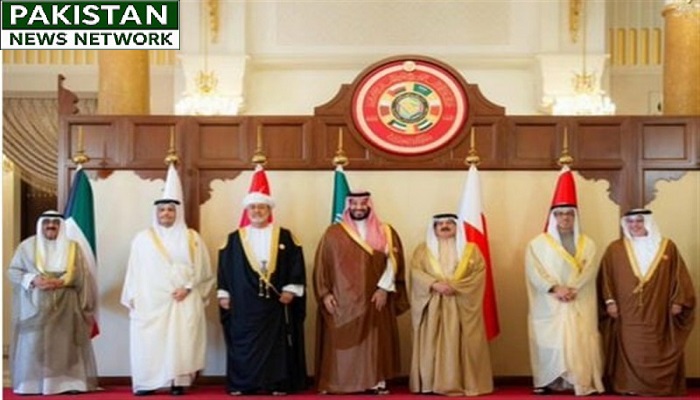
It is also important for the Gulf Cooperation Council (GCC) states to move away from managing relations with Iran on a predominantly bilateral basis and instead develop a shared vision for the Persian Gulf, while allowing each country to maintain its own independent ties with Tehran.
A minimum level of coordination is required regarding the definition of red lines, the protection of airspace and territorial waters, the security of critical infrastructure, the safeguarding of trade routes, and the treatment of any potential threat as a threat to the security of the entire region.
Recent developments have demonstrated the practical importance of this coordination. When a Persian Gulf state is attacked, the repercussions extend far beyond its political borders.