
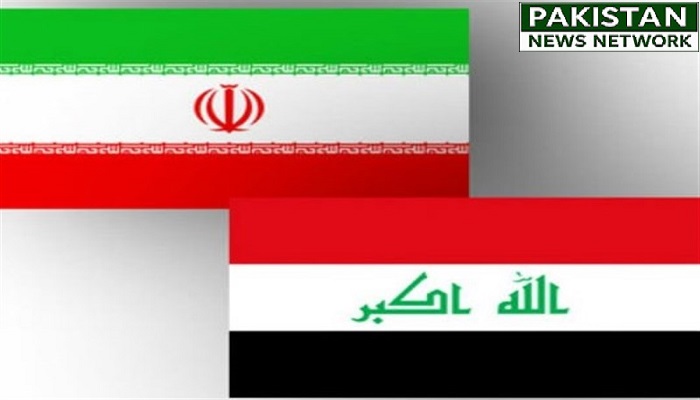
PNN – An official from Iraq’s Popular Mobilization Forces (PMF) stated: Had it not been for the Islamic Republic of Iran, there would be no security in Iraq.
According to the report of Pakistan News Network; Muhannad al-Oqabi, the Director of Media for the PMF, discussed the status of armed forces and resistance groups in the country, noting that Iraq has endured periods of occupation by US forces, Al-Qaeda, and ISIS, and that the prevailing conditions at various times led to the emergence of armed groups.
He added: We usually examine matters through a scientific lens; however, at times, an armed group is viewed as a national asset and a resistance group.
The Formation Process of the Hashd al-Shaabi
The media director of the Hashd al-Shaabi Commission stated regarding the force’s formation: What brought the Hashd al-Shaabi into existence was the fatwa issued by the supreme religious authority, Ayatollah Sayyid Ali al-Sistani. Resistance groups formed the core and initial nucleus of the force.
He added: Prior to the issuance of the fatwa, resistance groups gathered at the home of Hajj Abu Mahdi al-Muhandis; the religious authority’s fatwa was issued following that meeting.
Al-Uqabi continued: After the fatwa was issued, volunteers stepped forward. Some of them had no prior experience handling weapons, yet they joined the Hashd al-Shaabi driven by a desire to participate.
He emphasized that the Hashd al-Shaabi was founded upon resistance groups, and most of those who served as commanders within the force had prior ties to such groups. Over time, the Hashd al-Shaabi evolved into a state institution that adheres to established orders and regulations.
Al-Uqabi stated that, in the interest of the country, it is essential to have laws, a clear organizational structure, and disciplined military forces operating under a single flag and unified command.
Faleh al-Fayyad’s Relationship with Resistance Groups
Regarding Faleh al-Fayyad, the head of the Popular Mobilization Forces (PMF) organization, he stated: Faleh al-Fayyad has long maintained close ties with resistance groups—even prior to the establishment of the PMF. He was the first to announce the name ‘Popular Mobilization Forces’ and assumed leadership of the organization.
The PMF and the Iraqi Government
The Director of Media for the PMF Commission emphasized: We are committed to upholding the government and the political process; this framework is of paramount importance to us. We are an integral part of the Iraqi landscape and will undertake any action that serves the country’s interests. We do not answer to specific individuals, personal preferences, or particular circumstances.
Referring to the composition of the PMF, he noted: The PMF brought together Yazidis, Christians, Kurds, Shiites, and Sunnis, uniting them within a single organization.
Reaction to Attacks on the Hashd
Regarding the recent attacks on Hashd al-Shaabi (Popular Mobilization Forces) bases, he stated that targeting these facilities was absurd; instead of addressing the perpetrator and the crime itself, the discourse shifted to whether or not the Hashd had prior knowledge of the matter.
The Media Director of the Hashd al-Shaabi Commission emphasized: We have always defined ourselves as a supporting force for the army and the police. We have achieved successes—defeating ISIS and offering many martyrs, including a significant number of our commanders.
Stance on the US and Iran’s Role
The media director of the Popular Mobilization Forces (PMF) continued: We are neither a US-subordinate state nor a province under US control, and we do not carry out the US’s agenda.
He added that Iraq can play a role in regional understandings and the establishment of stability.
Al-Oqabi also stated: We are constantly monitoring the situation and maintaining a state of readiness; this is our duty, and we operate within the framework of the state and the government.
In conclusion, referring to Iran’s role in Iraq’s security developments, he asserted: Had it not been for the Islamic Republic of Iran, there would be no security in Iraq.