
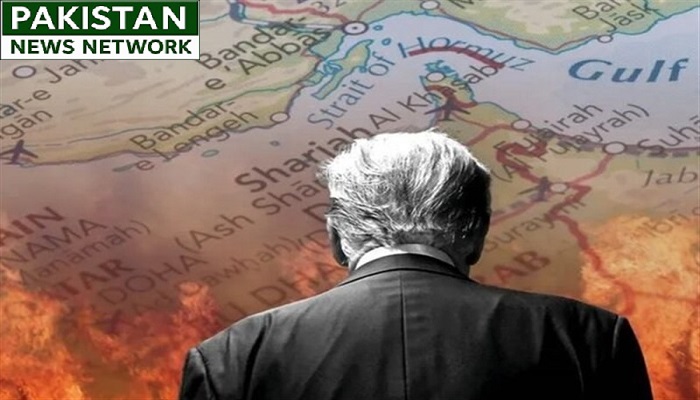
PNN – The Atlantic reported on Thursday that Iran has called Donald Trump’s bluff.
According to the report of Pakistan News Network; the Atlantic writes that in recent months, Iran has repeatedly disregarded Donald Trump’s threats; by discerning the gap between the U.S. President’s threats and his actual capacity or willingness to carry them out, Iran has seized the initiative in the conflict. Key points from the report include the following:
1- Tehran Does Not Take the Threats Seriously
The Atlantic notes that Trump has repeatedly threatened to destroy Iran and spoken of victory, yet none of these threats have yielded the outcome he expected. By ignoring Trump’s threats, Iran has gradually demonstrated that there is a gap between his rhetoric and actual action by Washington.
2- Trump Trapped by His Own Threats
According to The Atlantic, Trump faces a difficult dilemma: either back down from threats of escalating the conflict—thereby allowing Iran to emerge from the confrontation stronger—or enter a more dangerous phase of war to prove the credibility of his threats.
3- Trump’s embarrassment has become apparent
The Atlantic notes that Trump—who typically possessed a remarkable ability to weather scandals and political blunders—is now displaying signs of embarrassment and an emotional reaction. The author argues that the setbacks regarding the conflict with Iran, coupled with other recent failures, have undermined Trump’s habitual ability to brush off mistakes and move past them.
4- U.S. allies held back
According to The Atlantic, Trump was on the verge of ordering major new strikes against Iran, but consultations with regional allies—including Saudi Arabia—and concerns over Iran’s potential response led him to back down. This episode demonstrated that even when Trump intends to escalate a conflict, the potential costs of an Iranian response can compel both him and his allies to retreat.
5- Hormuz has become a symbol of the impasse.
The Atlantic reports that Trump recently claimed the Strait of Hormuz would soon reopen and that negotiations had made progress; however, Tehran rejected this claim, and shortly thereafter, another ship was attacked in the Strait. According to the report, this incident clearly illustrates the gap between Trump’s narrative and the reality of the conflict on the ground.
6- Conclusion
The Atlantic presents a picture of a president whose threats no longer carry the same weight with Tehran as they once did. By dismissing Trump’s claims, ignoring his threats, and maintaining pressure in the Strait of Hormuz, Iran has demonstrated that it appears to have called Washington’s bluff. The result is a situation where, to preserve the credibility of his threats, Trump must either raise the stakes of potential conflict or find a way to avoid war by accepting a political retreat.