
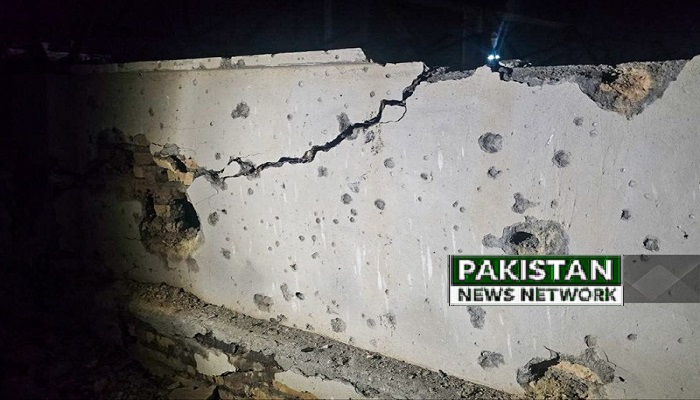
PNN – In a repeat of their history of savagery, American terrorists have once again turned a wedding ceremony—this time in Sirik—into a scene of bloodshed and carnage.
According to the report of Pakistan News Network; war is not confined to the battlefield; sometimes, the sound of an explosion cuts short the music of a wedding. A family gathered to embark on a new life is plunged into mourning in a matter of seconds, and the children, women, and guests at a joyous celebration fall victim to an attack that—in principle—is not supposed to target civilians.
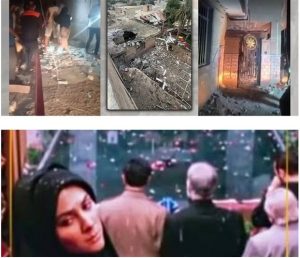
The recent U.S. attack on a home in Kohestak—located in Sirik County, Hormozgan Province—has once again evoked this grim image. During the strike, which occurred while a wedding ceremony was underway, five people—including a child—were killed, and more than 50 others were wounded.
However, the significance of this incident extends beyond the casualty figures; what makes it even more harrowing is the nature of the location and the timing: a private residence, a wedding celebration, and the presence of families who had gathered to rejoice.
Of course, this is not the first time such a scenario has appeared in the record of U.S. military operations in the region.
Numerous incidents involving attacks by the U.S. military—or forces under its command—on wedding ceremonies or associated convoys have been reported in Afghanistan, Iraq, and Yemen. While U.S. officials subsequently insisted that military targets or militants were among the casualties in some of these instances, human rights investigations and the accounts of survivors raised serious questions regarding the civilian status of the victims and challenged the American narrative.
In Afghanistan, a 2008 airstrike on a wedding ceremony in Nangarhar province killed at least 40 civilians and wounded 28 others; reports on the incident highlighted the presence of women and children among the casualties.
Similarly, in Iraq, a May 2004 attack by US occupying forces on the village of Al-Deeb—where a wedding was taking place—left at least 40 people dead. The US military’s account of the incident conflicted with the versions given by survivors and with visual evidence published in the media; the release of a video showing the ceremony prior to the attack intensified pressure for accountability regarding the operation.
However, perhaps one of the most well-documented examples concerns Yemen: in December 2013, a U.S. drone strike on a wedding convoy killed at least 12 people and wounded at least 15 others—including the bride. Following an investigation into the incident, Human Rights Watch called on the U.S. government to investigate the attack and release the findings.
These incidents raise a fundamental question: How is it possible for a gathering of families, women, and children to be repeatedly subjected to deadly attacks across multiple conflicts and over the course of several years?
In many of these instances, the U.S. response has relied on claims regarding intelligence, the suspected presence of armed group members, or errors in target identification; however, under international humanitarian law, the mere assertion of a military objective does not absolve the attacking forces of their responsibility toward civilians.
The principle of distinction between military objectives and civilians, along with the principles of proportionality and the obligation to take all feasible measures to prevent harm to civilians, constitute fundamental tenets of international humanitarian law in times of war; consequently, any attack resulting in a large number of civilian deaths or injuries requires an independent and transparent investigation—particularly when the target was a residential home or a family gathering.
In its review of airstrikes conducted by the U.S. and its allies in Afghanistan, Human Rights Watch has repeatedly criticized the inadequacy of investigations into civilian deaths, warning that a failure to thoroughly examine such incidents could lead to continued civilian casualties.
The human dimension of these incidents is perhaps more significant than any statistics; for families, a wedding symbolizes a new beginning, hope, and the continuation of life. A child present at such a ceremony is neither a combatant nor a decision-maker in a political conflict, and the bride and groom play no role in government decisions to initiate wars or conduct military operations.
In Yemen, Human Rights Watch reported that during a 2013 drone strike, shrapnel struck a bride in the face and shattered her wedding belongings; this image perhaps illustrates—more vividly than any statistic—how war can transform even the most private and deeply human moments of life into a memory of death and destruction.
The recurrence of such incidents also raises a more serious issue: the normalization of civilian deaths in modern warfare. When a botched attack occurs, the talk usually turns to “flawed intelligence,” “identification errors,” or “collateral damage”; yet for the victim’s family, these terms do nothing to alter the reality: the child who was killed remains a child; the wounded bride remains a human being whose wedding ceremony was transformed into a scene of horror; and the family that lost a loved one must continue to live with the aftermath of that event.
From this perspective, the repeated attacks on wedding ceremonies cannot be dismissed merely as a series of “isolated errors”; the persistence of such incidents in Afghanistan, Iraq, and Yemen—and now similar allegations regarding Iran—underscores the need for a deeper investigation, the punishment of those responsible for these crimes, and a review of targeting procedures and risk assessments concerning civilians.
Another troubling aspect is the gap between claims of upholding human rights and actual military conduct. The United States has consistently portrayed itself as a defender of the international order, human rights, and the laws of war; yet, the hollowness and falsity of this claim are exposed when civilians are killed in their homes, at weddings, or while traveling to family gatherings.
Human rights only hold meaning when they are accorded the same weight for victims of war as they are for victims in nations that are America’s rivals.
The recent U.S. strike in Kohestak, Sirik County, is not merely another human tragedy in the conflict between the United States and Iran; it also serves as a reminder of a pattern that has long been flagged regarding U.S. military operations in West Asia and Afghanistan: the disparity between a declared “military target” and the human being who ultimately pays the price for the operation.
Ultimately, the issue is not merely who was targeted; it is about who was killed. Behind every figure in the casualty list lies a family that was awaiting a loved one’s return, a child who should have lived and grown up, and a ceremony that was meant to mark the beginning of a life—not the end of many.
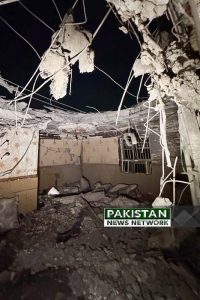
The recurrence of such scenes serves, more than anything else, as proof of the savagery of the terrorist US military and a test of the claims made by military powers regarding their adherence to human rights and the laws of war.