
PNN – Iran and Lebanon’s Hezbollah thwarted the new U.S. strategy of pursuing limited military approaches and implementing a policy of maximum economic pressure.
The Zionist regime’s current strategy in Lebanon is predicated on systematic destruction and repeated violations of the ceasefire agreement established in the country. From this perspective, Lebanon is witnessing a war characterized by diverse methods and tools, varying only in the ebb and flow of its strategic execution over time.
Meanwhile, although the United States prioritizes avoiding a full-scale conflict above all else, it pursues an approach centered on utilizing periodic military strikes to maintain pressure on Iran. The core U.S. strategy involves containing all-out war while leveraging economic sanctions to exert both military and economic pressure, thereby imposing a continuous cost on Tehran.
Obstacles and Considerations Regarding U.S. Strategy in the Region
U.S. strategists believe that the current regional situation is playing out to Iran’s advantage; they anticipate that Tehran will likely persist with this strategy of attrition, leveraging it to rebuild capabilities that were degraded during the war.
Conversely, the Trump team is compelled to adopt a clear strategy—in coordination with its primary strategic ally, the Zionist regime—aimed at driving up political and operational costs and forcing Iran to relinquish key leverage points, chief among them the Strait of Hormuz.
The key components of the U.S. strategy in the region include the following:
– Prioritizing the protection of U.S. forces and implementing measures to prevent drone and missile attacks.
– Emphasizing that Iran exercises no control over the Strait of Hormuz off the coast of Oman and insisting that freedom of navigation must resume as soon as possible within the framework of the existing maritime traffic separation scheme. Other priorities include bolstering the protection of allies along the alternative southern route off the Omani coast and expanding the scope of intelligence sharing and joint planning with Israel.
– Targeting the equipping of military hubs by imposing stringent secondary sanctions.
The U.S. pursued this policy while simultaneously targeting radars and missile platforms along the Iranian coast near the Strait of Hormuz; yet, despite these efforts, it failed to prevent Iranian attacks within the Strait or strikes against U.S. bases in the region. To counter this situation, the U.S. moved to evacuate its bases in the Persian Gulf and sought to relocate to remote, undisclosed sites; however, Iran thwarted this maneuver and successfully struck the U.S. forces—including Marines stationed at “Camp Titiin” in Jordan.
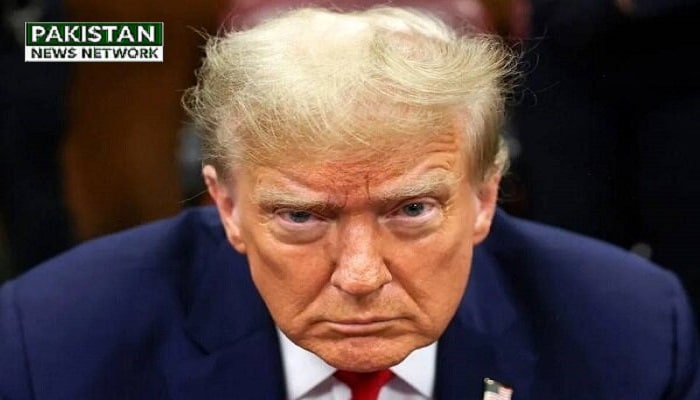
What Trump emphasizes in his statements is an attempt to sow discord among politicians, diplomats, and the Islamic Revolutionary Guard Corps (IRGC). The United States claims that Iranians lack a unified stance and are plagued by rifts and division. Through his lies, he has launched a psychological and propaganda war against the Iranian people. The U.S. objective in this strategy is to exert pressure on Iran—including through renewed attacks on civilians, such as the atrocity involving the killing of women and children at a wedding—to increase the cost of resistance for the Iranian system and its people, and to foment internal strife and division.
Lebanon is experiencing conditions similar to those in Iran.
An examination of the situation in Lebanon reveals a similar approach. On one hand, the Zionist regime faces the deterrent power of the Lebanese Resistance; on the other, it is acutely aware of Iran’s strength and its “True Promise” to intervene should red lines be crossed. Consequently, Tel Aviv is exploiting the atmosphere created by the Lebanese authorities—who are pursuing futile compromise negotiations—to drive a wedge between the Resistance and its surrounding community. By raising the cost of steadfastness through the destruction of villages and the continued displacement of the population, it seeks to foster discord and propagate the narrative that the Resistance and its weaponry are the root cause of this suffering and aggression.
In conclusion, Al-Ahed adds: Consequently, we are witnessing the same strategy of containing the war and intermittent acts of aggression—a strategy aimed at pressuring the people and the ranks of the Resistance. This approach is pursued alongside a continued blockade—targeting the Resistance’s service institutions and severing the link between the Resistance and its supporters—as well as an intensification of psychological warfare, rumors, and attempts to sow discord. Yet, much like Iran, the Resistance stands firm and holds many surprises in store for any potential future conflict. Supporters of the Resistance stand ready across all fronts, possessing the necessary awareness and insight for this path; they have rallied around their leaders, fully aware that this is a major existential battle that brooks no concessions to the enemy.