
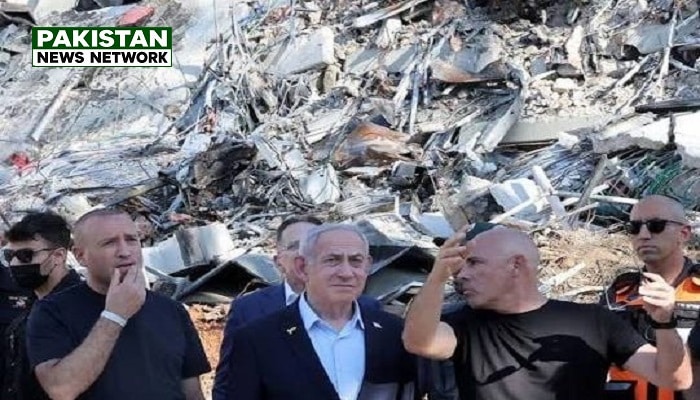
PNN – Netanyahu intends to pave the way for postponing the elections and remaining in power by stoking the flames of a new war.
According to the report of Pakistan News Network; with less than three weeks remaining until the Zionist regime’s parliamentary elections, the prospect of renewed conflict with Iran is once again dominating the regime’s political landscape. While polls suggest a likely defeat for the ruling coalition led by Likud Party leader Benjamin Netanyahu, he has spoken of the possibility of new attacks on the regime by Iran and its allies, and Eyal Zamir, the regime’s Deputy Chief of General Staff, has warned of the security consequences of a renewed war.
Meanwhile, former Israeli Prime Minister Ehud Barak has accused Netanyahu of creating conditions for war in order to postpone the elections. Given Netanyahu’s legal troubles and the risk of losing power, the question arises: could an escalation of military tensions become a tool to delay the elections and allow Netanyahu to remain in power?
The Zionist regime’s parliamentary elections are scheduled to be held on October 27. Netanyahu enters this race facing—after years in power—dissatisfaction among a segment of Zionist society, criticism regarding the security failure of October 7, and his own legal cases. Under these circumstances, any security-related development could influence the electoral climate and alter the political landscape.
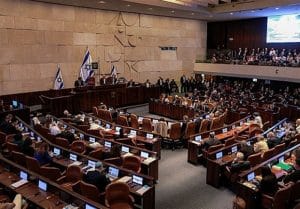
On October 2, speaking to Israel’s Channel 12, former Israeli Prime Minister Ehud Barak accused Netanyahu of laying the groundwork for a war that could postpone the upcoming Knesset elections. He added: Netanyahu is preparing the necessary infrastructure to enter a war that would lead to the postponement of the elections. Pointing to developments in Iran, the West Bank, and Gaza, Barak also warned that a single spark could escalate into a full-scale conflict in the days leading up to the election. He emphasized the need to oust Netanyahu from power in the October 27 election.
The increasing shadow of military confrontation with Iran over the Knesset elections
Barak’s remarks come amidst conflicting reports in recent days regarding a resurgence of tensions between Iran and the Zionist regime. According to a report published on October 8, Eyal Zamir, the Israeli military’s Deputy Chief of General Staff, warned senior US officials about the potential consequences of renewed hostilities. Zamir stated that if attacks resume in the coming weeks, an Iranian missile response could create conditions making it difficult to hold elections on schedule. These media speculations arise amidst the belief among Netanyahu’s opponents that he has repeatedly exploited security situations to bolster his own standing; they argue that he might now view an escalation of tensions as serving his political interests and his continued hold on power, potentially hoping that igniting another full-scale military conflict with Iran would secure his tenure as prime minister.
In addition to security-related pressures, Netanyahu faces a serious challenge from his opponents. His staunch critics are determined to oust him from the premiership at any cost in the upcoming Knesset elections. According to the latest polls released on October 11, the “Yashar” party, led by Gadi Eisenkot, holds the top spot with 23 seats in several surveys, while the Likud party, led by Netanyahu, has secured 21 seats in some of these same polls.
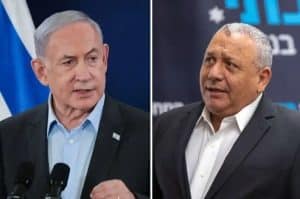
A Channel 12 poll similarly projects 54 seats for the bloc opposing Netanyahu and 49 seats for the ruling coalition; consequently, while Netanyahu’s defeat cannot yet be considered a certainty, it appears—at least on paper—that he is not well-positioned to remain in power as the Knesset elections approach. Even if Likud secures the highest number of seats, forming a government requires a coalition commanding at least 61 lawmakers, a factor that could boost the opposition’s chances of returning to power.
However, for Netanyahu, the elections represent more than just the continuation or end of his premiership. For years, he has faced legal proceedings involving charges of bribery, fraud, and breach of trust. Indictments were filed in 2019, and his trial began in 2020. While Netanyahu denies all allegations against him, a conviction would entail severe legal consequences. His trial hearings have repeatedly been postponed due to official engagements, security concerns, and developments related to the war. Nevertheless, the judicial proceedings regarding his cases remain ongoing; indeed, he appeared in court as recently as October 11, 2026, for the continuation of the process.
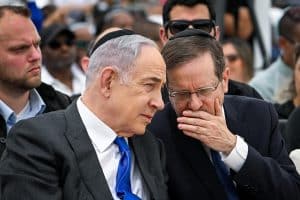
Netanyahu has also requested a pardon from Israeli President Isaac Herzog to bring this case to a close. Donald Trump had previously publicly called on Herzog to pardon Netanyahu. Notably, Netanyahu submitted the request without admitting to the charges—a move that carries significant legal and political sensitivity. Of course, requesting a pardon does not guarantee it will be granted, and the case remains a serious issue for Netanyahu.
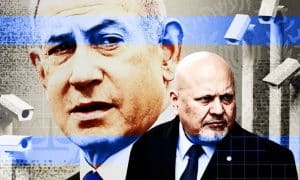
The legal pressure facing Netanyahu is not limited to domestic cases. On November 21, 2024, the International Criminal Court issued arrest warrants for him and Yoav Gallant, Israel’s then-Defense Minister. The court stated there were reasonable grounds to believe they bore criminal responsibility for war crimes—specifically the use of starvation as a method of warfare and intentional attacks against civilians—as well as certain crimes against humanity.
Under these circumstances, a loss of power could weaken Netanyahu’s political standing on the international stage and influence the proceedings of his legal cases. Consequently, his motivation to retain the premiership cannot be reduced merely to party-political rivalry.
Conclusion
Ahead of the October 27 elections, Netanyahu faces two major pressures: on one hand, political rivalry and the potential loss of power; on the other, domestic and international legal cases that continue to cast a shadow over his political future. Under these circumstances, an escalation in military tensions could alter Israel’s political landscape and even pave the way for discussions about postponing the elections.