
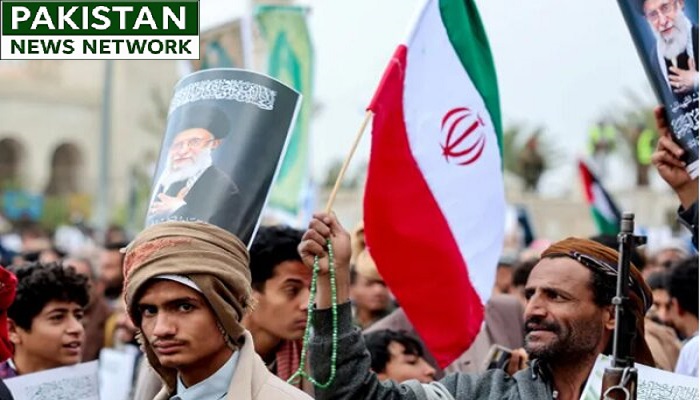
PNN – Foreign Affairs has acknowledged that, despite the military campaign waged by the US-Zionist axis, the Axis of Resistance remains intact and steadfast.
According to the report of Pakistan News Network; Foreign Affairs emphasized in a report that the Axis of Resistance has rapidly recovered, notwithstanding the regional developments of recent years.
Writing on this matter, Foreign Affairs noted that as the five-month conflict between the U.S. and Iran (characterized as a U.S.-Zionist aggression against Iran) unfolds; Tehran’s ability to continue dealing punitive blows to the U.S. and its allies has caught many strategists and analysts off guard. For months, the United States and Israel have intermittently targeted the country with airstrikes; yet, Iran and its regional allies have demonstrated remarkable resilience and tenacity: Hezbollah remains a serious threat despite Israel’s intense campaign in southern Lebanon, and the Yemenis have resumed their operations against commercial shipping in the Red Sea.
The publication added: In fact, the resilience of the Islamic Republic and its partners—despite years of apparent setbacks—reveals a fundamental flaw in the thinking that led to this conflict. When the United States and Israel launched their campaign against Iran in late February, they acted based on a theory long championed by U.S. proponents of regime change and Israeli strategists: the idea that Washington could deal a fatal blow to the Iranian government by targeting the Islamic Republic’s economy, leadership, weapons facilities, and key supply lines through a combination of military force and economic sanctions. This move was also expected to deal a decisive blow to the government’s allies; yet, that did not happen.
Foreign Affairs noted that two decades ago, a military operation based on what was termed the “Octopus Doctrine” might have been effective. At that time, relations between Iran and its allies were less complex, and the flow of weaponry, technology, and technical know-how was channeled through Tehran. However, this axis is no longer organized as a simple system with easily identifiable vulnerabilities; instead, it has evolved into a dense, interconnected, and self-replicating network—one in which knowledge, resources, and even decision-making processes can be simultaneously concentrated or distributed across various, disparate locations. When a leader is killed, a production facility or warehouse bombed, or a supply line severed, the various groups involved adapt to the new circumstances; they rapidly find a replacement for the slain leader, fill gaps in the technical expertise needed for weapons manufacturing, and re-establish supply lines via alternative routes. Even after the blows Israel dealt to Hamas and Hezbollah during the Gaza war, the collapse of Bashar al-Assad’s position in Syria, and even following the extensive US-Israeli air operations against Iran last spring, this axis has remained largely intact and resilient.