
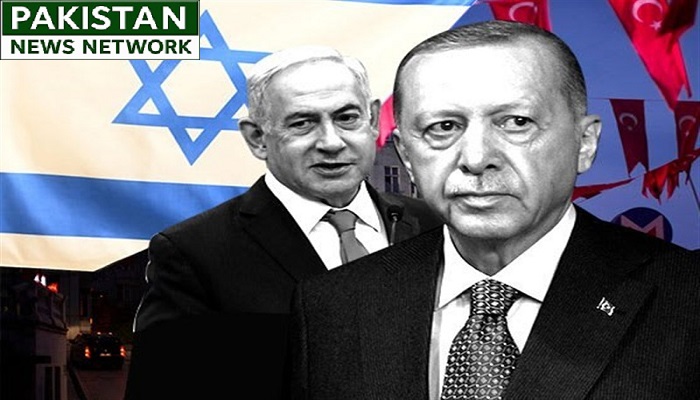
PNN – From Tel Aviv’s perspective, the sense of danger and threat posed by Turkey stems from profound geopolitical shifts in the region.
According to the report of Pakistan News Network; relations between Turkey and the Zionist regime—which have consistently experienced ups and downs in recent years—have plummeted to an all-time low following the October 7, 2023 operation and the war in Gaza. What was previously a covert diplomatic rivalry has now escalated into an open verbal confrontation and military warnings—to the point where Amichai Chikli, the regime’s Minister of Diaspora Affairs, has explicitly stated that “a direct confrontation with the Turkish military at sea is probable,” and the Zionist think tank “Alma” has claimed in its latest analysis that “Turkey is becoming the most dangerous strategic threat to Israel.”
Although both Turkey and Israel are considered strategic allies of the United States, this shared strategic alignment has never succeeded in mitigating the deep-seated differences between the two sides. Since the Justice and Development Party (AKP) rose to power in Turkey under the leadership of Recep Tayyip Erdoğan, Ankara’s stance regarding the Palestinian issue and Israel’s racist and inhumane policies has shifted dramatically. However, developments over the past two years have transcended typical ideological disputes, evolving into a full-blown geopolitical confrontation between Ankara and Tel Aviv, in which senior Zionist officials view Turkey as a threat to their internal security on par with Iran.
Disputed issues between Türkiye and the Zionist regime
- The Future of Hamas and the Ceasefire in the Gaza Strip
The most significant and glaring point of contention between Ankara and Tel Aviv is the Palestinian issue, particularly the ceasefire in Gaza. From the very early days of the Gaza war, Turkish President Recep Tayyip Erdoğan adopted a forthright and harsh stance against the Netanyahu cabinet, condemning the regime’s military operations. In response, Israel accused Ankara of supporting Hamas, viewing this support as a primary source of security threats posed by Turkey. This dispute has escalated beyond mere diplomatic statements to concrete actions, including the issuance of indictments in Turkey against 35 senior Israeli officials on charges of “crimes against humanity” and “genocide.”

- Syria and Lebanon: A New Battlefield
The collapse of Bashar al-Assad’s government in Syria and the resulting power vacuum created a unique opportunity for Turkey to expand its military and political influence in northern Syria. This presence—particularly along the borders of occupied Palestine and in the provinces of Quneitra and Daraa—has become a source of serious concern for Tel Aviv. In June 2026, Erdoğan stated that Israeli attacks on Syria and Lebanon have reached a level that threatens Turkey’s security as well, emphasizing that Turkey’s security begins not in Hatay, but in Aleppo, Damascus, and Beirut. In response, Israel threatened that if Turkish military bases were established in Syria, it would be compelled to set up its own bases in the country. Furthermore, Turkey’s bid to deploy security forces in southern Lebanon following the conclusion of the UNIFIL mission has met with strong opposition from Tel Aviv.
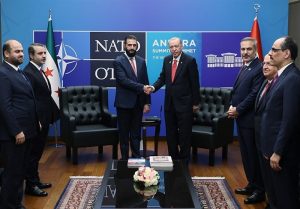
- The War with Iran: A Clash of Interests between Ankara and Tel Aviv
One of the most sobering statements regarding the tensions between the two nations—made at the onset of the war imposed by the US and Israel on Iran—came from Turkish Foreign Minister Hakan Fidan. In April 2026, he explicitly stated that “Israel cannot exist without an enemy” and that “after Iran, Turkey is Israel’s next enemy.” This remark, delivered by a senior Turkish official, demonstrates that Ankara is fully aware of how Israel views it. Israel has also taken this claim seriously; in response to the Turkish Foreign Minister’s stance, Israeli Prime Minister Benjamin Netanyahu labeled Erdoğan an “antisemitic dictator” who “supports Hamas and suppresses his opponents.” This war of words, which intensified following the 40-day war, signals the readiness of both sides for a confrontation at a higher level.
- Tel Aviv’s Concern over Ankara’s Rise in the Aviation Industry
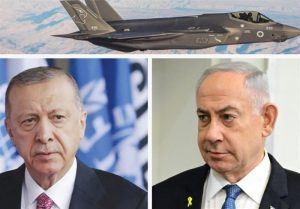
The Zionist regime is concerned not only about Turkey’s influence among its neighbors but also deeply apprehensive about Ankara’s growing military might and regional ambitions. One of the most sensitive points of contention between the two sides is Turkey’s bid to rejoin the F-35 fighter jet program and purchase the aircraft from the United States. Netanyahu has openly opposed this sale, warning that such a move would “disrupt the balance of power in the Middle East.” The Israeli Prime Minister has described Turkey as a regime that “hates the United States.”
However, in response to Netanyahu’s objections, U.S. President Donald Trump explicitly declared, “No one tells me what to sell,” and went on to describe Turkey as a “fantastic ally.” This overt support for Turkey from Trump has compounded Zionist concerns, as it implies that Washington might provide advanced equipment to Israel’s regional rival in the near future.
Conclusion:
The Zionist regime’s assessment of the security risks and threats posed by Turkey goes beyond a mere political dispute. This concern is rooted in profound geopolitical shifts in the region—changes in which Turkey, leveraging its strategic location and capable military, has become a source of deep concern for Zionist officials. From Gaza and Hamas to Syria and Lebanon, and from the Mediterranean Sea to Jerusalem, Ankara and Tel Aviv have become locked in a confrontation that is escalating daily. The Turkish Foreign Minister’s explicit statement that “after Iran, it is Turkey’s turn,” combined with an Israeli minister’s warning regarding a direct maritime clash between the two sides, indicates that this tension can no longer be dismissed as merely a war of words.
The Zionist regime, finding itself mired in wars of attrition in Gaza and Lebanon following the conflict with Iran, now views Turkey as a strategic threat. This harsh reality has placed Israel in a position where, for the first time, it faces a power that its traditional ally—Trump’s America—does not regard as a serious threat.