
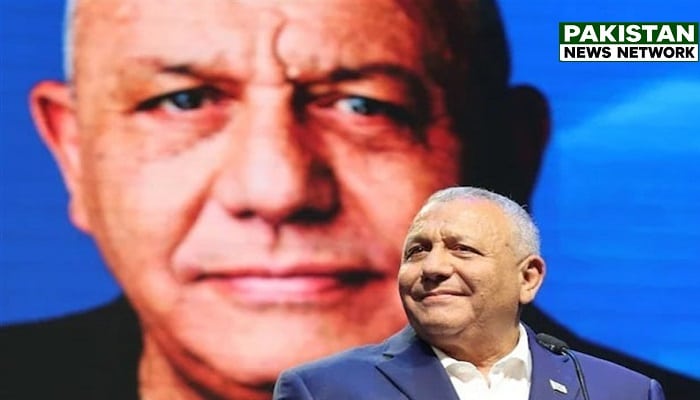
PNN – Gadi Eisenkot, Netanyahu’s key electoral rival, is known for his hostility toward the Axis of Resistance and his support for Syrian terrorists.
According to the report of Pakistan News Network; less than a month remains until the Zionist regime’s 26th parliamentary elections. Polls indicate that the primary challenger to Netanyahu and the Likud party in this race is Gadi Eisenkot, leader of the Yashar party. In recent surveys, the party has secured the top spot with a projected 22 to 25 seats, while Likud trails in second place with four to five fewer seats.
Furthermore, in comparisons between Eisenkot and Netanyahu for the premiership, the leader of the Yashar party has consistently garnered at least 10 percent more support among Zionist settlers across all polls. Consequently, understanding Eisenkot and his party is crucial for gaining a better grasp of the current state of political electoral contests in the occupied territories and the potential scenarios ahead.
A Look at the Biography of Gadi Eisenkot
Gadi Eizenkot was born in 1960 in the city of Tiberias, in the north of the occupied territories. He was the second of four children born to parents who had immigrated to occupied Palestine from Morocco in the 1950s. Due to his father’s career in the shipping industry, Eizenkot spent his childhood and adolescence in Eilat. He studied marine sciences in high school. Later, he earned a bachelor’s degree in general history from Tel Aviv University and a master’s degree in political science from the University of Haifa. He also completed a military and security studies program at the U.S. Army War College in Pennsylvania.
Gadi Eizenkot currently lives with his family in Herzliya, north of Tel Aviv. He had two sons and three daughters; one of his sons was killed in Jabalia, in the northern Gaza Strip, on December 8, 2023, during the Gaza war.

Two of his nephews also lost their lives in the same war. These events transformed Gadi Eisenkot—in the eyes of the Zionist public—into a symbol representing the families of those who fell during the “Al-Aqsa Flood” operation by Palestinian resistance fighters and the subsequent war; this stands in stark contrast to Netanyahu’s sons, who evaded military service and avoided participating in the conflict. This distinction has now become a political asset for Eisenkot in the Knesset elections.
Eisenkot’s entry into the Zionist regime’s army
After briefly participating in the Israeli Air Force pilot training course, Eisenkot joined the Golani Infantry Brigade in November 1978 and was assigned to the 51st Battalion. During the 1982 Lebanon War, Eisenkot commanded a company within the 51st Battalion; he took over for a company commander who had been wounded during the battle to capture Beaufort Castle (Qal’at al-Shaqif) in southern Lebanon. From 1984 to 1985, he commanded the Golani Brigade’s anti-tank company. Following the end of the Israeli army’s occupation of southern Lebanon—brought about by the historic victories of the Lebanese Islamic Resistance under the leadership of the martyred Sayyed Hassan Nasrallah—Eisenkot was sent to the IDF Command and Staff College. In subsequent years, he assumed command of the 366th Division and the West Bank Division, served as Deputy Head of the Operations Directorate, and commanded the Northern Command. He was appointed commander of the IDF Northern Command following the 2006 Lebanon War.
During his tenure as Head of the Operations Directorate and Commander of the Northern Command, Eisenkot became associated with the “Dahiya Doctrine.” This doctrine emphasizes the use of devastating and disproportionate firepower against civilian infrastructure utilized by militant groups as a means of deterrence. In his view, “There are no civilian towns in Lebanon; they are all military bases.”
Eisenkot was appointed as the 21st Chief of the General Staff of the Israel Defense Forces in 2015, succeeding Benny Gantz. His tenure as military chief lasted until January 15, 2019, after which he officially retired.

During his tenure as Chief of General Staff, Eisenkot pursued the strategy known as “mowing the grass” against resistance groups and senior Palestinian resistance commanders in the West Bank and the Gaza Strip. This approach involved the military temporarily degrading enemy capabilities through extensive, continuous, and short-duration operations in order to secure prolonged periods of calm.
Eisenkot Enters the Political Arena in Occupied Palestine
Following his retirement from the military in 2019, Eisenkot entered the Knesset during the 2022 parliamentary elections as a senior member of the “National Unity” alliance led by Benny Gantz; however, his tenure lasted only one year. After October 7, 2023, Eisenkot—along with four other members of the “National Unity” alliance—joined the emergency cabinet formed following the outbreak of the Gaza war. He served as a minister without portfolio within the emergency cabinet, acting in an advisory capacity.
Within the “War Cabinet,” Eisenkot opposed preemptively expanding the conflict into the Lebanese theater while the war in Gaza was ongoing. He ultimately left the cabinet in 2024, accusing Netanyahu of lacking a clear strategy for continuing the war in Gaza. Eisenkot was the most influential member of the “War Cabinet” regarding key decisions; the most significant of these was the agreement to a four-day ceasefire with Hamas in exchange for the release of 50 hostages.
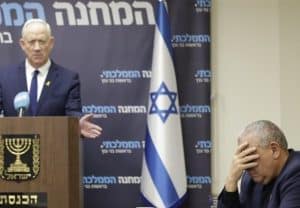
Eisenkot was the minister most determined to do whatever it took to rescue the Zionist captives held by the resistance. Through persistent effort, he eventually persuaded the other generals and the Minister of War to agree to a ceasefire—and to counter Netanyahu’s unilateral actions—thereby securing the release of 110 Zionist captives from Gaza in exchange for Palestinian prisoners held in the regime’s detention centers. Backed by this political and military standing, Eisenkot founded his own independent party, “Yashar,” ahead of the 2026 elections. The party now positions itself as a centrist movement seeking to replace Netanyahu’s cabinet.
Yashar Party’s Positions on Domestic and Foreign Issues
The party belongs to the anti-Netanyahu bloc—also known as the “Change” bloc—a coalition seeking to end the long-standing rule of the Zionist right-wing led by Netanyahu. To this end, leaders of the Change bloc—Yair Lapid, Gadi Eisenkot, Naftali Bennett, Avigdor Lieberman, and Yair Golan—signed a cooperation agreement. Under this pact, they pledged that, pending the formation of the next Israeli government following the Knesset elections, none of them would attack any partner party within the bloc or its leader. The document also states that their objective is to form a Zionist government.
In line with this approach, the Yashar Party signed a “surplus vote-sharing agreement” with the Democrats, led by Yair Golan. The aim of this agreement is to prevent the waste of votes and maximize opposition seats—a lesson learned from past electoral defeats. In a statement, the Yashar Party declared: We are determined to pursue this path by any means necessary to achieve victory, realize the public will, and form a Zionist cabinet to replace Netanyahu’s failed administration.
As previously mentioned, Yesh Atid is now considered the most powerful party. The gap in seats between it and the second-place party, Likud, ranges from four to five (depending on the specific poll). However, what drives public support for this party is its approach to various issues:
The Palestinian Issue: In the summer, Eisenkot officially announced his opposition to the establishment of an “independent Palestinian state.” He described the Palestinians as the staunch enemies of Zionists over the course of several decades. In a subsequent interview, he emphasized: I have never spoken of ‘two states for two peoples’; anyone who talks about two states fails to grasp the nature of this conflict. I fully believe in settlement construction in the West Bank.
Belief in hardline, violent security approaches to threats: Eisenkot is known as a “security hawk” who advocates the use of force but opposes “reckless adventurism.” Within the war cabinet, he opposed preemptively expanding the conflict to Lebanon while the war in Gaza was ongoing; however, he recently described the ceasefire agreement Netanyahu reached with Lebanon—at Trump’s behest—as an “irrational capitulation.”
Lebanon and Hezbollah: While Eizenkot shares Netanyahu’s view that the Americans should play a leading role in managing the Lebanese Army through military liaison officers, he differs from Netanyahu in believing that the French should also regain a significant share in these arrangements. Regarding the security buffer zone in southern Lebanon, Eizenkot’s position does not differ greatly from Netanyahu’s; Netanyahu has indicated a desire to maintain the entire current buffer zone, which extends more than 10 kilometers in some areas. However, given his military expertise and combat experience in Lebanon during the occupation of the south in the 1980s and 1990s, Eisenkot is skeptical of the Lebanese Army’s capabilities; nevertheless, under certain conditions, he is willing to withdraw to an eight-kilometer security zone, as he believes occupying a larger area offers no distinct military advantage. He is also deeply concerned about Hezbollah’s presence in southern Lebanon. Eisenkot hopes that political and military support from the United States and France can compel the Lebanese Army to confront Hezbollah more seriously.
Relations with the US and the West: Eisenkot has identified the restoration of Israel-US ties—and convincing Americans, whether Democrats or Republicans, that Israel is an asset to the United States—as one of his primary objectives. He believes that with the departure of Netanyahu and the arrival of new officials seeking to revive negotiations and mutual understanding with the West, Israel can regain the standing it lost following the atrocities committed in Gaza, the West Bank, Lebanon, Syria, and Iran. He holds the view that the domestic and international conduct of Netanyahu and his coalition partners—such as Ben-Gvir and Smotrich—has severely damaged Israel’s image as a political system sharing values with the West, yet an opportunity remains to repair this damage.
Domestic challenges: Eisenkot advocates for military service without granting any special exemptions to the Haredim. He also insists on universal education, a reduction in the cost of living, the reconstruction of war-torn areas in the north and south, and the return of the younger generation to these regions. Eisenkot describes himself as “traditional”—a term used in Israel primarily to refer to Mizrahi Jews who observe certain Orthodox practices while leading secular lives. This identity holds appeal for a large segment of the electorate, a fact reflected in the number of seats the party has secured.
Given Eisenkot’s very limited political background, the question arises as to what factors have led Israeli public opinion to favor him over Netanyahu. Several factors are generally cited in the media landscape of the occupied territories: a public desire for a new alternative, coupled with fatigue regarding familiar political figures and Netanyahu’s prolonged grip on power; the importance of security to society—highlighted by Eisenkot’s military background and the loss of his son in the Gaza war—contrasted with Netanyahu’s failure to prevent or effectively respond to a catastrophe like Operation Al-Aqsa Flood.
In this sense, Eisenkot effectively represents a “big ‘no'” to Netanyahu. He is considered a center-right leader who advocates for the formation of a “Zionist cabinet” yet avoids radical behavior. However, despite the general appeal of the Yashar party, Eisenkot has yet to articulate a precise political vision for a potential premiership. The contradictory makeup of the Yashar electoral list—comprising high-ranking security figures alongside religious right-wingers—could lead to internal rifts over key issues such as settlement policy, mandatory military service for the Ultra-Orthodox (Haredim), and the Palestinian question. Another factor is Eisenkot’s limited political experience; he has served only a brief term as a Knesset member and possesses little executive experience.
Meanwhile, poll results indicate that neither of the two blocs is capable of forming the next cabinet in the occupied territories on its own. Given the current situation, Yesh Atid—as the largest party in the Knesset—must choose between securing the support of the Arab party Ra’am or aligning with right-wing parties other than Likud. Ultimately, should Eisenkot succeed in forming a new cabinet in occupied Palestine, he would become Israel’s first prime minister of Mizrahi descent—development analysts have described as a “revolution in a political system dominated by Ashkenazi elites.”

During the years of Syria’s internal crisis, he was also among the proponents of the Israeli army providing aid to the terrorists of the Al-Nusra Front—led by Abu Mohammad al-Julani (also known as Ahmad al-Sharaa)—the very individual who has now assumed the helm of the governing structure in Damascus following the fall of Bashar al-Assad’s regime.
Regarding the issue of war with Iran, it must also be noted that Eisenkot is considered one of the key proponents of continued military confrontation with Iran; indeed, many of the Israeli military’s strategies concerning Iran were formulated during his tenure as Chief of the General Staff and were subsequently implemented during the “Ramadan War.”