
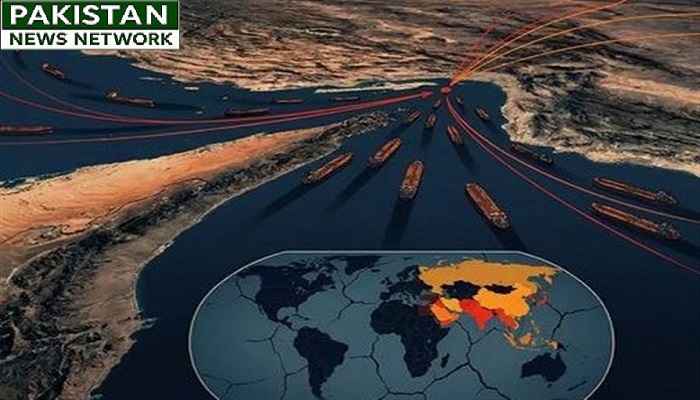
PNN – The German Institute for International and Security Affairs (SWP) in Berlin has highlighted the United States’ strategic failure in the conflict with Iran and Tehran’s upper hand in this arena.
According to the report of Pakistan News Network; Guido Steinberg—a Middle East expert at the Berlin-based institute—discussed Trump’s Middle East policy in the context of a potential second term during an interview with the Handelsblatt newspaper. Pointing to the quagmire in which Trump has become ensnared due to the “terrorist war” imposed on Iran, Steinberg stated: It must be said that, to date, Trump’s Middle East policy has largely failed.
There are no signs of success for Trump in the conflict with Iran.
He added: This is primarily due to the ongoing conflict with Iran, where there are no indications of success for him. The same applies to Gaza, where the situation is deeply deadlocked, as well as to southern Lebanon, where hostilities persist despite the ceasefire. All of this suggests that the Trump administration will face significant challenges in making its Middle East policy succeed over the next two and a half years.
Trump Faces a Disastrous Dilemma: War or Negotiation with Iran
Regarding the reasons for Trump’s failure in Middle East policy, he stated: There are various reasons. The most significant one at present is, of course, the prospect of war with Iran. Donald Trump has placed himself in a truly disastrous dilemma. On one hand, he cannot win such a war using the military means available and willing to be deployed. On the other, he is unable to secure a negotiated outcome that would be fully acceptable to him—or perhaps to the entire Western world. This dilemma has dominated policy since April, when the period of intense military confrontation ended.
He added: We are witnessing a cycle of negotiations, threats, and ruthless insults, followed by the repeated flare-up of conflict on the part of both the American and Iranian sides.
Regarding the continued closure of the Strait of Hormuz, this prominent German expert also stated: The Strait of Hormuz remains closed. Meanwhile, the southern entrance to the Red Sea is also no longer fully navigable, particularly for Saudi Arabian oil tankers. This situation has come to define Trump’s entire Middle East policy and is viewed globally—including within the United States itself—as a catastrophic failure. It is entirely possible that this limbo between war and peace will persist for a much longer time.
Iran Holds the Upper Hand in the Conflict
Responding to the question of who holds the stronger hand in this arena, he stated: Overall, Tehran holds the stronger hand, and this has less to do with the military course of the war.
Pointing to the losses Iran suffered during the imposed war, the military expert added: However, the Iranians subsequently took an action that the Americans—for reasons I cannot fathom—had failed to anticipate. They began blocking the Strait of Hormuz and attacking U.S. allies—specifically the major oil and gas-producing nations of Saudi Arabia, Kuwait, Qatar, the UAE, and Oman. From that moment on, the Iranians have found themselves in a much stronger position.
The US has failed to open the Strait of Hormuz.
Elaborating on Trump’s recent baseless and false claim that the Strait of Hormuz is under US control, this prominent German expert stated: The Americans have failed to retake the Strait of Hormuz.
America’s Strategic Defeat in the War against Iran
This presents them with a major problem, as any military blow the Iranians might sustain will change nothing. We are on the verge of Iran assuming a dominant position in the Persian Gulf, and all of Washington’s rhetoric cannot alter the overall strategic landscape: the Americans won the war militarily, but ultimately lost it strategically.
Responding to the question of whether there is a way for Donald Trump to save face in this conflict with Iran, he stated that there are only two highly problematic options: the United States could continue the conflict, but if it remains unwilling to deploy ground troops—at least in the vicinity of the Strait of Hormuz—it cannot alter the overall strategic military situation. My assessment is that the Trump administration absolutely does not want to deploy ground forces.
He added, however, that negotiations have also become difficult for the U.S. because the Iranians currently hold a strong position. The Iranians are aware of this and have recently made it clear that they will reopen the Strait of Hormuz only if they are granted sweeping concessions.
The Trump administration was briefly prepared to do this in June. However, Washington apparently concluded that such sweeping concessions—such as the temporary lifting of oil and banking sanctions—were not feasible.
Negotiations Will Not Succeed Unless Trump Swallows Some Bitter Pills
Regarding the best way for Trump to extricate himself from this predicament, he stated: It appears the only way out is to ultimately accept the outcome of negotiations—an outcome that will be highly unfavorable to the American side. The overall trend is moving toward negotiations; however, these talks cannot succeed unless the United States swallows some bitter pills.
At the same time, he stated: If the United States intends to continue this war, it must fight differently and anticipate far greater losses in terms of equipment and personnel. A shortage of long-range weapons forces American aircraft to fly closer to their targets, thereby increasing the risk of being shot down. However, as I mentioned, if the United States truly wishes to win this war, it must seize broader areas along the Strait of Hormuz and, ultimately, deploy ground forces.
In conclusion, the German expert addressed the issue of Gaza and Trump’s stance on it, stating: Donald Trump brokered a ceasefire and announced ambitious reconstruction plans. However, Israeli Prime Minister Benjamin Netanyahu has now clearly declared his opposition to this plan. Neither side to the conflict is prepared to implement the agreement’s most critical terms.