
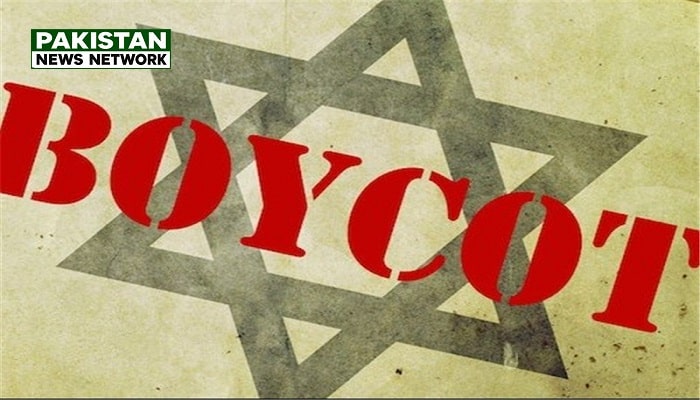
PNN – A Hebrew-language media outlet has reported on the emergence of an anti-Zionist movement globally.
According to the report of Pakistan News Network; the newspaper Yedioth Ahronoth has compiled a list of 121 types of actions and sanctions taken against the Zionist regime across 62 countries.
The report further states that 121 such measures have been implemented against Israel in 62 nations; a new database maps out these existing sanctions as well as other proposed actions.
The Ministry of Foreign Affairs stated that it is “making extensive efforts in this regard,” but political sources explained: There was a real possibility of the European Union imposing sanctions, and the consequences would have been severe. This was averted, but that might not be the case in the future.
The Jewish People Policy Institute (JPPI) has launched a new database that maps sanctions and restrictive measures taken against Israel across various countries worldwide.
This map includes 121 measures across 62 countries: 93 are currently in effect, 19 are from the past, and 9 are currently proposed or in the planning stages.
Elsewhere in the report, it is noted that the Ministry of Foreign Affairs (of the Zionist regime) claims the data presented therein does not accurately reflect the reality of the sanctions, and that, in essence, no sanctions exist against Israel. Nevertheless, will this situation persist? One cannot be certain that the world will remain insulated from such a state of affairs; over time, the situation could shift to Israel’s disadvantage.
However, as acknowledged by Shuki Friedman, Director General of the Jewish People Policy Institute, the data should not be evaluated solely based on the number of sanctions; rather, primary consideration must be given to their potential cumulative and broad-reaching impact on the Israeli economy, as well as on Israel’s ability to maintain trade relations, investments, and international supply chains.
He stated: Anyone who imagines that the sanctions imposed on ministers, individuals in Judea and Samaria (the West Bank), or products from this region will remain confined to that scope and will not cross the Green Line is mistaken.
Sanctions have a marginal impact; however, when they accumulate, they can affect banks, companies, investors, and business partners that have no connection whatsoever to the sanctioned individual or entity. The real danger lies in the shift from targeted sanctions to causing harm to the very systems upon which Israel’s economy and security depend.
Mapping this out also makes it possible to identify the countries where the highest number of such measures have been recorded.
Spain tops the list with 10 actions. It is followed by the United States with eight actions—all of which, to date, have taken place exclusively within academic settings—in addition to two “historical” measures and five proposals aimed at preventing the supply of various types of weaponry.
The United Kingdom follows with seven actions, while Belgium and Turkey each account for five.
Friedman estimates that the figure of 121 is merely a starting point. The more critical question is what will happen if this trend continues. While a single sanction might suffice on its own, the existence of 121 such actions across 62 countries underscores the need for a comprehensive perspective.
Israel must examine this threat just as it would any other strategic threat—that is, identify it, prepare to confront it, and take the necessary steps to prevent it from escalating.