
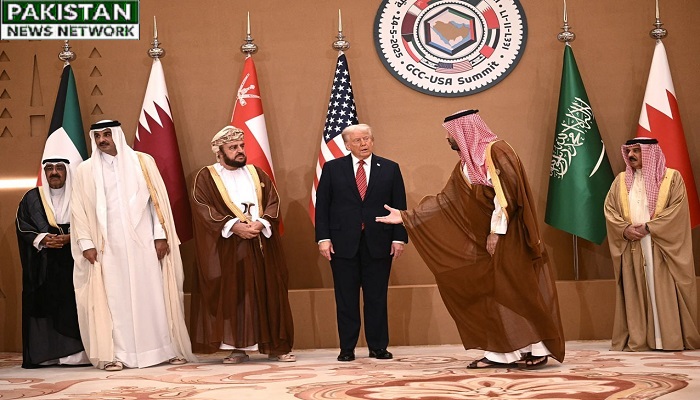
PNN – A pan-regional media outlet has reported that Persian Gulf states have told the United States that an economic war against Iran is unrealistic.
According to the report of Pakistan News Network; while regional and media circles have offered numerous analyses regarding the likely failure of the U.S. in this new conflict—following Donald Trump’s threats to escalate economic warfare against Iran in the wake of a humiliating military defeat—the pan-regional newspaper Rai al-Youm has reported on the negative stance held by Persian Gulf states regarding the intensification of sanctions against Iran.
According to the report, Persian Gulf states have officially informed the U.S. side that the “prescription” offered by the U.S. Treasury Secretary—calling for an economic war against Iran—is “unrealistic” and, given geographical realities and proximity, is not a viable path for them to follow.
Western diplomatic circles told the Rai al-Youm newspaper that the United Arab Emirates, Oman, and Qatar, at the very least, show no enthusiasm for the decisions and directives issued by the U.S. Treasury Department—much like the stance adopted by certain European nations.
According to this report, certain foreign governments in the region—including Qatar—are prepared to defy U.S. economic sanctions, which carry threatening implications; they view these sanctions as unrealistic and indicative of a pattern of perpetual crisis-mongering in the region that would obstruct any scenario or possibility for de-escalation.
Meanwhile, U.S. circles emphasize that Trump’s strategy of strangling Iran’s economy through sanctions and a naval blockade faces a difficult test, as Tehran remains steadfast in its position, willing to shoulder significant economic burdens rather than yield to U.S. demands.
In this context, the American magazine Politico—citing former Trump administration officials, U.S. ambassadors, and regional experts—reported that there are significant doubts regarding the economic war against Iran promised by the United States; while Scott Bessent, the Treasury Secretary, had claimed this war would differ from previous ones, it appears that is not the case.
James Jeffrey, a former U.S. ambassador who served under three administrations—including Trump’s first term—commented on the matter: This is a war of attrition. I am certain the Treasury Department is making minor adjustments here and there to close loopholes or expand sanctions, but it is difficult to believe that—after twenty years of U.S. sanctions and Iran’s experience in circumventing them—anything decisive will occur.
US sources have stated that Donald Trump is waiting for Iran to raise the white flag as a result of the economic war; however, Tehran appears prepared to wait it out and will not yield to his demands—such as waiving fees for ships passing through the Strait of Hormuz or other conditions he seeks to impose to end the conflict.