
PNN – Hebrew media reported: Netanyahu claims the war with Iran strengthened Israel’s position, but this never happened.
According to the report of Pakistan News Network the Zman Yisrael newspaper stated in an article on the subject that Israeli Prime Minister Benjamin Netanyahu and his spokespersons are making strenuous efforts to portray the recent US war against Iran—in which Israel also participated—as a major success.
Cabinet spokespersons and their supporters portray the situation as if Iran is at its weakest point in history—presenting a prime opportunity to dismantle the Iranian axis (the Axis of Resistance) and pave the way for rapprochement and cooperation with Gulf Cooperation Council (GCC) nations, including Saudi Arabia.
However, a factual assessment of events—combined with an analysis of official political and security data from Israeli, American, and international sources, as well as findings from research centers and databases—leads to the conclusion that these purported goals never materialized; on the contrary, the war has resulted in a profound diplomatic defeat for Israel.
Among the most significant factors indicating Israel’s failure in this war are:
- The Islamic Republic of Iran has succeeded in preserving its structure despite heavy attacks—and one could even say it has emerged stronger than before.
- The Axis of Resistance, too, has weathered the blows dealt to it.
- Israel’s diplomatic standing has reached its lowest level in history.
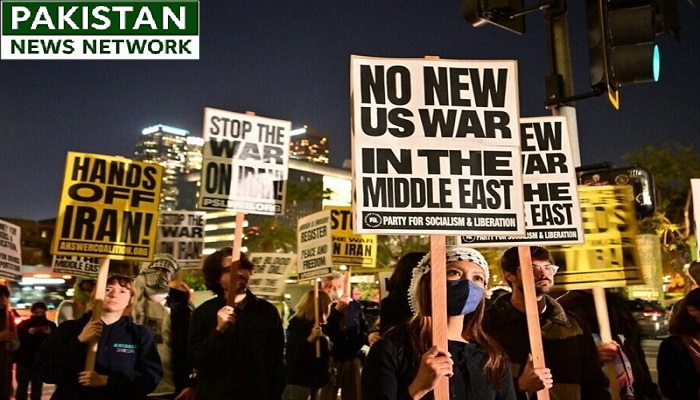
- American public opinion lined up against the war and against Israel.
- The global energy crisis resulting from control over the Strait of Hormuz boosted Iran’s power, weakened the position of the United States and the southern Persian Gulf states, and sparked global outrage against Israel.
Another part of the report states: Netanyahu has repeatedly claimed that a historic opportunity has emerged to reshape the Middle East, isolate Iran, and deepen alliances with Israel at the center. This claim did not materialize; on the contrary, the exact opposite occurred.
As Zman Yisrael admits the claim that the war “isolated Iran” amidst a world sympathetic to Israel is entirely baseless. In fact, the war led to Israel’s unprecedented international isolation, and the United States found itself under pressure from an international diplomatic offensive.
The United Nations, the majority of European Union and Arab League nations, and most countries worldwide have expressed strong opposition to this war, while numerous international bodies—including certain factions opposed to the Iranian regime—have condemned these joint attacks.
According to several polls, public opinion in most countries across the globe is strongly opposed to this war.
Meanwhile, China and Russia—whose standing as Iran’s allies was initially said to be waning—bolstered their diplomatic support for Iran: both countries abstained in the UN Security Council vote on a resolution condemning Iran, exercised their veto against a draft resolution regarding the escorting of ships in the Strait of Hormuz, and issued a joint statement describing attacks by the US and Israel as a “violation of international law.”
The claim by Netanyahu and his cabinet spokespersons that his administration has elevated the Israel-U.S. alliance to a “historic peak” is highly questionable. It is true that during the twelve-day war, the Israeli and U.S. militaries openly entered the conflict as active partners for the first time in history.
However, from the very beginning, voices in the United States labeled Israel a “warmongering” state that had dragged America into a conflict contrary to its own interests; these voices grew louder following the doubts that emerged during the war. Virtually the entire Democratic Party opposed the war, as did segments of the Republican Party—Trump’s own party.
Public opinion polls in the United States indicated widespread opposition among the majority of Americans.
In Europe—which had previously leveled harsh criticism at Israel during the Gaza war—there was opposition to an attack on Iran. Voices also emerged in the Middle East describing Israel as an “aggressive and bullying entity” that had become a “threat to regional peace.”
In short: a war with Iran certainly did not improve Israel’s diplomatic standing in the world.
Another section of this lengthy article notes that, until a few years ago, Israel enjoyed broad support from both major U.S. parties—the Republicans and the Democrats.
Subsequently, relations with the Democratic Party deteriorated, yet Republican support was still considered “steady.”
However, the latest Gallup poll indicates that the level of Republican identification with Israel has fallen to its lowest point since 2004 following the war involving Iran.
Seventy percent of Republicans identify with Israel, whereas this figure stood at approximately 80 percent prior to the outbreak of the war.
This situation cannot be described as “stability”; rather, it represents a clear decline in support. This drop is particularly striking among the younger generation: separate surveys tracking the views of young Republicans and Evangelicals indicate a 24 percent decrease in support for Israel among Republicans under the age of 45 alone.
Most importantly, for the first time since Gallup began its annual polling in 2001, American public sympathy no longer leans more toward Israelis than Palestinians.
Among young Americans aged 18 to 34, 53 percent express greater sympathy for the Palestinians. This marks the first time a majority of this age group has taken such a stance, while only 23 percent sympathize more with Israel—the lowest figure recorded for this demographic. This is a historic turning point. In American public opinion, this is no longer a passing trend.