PNN – In an article, a prominent German expert described the Strait of Hormuz as a powerful leverage for Iran that exposed U.S. weaknesses.
According to the report of Pakistan News Network; Dr. Josef Braml—a political scientist and U.S. affairs specialist with over 20 years of research experience, currently serving as the European Director of the Trilateral Commission at a Berlin-based strategic, political, security, and economic consultancy—addressed the U.S. war against Iran and the resulting exposure of American weaknesses in an article for Focus magazine. He wrote that while the Strait of Hormuz grants Tehran significant leverage in this conflict, for Washington, the confrontation is increasingly becoming a problem of ammunition, money, and time.
The Strait of Hormuz Reveals Washington’s Limitations
Another part of the article states: The crisis surrounding the Strait of Hormuz exposes the limits of American power. While Iran is banking on attrition in this conflict, Washington faces military, economic, and political pressure.
The US in a Strategic Deadlock
The German expert continued: Donald Trump likes to portray himself as a tough negotiator. Just a few weeks ago, the US President threatened Iran with massive military strikes. Now, Washington appears significantly more cautious. While the US officially speaks of constructive negotiations, in reality, many of these statements point to a strategic deadlock.
It goes on to state: Tehran holds a powerful lever in the Strait of Hormuz, whereas the United States has reached the limits of its capabilities—specifically regarding modern precision munitions and air defenses.
Therefore, the central question is not whether the United States is militarily stronger than Iran. The fundamental question is whether Washington can maintain its political, economic, and logistical superiority for a sufficient period.
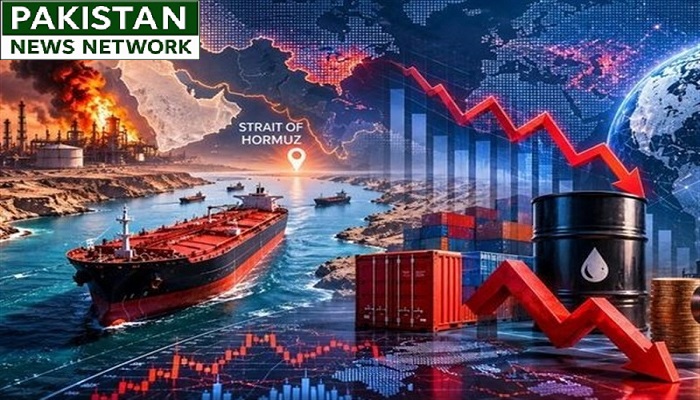
At the heart of this conflict lies the Strait of Hormuz. Under normal circumstances, approximately one-fifth of the world’s oil and liquefied natural gas flows through this narrow strait, which is only a few tens of kilometers wide. Consequently, whoever controls Hormuz influences energy prices from Shanghai to Houston.
Tehran has now made the full reopening of the strait contingent upon a wide range of demands, including the lifting of sanctions, the unfreezing of assets, security guarantees, and compensation for damages resulting from the conflict with the United States and Israel.
Trump publicly rejects these demands and, in turn, asserts claims for compensation against Iran. Nevertheless, intensive negotiations mediated by Oman are ongoing; while a technical agreement regarding shipping lanes appears closer, significant political differences remain.
However, the author argues that Iran’s true leverage does not lie in permanently closing the Strait of Hormuz—a move that would be both high-risk and costly for Tehran. A far more effective form of leverage is the ability to repeatedly disrupt this waterway, thereby creating uncertainty and driving up energy prices.
Noting the United States’ military superiority over Iran in such a conflict, the author adds that this is precisely where Trump’s problem begins: military superiority does not guarantee the ability to act effectively in the realm of foreign policy.
He added: Apparently, the war against Iran has placed a greater strain on U.S. armed forces than many strategists had anticipated. Published reports citing sources close to the Pentagon, along with analyses by the Center for Strategic and International Studies (CSIS), indicate that U.S. Patriot and THAAD interceptor missiles have been expended at a significant rate during this conflict. Estimates suggest that only about one-third of the initial Patriot stockpiles may remain.
This problem is compounded by the realities inherent in the production process. Patriot missiles are not mass-produced; manufacturing them takes a long time—sometimes up to two years. Even the recently announced expansion of production will not help in the short term.
The author further noted that this alters the logic of the conflict: the longer the crisis drags on, the more important endurance becomes—alongside firepower.
Escalating tensions with Iran diminish Republican prospects in the midterm elections.
Meanwhile, Trump is focused on this autumn’s midterm elections. Rising energy prices directly impact American consumers, and high gasoline prices have traditionally been among the most politically sensitive issues in the United States. Consequently, any further escalation of tension in the Persian Gulf carries the risk of reigniting inflation and undermining Republican chances in the elections.
In the author’s view, the paradox lies in the fact that while Iran suffers greater economic damage from this conflict, it is Trump who faces greater political pressure.
For Europe, too, the real lesson of this conflict lies not in the Persian Gulf, but in its own strategic vulnerability.
This crisis demonstrates, firstly, the extent to which the global economy relies on a few maritime chokepoints and, secondly, reveals the limits of American power projection. It shows that even the United States can struggle to manage multiple major military crises simultaneously.
This places Washington in a strategic dilemma. Patriot and THAAD systems are needed not only in the Middle East but are also relied upon by Ukraine. At the same time, the United States must maintain its deterrence capabilities against China in the Indo-Pacific.
Conflict involving Iran has demonstrated that the United States can struggle to sustain even a prolonged, high-intensity engagement—one requiring the daily deployment of vast quantities of modern precision munitions and missile defense systems.
Several experts point out that since the end of the Cold War, the U.S. defense industry has focused more on efficiency than on mass production; consequently, a conflict with Iran exposes a structural weakness in Western defense planning: while advanced weapons are extraordinarily effective, they cannot be rapidly replaced at will during a crisis.
Arab Gulf States Move Away from Reliance on the US
For some time, Arab Gulf states have been diversifying their security relationships. Despite making substantial payments for US protection and helping to finance the strengthening of the US military—including through loans—these nations no longer wish to rely solely on Washington. New regional arrangements, such as those involving Saudi Arabia, Turkey, and Pakistan, point toward a security order that is less dominated by Washington.
The Real Message of Hormuz
Thus, the real message from the Strait of Hormuz is not that the United States has lost its supremacy; the U.S. still possesses the world’s most powerful armed forces. However, this crisis demonstrated that in the twenty-first century, power no longer relies solely on aircraft carriers and bombers, but also on industrial capacity, political patience, and economic leverage.
The author continues: What matters is who holds the advantage regarding time, staying power, and economic leverage. In this strategic game, Iran still holds a trump card in the Strait of Hormuz—a card that even Donald Trump cannot simply disregard.