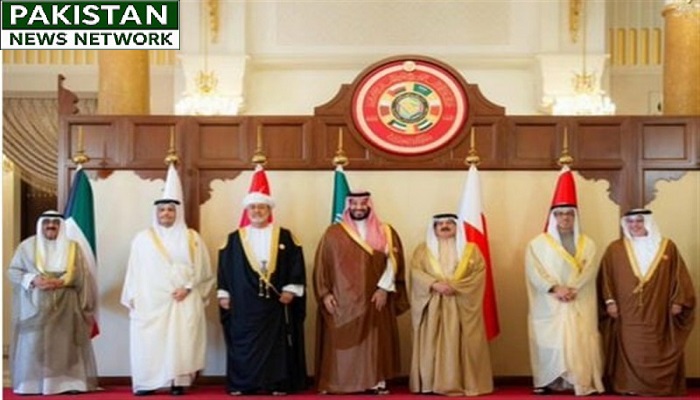
PNN – An Emirati writer has warned Persian Gulf states about the consequences of participating in new US sanctions against Iran.
According to the report of Pakistan News Network; as Donald Trump—the head of the terrorist US administration—seeks to pressure his allies to join the economic war he has declared against Iran following a humiliating military failure, an Emirati writer has warned of the repercussions of Persian Gulf states cooperating with the United States in this regard.
Emirati writer Abdul Ghaffar Hussain stated in a post on his X account that the imposition of economic and trade sanctions on Iran by Persian Gulf states would be detrimental not only to Iran but to both sides.
The Emirati writer added that those calling for joining the sanctions against Iran are unaware of the potential losses and consequences involved.
Last May, the same writer had also called for rapprochement with Tehran, emphasizing that commercial interests between Iran and the Persian Gulf states could help reduce tensions and that both sides share significant common interests.
However, as the so-called 60-day deadline set during the Islamabad talks expires—prompting numerous analyses in regional and international media, as well as Zionist sources, regarding scenarios for the next phase and the limitations of U.S. options—American circles emphasize that President Donald Trump’s strategy of strangling Iran’s economy through sanctions and a naval blockade faces a difficult test; Tehran remains steadfast in its position, willing to endure significant economic burdens rather than accept U.S. terms.
In this context, the American magazine Politico—citing former Trump administration officials, U.S. ambassadors, and regional experts—reported significant skepticism regarding the economic war against Iran promised by the United States. While Scott Bessent had claimed this conflict would differ from previous ones, that does not appear to be the case.
James Jeffrey, a former U.S. ambassador who served under three administrations—including Trump’s first term—commented: This is a war of attrition. I am certain the Treasury Department is making minor adjustments here and there to close loopholes or expand sanctions. However, it is difficult to believe that a decisive outcome will occur after twenty years of U.S. sanctions and Iran’s experience in circumventing them.
US sources have stated that Donald Trump is waiting for Iran to raise the white flag as a result of the economic war; however, Tehran appears prepared to wait it out and will not yield to his demands—such as waiving fees for ships passing through the Strait of Hormuz or other conditions he seeks to impose to end the conflict.