
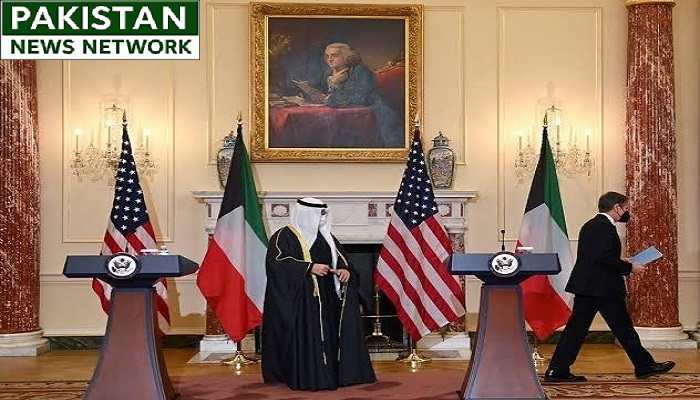
PNN – Thirty-five years after Iran helped extinguish the fires in oil wells in Kuwait, that country has now aligned itself with those who once invaded Iranian territory.
According to the report of Pakistan News Network; in the major conflict currently unfolding in West Asia has upended the region’s security and political equations. What appeared merely as an alarming scenario just a few months ago has now become a bitter reality. Amidst this, Kuwait has positioned itself at the forefront of the confrontation with the Islamic Republic of Iran. Yet, this stance stems neither from military might nor national resolve; rather, it is the result of its unquestioning hosting of US military forces. The question arises: what benefit does Kuwait hope to gain from escalating tensions with Iran when it lacks even the slightest capability to defend its own territory against a serious threat?
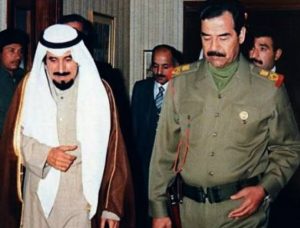
Despite their geographical proximity and shared cultural ties, Iran and Kuwait have consistently experienced a relationship marked by ups and downs. The most bitter chapter of these relations dates back to the era of the Sacred Defense; a time when Kuwait sided with Saddam Hussein’s Ba’athist regime and did not hesitate to provide financial and logistical support to the very country that would later invade Kuwaiti territory.
At the same time, however, one of the most brilliant chapters in the history of regional cooperation was written by Iranians; following Saddam’s invasion of Kuwait and the torching of the country’s massive oil wells, it was Iranian engineers and specialists who—at great personal and financial cost—rushed to Kuwait’s aid, not only extinguishing the fires ravaging the oil infrastructure but also saving the Persian Gulf from an irreversible environmental disaster.
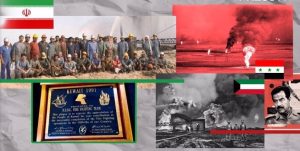
This selfless assistance stands as an enduring testament to the Iranian nation’s goodwill toward its neighbors. Yet today, by making its territory available to the US terrorist military, Kuwait has responded inappropriately to that historic aid.
Kuwait’s Role in the Current Conflict
According to numerous reports from field sources and even international media, military bases in Kuwait—including Ali Al Salem, Camp Arifjan, and Camp Al-Udayri—have been transformed into launch and support platforms for U.S. forces. These bases host American HIMARS missile systems and rocket launchers that have recently carried out attacks against Khuzestan province and other parts of Iran. The presence of Patriot air defense systems and U.S. drone hangars at these bases signals Washington’s determination to utilize Kuwaiti territory as a frontline in the war against Iran.
Fire at U.S. Bases
The Armed Forces of the Islamic Republic of Iran—which had previously targeted these bases on multiple occasions during the Ramadan War—delivered a response of unprecedented scale this time. In recent massive strikes, Iranian precision-guided missiles and drones destroyed the bases’ radars, ammunition depots, HIMARS launchers, and refueling facilities. Images showing a massive blaze engulfing several hectares of these facilities attest to the effectiveness of Iran’s attacks.
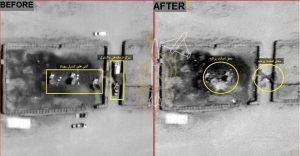
The Islamic Revolutionary Guard Corps (IRGC) has officially announced that these attacks were carried out in response to acts of aggression by the United States launched from Kuwaiti territory, and warned that should this trend continue, future targets would be far more extensive. Furthermore, Iranian forces have closed the Strait of Hormuz, and exports of oil and chemical fertilizers will not resume until the attacks cease—a move that directly threatens Kuwait’s fragile economy.
A bitter reality that Kuwait must confront is its inherent inability to defend itself. Despite spending billions on advanced Western weaponry, the Kuwaiti military lacks strategic depth, a population sufficient to sustain territorial defense, and an integrated air defense system capable of withstanding a full-scale assault. Kuwait is a small, oil-rich nation with limited territory and population, effectively incapable of confronting any of the region’s powers. Its reliance on the U.S. defense umbrella—at a time when the United States is itself embroiled in a war of attrition across multiple regional fronts—appears to be a strategic miscalculation.
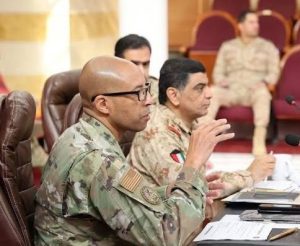
Washington may pledge all-out support today, but history has shown that in times of serious crisis, Americans prioritize their own interests over the preservation of smaller allies. Instead of hosting a military base for an aggressor, Kuwait could have played the role of mediator—or at least a neutral observer; unfortunately, however, under U.S. pressure, it has chosen a path that leads only to the destruction of its own stability and dependent economy.
One must truly ask: what does the Kuwaiti government—which, despite purchasing billions of dollars’ worth of Western weaponry, lacks even the slightest capability to defend its own territory—hope to gain by escalating conflict and tension with Iran? It is expected that the country’s leadership, acknowledging the strategic errors made from the time of the “Ramadan War” to the present, will first expel American forces from its soil and refrain from further complicity in the killing of the Iranian people. This warning is not a threat, but rather sincere counsel from a neighbor that has demonstrated for decades that it prioritizes regional peace and stability over any form of futile tension. Kuwait stands at a crossroads today: one path leads to fire and destruction, the other to rationality and survival. It is hoped that the country’s rulers will make the right choice before it is too late.