
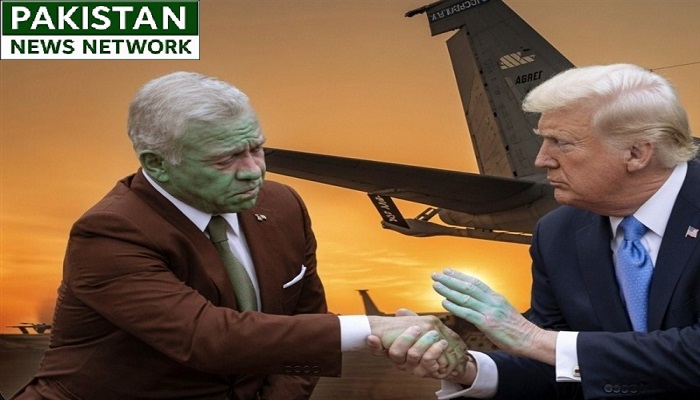
PNN – A base named after a Jordanian martyr of the war against Israel has, in recent times, come to serve Tel Aviv’s interests.
According to the report of Pakistan News Network; an airbase situated deep in the desert of eastern Jordan—approximately 800 kilometers from Iran’s borders—has evolved into one of the most critical U.S. military installations in West Asia. At first glance, the “Muwaffaq Salti” Airbase—also known as “Azraq”—appears to be merely a military facility; yet, beneath the surface, it embodies a bitter and contradictory narrative regarding regional politics.
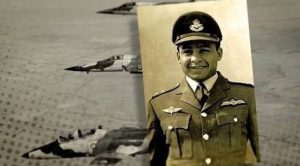
This base is named in honor of Captain Muwaffaq al-Salti, a Jordanian Air Force pilot. During the 1966 Arab-Israeli War, his aircraft was shot down in an aerial battle against the Zionist regime during the Battle of Samu, and he attained the high honor of martyrdom. The base itself was officially inaugurated in May 1981. At the time, the choice of this name served as a tribute to Palestinian resistance and the struggle against the Israeli occupation.
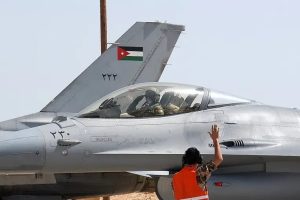
Yet today, the base bearing this martyr’s name has become a launchpad for American F-35 fighter jets and aerial refuelers that—in full coordination with that very Zionist regime—endanger regional security. This base was also utilized to safeguard the security of the Zionist regime during the 12-Day War and the 40-Day “Ramadan” battle. This contradiction is a bitter irony that few people notice.
Why did Muwaffaq Salti become a vital base for the United States?
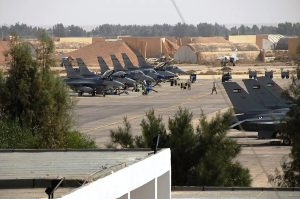
Following rising tensions with Iran, the United States sought a base more secure than Al Udeid in Qatar, which was under Iranian surveillance. The greater distance of Muwaffaq Salti from Iran’s borders led the Pentagon to believe that its new command center would remain safe from the prying eyes of the Iranians. Consequently, dozens of advanced fighter jets, aerial refueling tankers, and logistical assets were transferred to the base. Satellite imagery from February 2026 reveals that over 60 fighter aircraft—including F-35s—have been stationed there to conduct various military operations. In practice, this base has become the focal point of the U.S. military presence in West Asia.
Yet, the most painful aspect of the situation is the role the Jordanian government itself plays in this equation. During Iran’s missile and drone attacks on the occupied territories—spanning operations “True Promise” I through IV and even Operation “Thunderbolt”—Jordan not only opened its airspace to Zionist and American fighter jets but also actively participated in intercepting the Iranian drones and missiles traversing Jordanian skies toward the occupied territories. This move effectively aligned Jordan with US and Israeli defense systems, adding yet another layer of contradiction to the country’s foreign policy. How does a nation that officially champions Palestinian rights effectively transform into a defensive shield for the Zionist regime? This is a question that troubles the collective conscience of the region.
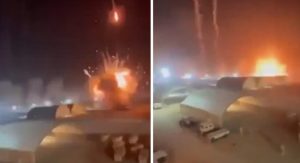
Despite all fortifications and claims, even the Muwaffaq Salti Air Base was not spared from Iranian drone and missile strikes. In recent days and nights, Iranian armed forces launched heavy missile and drone attacks against the base. Satellite imagery reveals the destruction of at least two main hangars and a portion of the Patriot air defense system. Iran has also announced the destruction of at least two fighter jets.
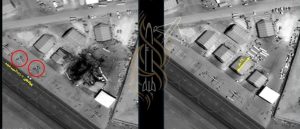
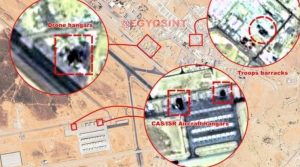
To date, the United States has officially acknowledged the deaths of two service members and the disappearance of another, though analyses suggest higher casualty figures. It is believed that the Pentagon—much like during the attack on Ain al-Asad—is employing a “drip-feed” information strategy in an attempt to downplay the scale of the disaster. These attacks demonstrated that geographical distance no longer guarantees the security of U.S. bases and that the Islamic Republic possesses the capability to strike deep into the enemy’s strategic depth using its precision-guided ballistic missiles.
The Need for Jordanian Public Pressure to Expel U.S. Troops
The experience of recent decades has demonstrated that the US military presence in West Asia has not only failed to bring peace but has instead continuously fueled the flames of war. By resorting to warmongering, the United States pits Muslim nations against one another to secure its own illegitimate interests. Consequently, the only path to restoring peace and stability to this volatile region is the complete and unconditional withdrawal of US forces. However, this withdrawal will not happen on its own; it requires a collective, grassroots demand across all the region’s nations. People must urge their governments to seek independent, regional solutions for their security rather than relying on foreign powers. As long as American bases remain in the heart of Islamic countries, war and insecurity will be constant companions in these lands. Muwaffaq al-Salti is but one example of this bitter reality. A popular awakening could put an end to this occupation and usher in a new era of independence and solidarity among the region’s governments and nations.