
PNN – Citing the experience of the Iranian attack on the Nevatim airbase, an Israeli document has warned of a scenario in which the air force could be paralyzed.
According to the report of Pakistan News Network; while the Israeli military relies absolutely on its air force in any conflict—given the numerous weaknesses of its ground forces—a new Israeli document highlights concerns regarding a scenario that could disrupt operations at key Israeli airbases in the Negev and curtail their capabilities at the height of a multi-front war.
The Nightmare Scenario Paralyzing the Israeli Air Force
In this context, the Hebrew newspaper Israel Hayom reported that the document—titled “Nevatim’s Edge: A Reference Scenario”—was prepared with the participation of former security and military officials. Indeed, the document is described as a “nightmare scenario” capable of threatening a portion of the Israeli Air Force.
Israel Hayom added that this warning is based on the potential convergence of three elements, each of which has previously emerged independently:
– According to assessments cited in the document, a large number of unlicensed weapons have been distributed in the Negev.
– There is a possibility of armed unrest stemming from various motives.
– Recently, a series of intelligence and directed activities attributed to Iran have taken place in the Negev region.
Based on this assessment by the Zionist regime, the real danger lies in the convergence of these three factors—particularly amidst escalating regional conflicts. This situation could disrupt Israel’s access routes to its bases at a critical moment.
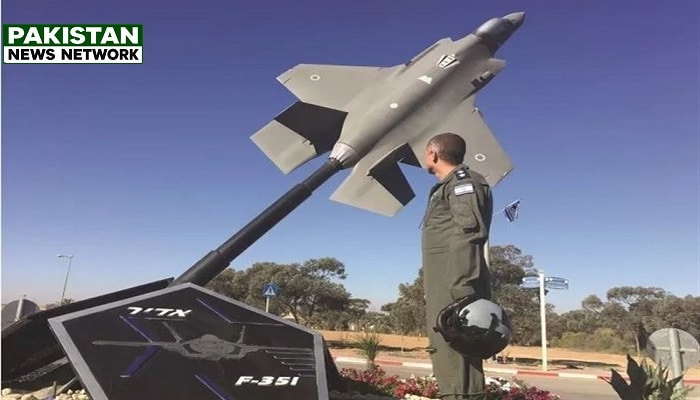
According to a report by Israel Hayom, at the heart of these concerns lies the Nevatim Airbase, home to squadrons of F-35 fighter jets, heavy transport aircraft, and the Israeli Air Force’s “Zion Wing” aircraft.
The report also addresses other bases in the Negev, including Hatzerim Airbase and the areas surrounding the Ramon and Tze’elim airbases. According to the document, a significant portion of Israel’s air power is concentrated in this region.
Details of the Israeli Air Force’s nightmare scenario in the Negev
Notably, this scenario does not consider a military assault or the seizure of the bases. The document indicates that cutting off access routes, firing at grounded aircraft, or employing drones could suffice to ground certain aircraft for hours or days, thereby limiting the base’s operational capacity and slowing the pace of flight operations at the height of a multi-front war.
In this regard, the document assesses risk based on the duration for which Israel would be deprived of using these bases; for instance, an aircraft sustaining minor damage might require inspection and maintenance before returning to service, whereas disruptions to access routes could prevent pilots and crew from reaching the base altogether.
The document also warns that under wartime conditions, a one-hour delay in takeoff can have a significant impact—one that outweighs the actual physical damage sustained.
Israel Hayom emphasized that the authors of the document did not present the elements of the scenario merely as theoretical hypotheses, but rather drew upon past experiences and events.
According to the report, during the May 2021 war in Gaza and the accompanying protests and unrest within Israel (the occupied territories), major roads in the Negev were blocked, and reserve pilots were forced to travel to Nevatim under security escort; additionally, the town adjacent to Nevatim was effectively under siege for approximately 24 hours.
Separately, a report by the Israeli regime’s State Comptroller from April 2026 documented instances of gunfire directed at the Nevatim airbase—including one case where an aircraft wing was struck—as well as drone attacks.
Meanwhile, the Israeli police estimate the number of unlicensed weapons and pieces of military hardware in the Negev at approximately 130,000, whereas the Reefman Institute places the figure at around 100,000.
Fears of Repeated Iranian Missile Strikes on the Strategic Nevatim Airbase
According to this document, concerns regarding potential Iranian operations against the Nevatim airbase continue to mount. The base had previously been targeted by Iranian missile strikes in 2024, and Israeli officials reported the discovery of espionage networks operating in the vicinity, whose members were tasked with photographing military bases and facilities.
In 2025, Israeli officials accused a Bedouin teacher from the Negev—who resided near Nevatim—of working for Iranian intelligence and gathering information on the base, including filming the takeoffs of fighter jets.
The document does not claim that Iran is behind the stockpiles of illicit weapons in the Negev; rather, it warns of the possibility that Iran might utilize existing infrastructure in the event of a broader confrontation.
According to the document, Iran does not need an army inside the Negev, but rather needs bases, weapons already in the area, and a segment of the population ready for mobilization.
This document outlines a scenario involving a war with Iran and its allies, in which road connections—particularly the access routes to military bases—are disrupted or blocked, forcing the police to devote all their time and energy to managing the situation. Amidst this turmoil, an armed group exploits the chaos to fire upon aircraft stationed at the Nevatim airbase.
According to the scenario, drone attacks launched from within the base follow, after which Iran—capitalizing on the resulting disorder—orchestrates a major external attack.
According to the report, the danger lies in the combination and timing of these elements: blocked roads, a base with reduced operational capacity, damaged aircraft on the ground, and an internal threat—all coinciding with an external attack.
The Significance of Nevatim Airbase to the Israeli Air Force
Nevatim Airbase—also known as Israeli Air Force Base 28—is located in the south of the occupied territories, between Beersheba and Arad. It is one of three airbases constructed to replace bases formerly located in the Sinai Desert.
Stealth fighter jets, transport aircraft, aerial refueling tankers, and electronic reconnaissance/detection platforms are stationed at this base. Featuring a 3.4-kilometer runway, Nevatim serves as the primary base and hangar facility for the Zionist regime’s F-35 fighter jets.
Over the years, this airbase has hosted the 103rd Squadron (Super Hercules transport aircraft), the 116th and 140th Operational Squadrons (F-35 fighters), the 117th Training Squadron (for F-35 pilot training), the 122nd Intelligence-Gathering Squadron, and the hangar for the Zionist regime’s presidential aircraft.
While transport and aerial refueling aircraft, as well as reconnaissance and surveillance planes, are stationed in the southern section of the airbase, the northern section—featuring two runways—is designated for three squadrons of stealth F-35 fighter jets.
According to Israel Hayom, a temporary disruption within the Air Force at this juncture could have repercussions for Israel extending well beyond the Negev to the Gaza Strip, Lebanon, and Iran.
In short, this document states that the area surrounding Nevatim is no longer merely a civilian buffer zone for a military base; rather, it has become the “Air Force’s home-front frontline”—a front where disruption to Air Force operations could originate from the roads and fences surrounding the base, even before combat begins in the skies.