
PNN – Gulf Cooperation Council members believe that a US military strike against Iran failed to shift the balance of power to Iran’s disadvantage.
According to the report of Pakistan News Network; US President Donald Trump stated in a post last Monday that the United States is fully prepared to attack the Islamic Republic of Iran. This threat followed Tehran’s decision to expand the scope of its “gray zone” operations in response to the continued adventurism of American terrorist military forces in the Strait of Hormuz.
Over the past few days, numerous reports have emerged suggesting that the United States and the Zionist regime might be planning new, severe attacks on Iran. However, in a post on Truth Social yesterday, Trump claimed that Iran and other Middle Eastern nations had asked him to refrain from any attacks, citing an increased likelihood of reaching an agreement; yet, this narrative was met with skepticism and uncertainty on the Iranian side. Trump has—for the eleventh time—backed away from threatening attacks on Iranian infrastructure, doing so despite the absence of any clear or reliable evidence supporting his claim that Iran has softened its stance, and while most evidence actually points to the contrary.
Tensions between the United States and Iran have once again escalated to levels reminiscent of the height of the conflict, following an unclaimed attack on a U.S.-owned gas storage vessel at Egypt’s Damietta Port and missile strikes on U.S. forces in Jordan—incidents that triggered retaliatory U.S. airstrikes against targets linked to Iran. These attacks, coupled with renewed threats from Yemen’s Ansarullah to block or restrict the Bab ul-Mandeb Strait, have heightened concerns regarding the security of maritime routes that facilitate the uninterrupted flow of Persian Gulf oil and liquefied natural gas exports to global markets, including via the Suez Canal.
For the Persian Gulf monarchies, the prospect of escalating conflict has raised deep concerns regarding their economic security and strategic vulnerability in the face of Iranian pressure. Persistent disruptions to maritime trade routes threaten the energy exports, foreign investment, and regional stability upon which these nations’ long-term development plans depend.
Despite decades of U.S. military dominance in the Persian Gulf, the resumption of military confrontation between Iran and the United States in the region exposed Washington’s inability to fully protect its regional partners—and their critical infrastructure—against potential Iranian attacks; for the Islamic Republic of Iran retains control over the Strait of Hormuz and dictates the rules of the game to its neighbors. The presence of delegations from nearly all Persian Gulf states—including Saudi Arabia, Qatar, and Oman—at the funeral of the Revolution’s martyred leader served as a symbolic indication of this reality and reflected a calculation rooted in realpolitik. Despite the losses sustained during the Ramadan War, Tehran remains a key regional player whose ability to shape the security environment of the Persian Gulf cannot be ignored.
In the assessment of the American side—specifically senior Trump administration officials, media outlets aligned with them, and the Zionist regime—much of the post-Ramadan War analysis has focused on the military dimension. From their perspective, the Zionist regime and the United States demonstrated unprecedented operational capabilities, deployed massive force, and inflicted heavy losses on Iran. However, the Arab monarchies of the Persian Gulf do not view the outcome of the wars in this light. For Riyadh, Abu Dhabi, Doha, and other Persian Gulf capitals, the ultimate measure of success is not the number of targets destroyed, military commanders assassinated, or missiles intercepted; rather, the question is whether the use of force has created a more stable and secure regional order. By this standard, the current situation can be viewed as nothing short of a strategic disappointment for these aggressor nations.
Consolidating Iran’s Position in the Persian Gulf Region
From the perspective of the Persian Gulf states, this conflict did not fundamentally alter the regional balance of power. Despite sustaining extensive military and economic losses, Tehran has retained the offensive capabilities that matter most to Gulf policymakers—including the ability to threaten energy infrastructure, disrupt maritime trade, activate the “Axis of Resistance,” and impose recurring costs on these nations.
For the Persian Gulf monarchies, these enduring capabilities are of paramount importance, as they define the future landscape of the region’s security balance. Nothing illustrates this better than Iran’s sustained leverage over the Strait of Hormuz. Iran’s asymmetric strategy relies on the geographic advantage of Hormuz and the understanding that achieving its objectives does not require permanently closing the strait. Through this approach, Iran aims to transform its geographic dominance over the Strait of Hormuz into broader political and strategic leverage against its Persian Gulf neighbors.
On the other hand, the experience of the Ramadan War demonstrated to these countries that the presence of U.S. bases cannot necessarily ward off all threats; indeed, at times, such bases themselves become points of vulnerability and sources of danger. Therefore, only a large-scale attack capable of bringing about real, fundamental change in Iran’s power, regional influence, and domestic situation could alter the regional order to these countries’ advantage in the medium term. However, if Iran maintains its resilience, resistance, and components of power, the result will be nothing but prolonged instability in the region. This instability could prove extremely costly for these countries’ long-term planning—plans that represent their future strength and are aimed at attracting foreign investment and technology to diversify their economies and break free from single-commodity, energy-dependent economic models.
Concluding Remarks
Members of the Gulf Cooperation Council (GCC) believe that achieving absolute economic dominance in the future could establish a stable, long-term regional order that favors their interests. However, Iran’s resistance and the emergence of new leverage points—such as the Strait of Hormuz—have shifted the balance against them, even raising the prospect of future internal instability in some of these nations, such as Bahrain.
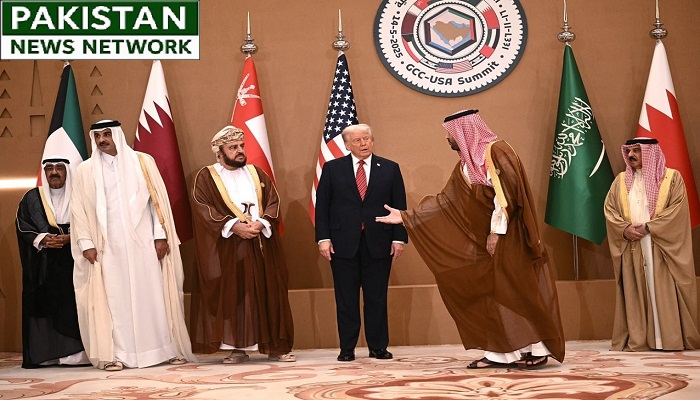
It is against this backdrop of perception that Saudi media and government officials have reported that Saudi Crown Prince Mohammed bin Salman spoke with Donald Trump yesterday, calling for further dialogue to avert an escalation of tensions with Iran. These reports also highlight the Crown Prince’s request for greater clarity regarding Washington’s strategy toward Iran.
It appears that some Persian Gulf states have adopted a more cautious stance due to these very uncertainties—which have become more apparent over the past five months. However, other actors—such as Kuwait, which has recently shifted toward a more aggressive policy in confronting Iran—do not necessarily share this perspective.