
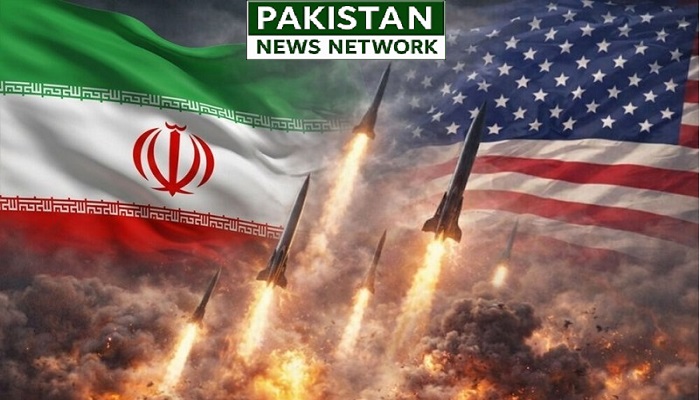
PNN – A British media outlet has presented its own account of the methods Iran is using to compel the United States to make concessions.
According to the report of Pakistan News Network; a Reuters report examines Iran’s new strategy in its conflict with the U.S., suggesting that Tehran is pushing Washington to accede to its demands by gradually escalating economic and security costs.
Some of the key points of this report are as follows:
- Iran’s Strategy: Increasing Costs for the U.S.
Reuters reports that by deliberately escalating tensions, Iran aims to raise the cost of continued confrontation to the point where Washington is compelled to accede to Tehran’s demands—particularly regarding the Strait of Hormuz.
- A New Tool for Pressure Every Week
Michael Knights, a researcher at the Washington Institute, notes that since the conflict began, Iran has sought to increase pressure on the United States each week by employing a new tool—sometimes by opening a new theater of operations, sometimes by using a new weapon, and sometimes by targeting different assets—thereby ensuring it always has fresh leverage.
- Tehran is banking on Trump’s constraints
Persian Gulf sources told Reuters that IRGC commanders believe Trump has no desire to enter another major war in the Middle East due to concerns regarding the congressional midterm elections; this situation has created an opportunity to increase pressure on Washington.
- Concessions before negotiations
A senior Iranian official told Reuters that the experience of past negotiations has led Iranian leaders to conclude that any flexibility shown before establishing leverage merely results in escalating U.S. demands; consequently, Tehran believes the balance of power must be shifted first before entering into negotiations.
- Iran seeks to set the rules of negotiation itself
Ray Takeyh, a former U.S. State Department advisor and a fellow at the Council on Foreign Relations, states that Tehran’s goal is to create conditions wherein—should negotiations take place—it is Iran, rather than Washington, that defines the framework and agenda.
- Conclusion
Reuters concludes that Iran’s current strategy is predicated on “attrition”—specifically, the gradual escalation of security, economic, and commercial costs for the United States and its allies to the point where continuing the confrontation becomes more costly than acceding to some of Tehran’s demands. From this perspective, time and sustained pressure are considered Iran’s most potent weapons.