
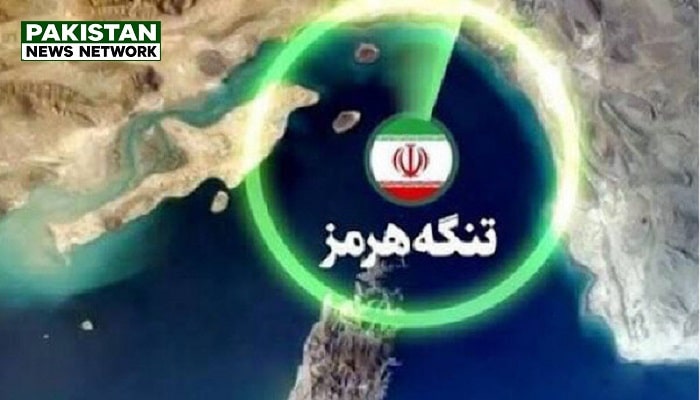
PNN – An American publication, emphasizing that Iran will be the dominant power in the Middle East in the future, wrote that the power to control the Strait of Hormuz is, for Iran, more significant than possessing nuclear weapons.
As time passes, independent international analysts and theorists increasingly recognize the extent of the failure of the US and the Zionist regime in their warmongering against Iran, as well as Iran’s emerging upper hand in future international equations.
In this context, the American publication The Atlantic—in a report by American historian Robert Kagan—highlighted the failure of the US-Zionist campaign of aggression against Iran. The report noted that the balance of power in the Middle East is on the verge of a fundamental shift that could transform Iran into the region’s dominant power—particularly after the recent conflict exposed the limitations of US and Zionist capabilities to bring Tehran to its knees or force it to make concessions.
According to this report, Iran emerged from this conflict possessing greater capacity to leverage the Strait of Hormuz as a strategic asset; it can now deter adversaries with increased confidence and influence their vital interests without the need to engage in all-out war.
Iran is set to become the dominant power in the Middle East.
Consequently, the repercussions of this development extend beyond the region, potentially impacting the global economic order and international alliances. Furthermore, the effectiveness of the sanctions regime has diminished, while doubts have grown among U.S. allies in Europe and Asia regarding Washington’s capacity to engage in another major conflict.
Keegan stressed that “Iran will be the dominant power in the Middle East in the future,” adding that neighboring countries are now beginning to adapt to this new reality, and that powers further afield will do the same.
He continued that Iran does not need to make a deal with the United States because the assumption that Iran is weaker or more vulnerable than it was two years ago has been proven wrong.
Warmongering in the region exposed America’s fragility.
The Atlantic adds that the Iranian regime held firm throughout the conflict without making a single concession; on the contrary, Iran exposed America’s vulnerabilities and the fragility of its neighbors. Iran’s strike on the U.S.-linked Ras Laffan gas facilities in Qatar—carried out in retaliation for the American attack on Iran’s own gas installations—demonstrated that Iranian missiles and drones are capable of inflicting severe damage on Persian Gulf oil and gas infrastructure and plunging the world into a prolonged economic crisis.
Noting that Trump halted U.S.—and even Israeli—strikes on Iranian energy targets following that attack, he added that, ultimately, military action ceased without securing any concessions from Iran. This alone was sufficient to shift the balance of power between Iran and the United States.
The Memorandum Was a Clear Victory for Iran
Robert Kagan described the signing of the interim memorandum between Iran and the United States as a clear victory for Iran, noting that the agreement stipulates that the Islamic Republic of Iran—and no other nation—will undertake the necessary “arrangements” to guarantee the “safe passage of commercial vessels” through the Strait of Hormuz.
According to the report, the aforementioned memorandum of understanding granted the United States no authority over the future management of the Strait; instead, it stipulated that Iran was the sole active party—alongside a weak Oman—responsible for managing the waterway, and even authorized Iran to levy transit fees on vessels for safe passage after a 60-day period.
Noting Iran’s reluctance to sign the agreement, the article states that the memorandum reflected the United States’ profound desperation and willingness to make concessions to end the war—to the extent that the Iranians anticipated the U.S. would ultimately withdraw regardless of whether an agreement was reached.
Resumption of War Threatens U.S. Interests Worldwide
Pointing to revelations that U.S. stockpiles of critical munitions have dwindled to dangerous levels, Kagan wrote that launching a major attack on Iran could jeopardize U.S. interests elsewhere in the world, as the United States would be left weakened should China move against Taiwan or Russia attack a NATO member. Furthermore, a shortage of missiles diminishes the feasibility of a large-scale strike on Iranian infrastructure.
According to the report, under such circumstances, the U.S. would be compelled to deploy more fighter jets with pilots who would be exposed to Iranian air defenses. Consequently, the risk of American casualties and the threat to regional energy infrastructure would increase.
The Atlantic noted that U.S. actions have clearly demonstrated that Washington fears an escalation of tensions more than Iran does. Reports indicate that Trump has told his advisors he does not wish to order further strikes.
Senior Iranian officials are now demanding the withdrawal of U.S. forces, the lifting of the U.S. naval blockade and all sanctions, the release of Iran’s frozen assets, and the payment of war reparations. Iranian leaders believe these demands are unacceptable to Washington; thus, they aim either to bring Trump to his knees or to secure a better deal.
For months, Iran has made it clear that control over the Strait is non-negotiable; meanwhile, claims by the Trump administration and the media suggesting Iranian hesitation are nothing but slander and lies.
Controlling the Strait of Hormuz is more beneficial for Iran than a nuclear weapon.
The report stated that Iran has been laying the groundwork for control mechanisms over the Strait of Hormuz for several months, having issued directives to ship owners and nations regarding the system’s operation. Iran has established the “Strait of Hormuz System,” requiring shipping companies to register, obtain permits, adhere to Iranian-designated routes, and pay for the insurance and security services provided by Iran. Iran reserves the right to deny passage through the Strait to vessels belonging to governments it deems “hostile” and to demand compensation from countries that have participated in attacks against Iran.
Keegan believes that Iran’s control over the Strait of Hormuz is an instrument of power whose effectiveness surpasses even that of nuclear weapons. In his view, control of the Strait allows Iran to exert influence over dozens of countries on a daily basis. Thanks to this control, Iran can reward allies, punish adversaries, generate revenue, compel governments to ease sanctions, and force them to think twice before opposing Iranian policies—all without firing a single shot.
The Sanctions Strategy Is Crumbling
Keegan believes that the sanctions strategy was predicated on “international cooperation”; consequently, nations reliant on access to the Strait (such as Japan and South Korea) will be forced to choose between “securing reliable energy supplies” and “participating in US-backed sanctions.” Thus, given the new order Iran seeks to establish, the global sanctions regime is likely to prove unstable.
Arab Nations Compelled to Make Peace with Iran
Noting the shift in the stances of regional states within the new landscape, the article adds that Persian Gulf rulers—who previously relied on U.S. security guarantees—are now compelled to make peace with a power that has proven capable of defeating their “American patron.” Under these circumstances, Iran will be able to resume its nuclear program without fear of another major attack. This fact alone will alter the regional balance of power.
According to Keegan, Iran has become bolder in leveraging its control over the Strait of Hormuz—and threatening U.S. interests and energy infrastructure in neighboring countries—to deter any similar future attacks. Replenishing U.S. missile stocks, including interceptors, takes a long time, and these munitions may be critically needed elsewhere in the world in the coming years. Meanwhile, Iran will continue to rearm with the assistance of Russia and China.