
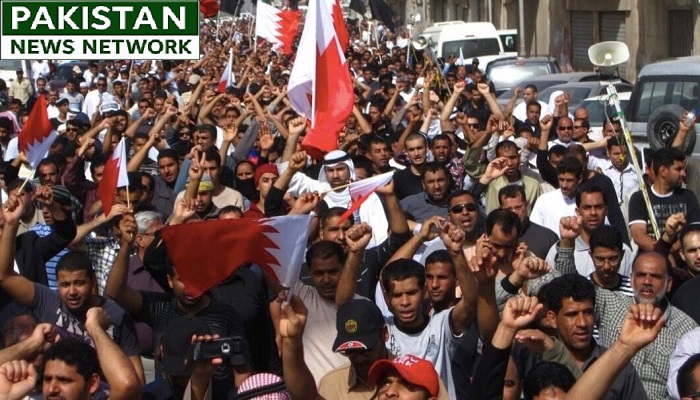
PNN – Key developments in West Asia over the past week included a warning from the leader of Bahrain’s Shiites regarding an existential threat to Shiism and its religious pillars in the country, as well as expert analysis of the multi-layered messages behind Iran’s attack on the U.S. base at Al-Tanf and regional efforts to de-escalate military tensions.
According to the report of Pakistan News Network; West Asia witnessed significant news and developments over the past week.
– In a telephone conversation with the President of the European Council, the President of Iraq emphasized the need to intensify international efforts to de-escalate tensions in the region.
– Sheikh Isa Qassim, the leader of Bahrain’s Shia community, issued a statement warning about the status of the political and civil rights of Shias in the country, asserting that the Shia faith—along with all its religious and outreach institutions in Bahrain—faces a severe existential threat.
– Yemen’s Ministry of Transport (under the “Change and Construction” government) announced the resumption of operations at Sana’a International Airport.
– Amid Riyadh’s growing concern over the escalation of attacks from Yemen, reports indicate that Oman and Qatar have initiated mediation efforts to contain the crisis; however, Sana’a—having released a map of new targets within Saudi Arabia—has emphasized that all Saudi airports will remain within striking range until the blockade on Sana’a Airport is lifted, and that a cessation of operations is contingent upon Riyadh fully honoring its commitments.
– In a joint meeting at the official Parvizkhan border crossing, the Director General of Parvizkhan Customs and the Plenipotentiary Representative of the Kurdistan Region of Iraq emphasized the expansion of bilateral cooperation, the removal of existing obstacles, the strengthening of border security, and the development of trade exchanges between the two sides.
– The International Media Office categorically denied false claims circulated by certain Zionist media outlets alleging that the Qatari government had agreed to participate in military action against the Islamic Republic of Iran.
– Amidst allegations of a drone attack by Iran, the Kuwaiti military announced the activation of the country’s air defense systems to intercept aerial targets, while reports emerged of explosions being heard in various parts of Kuwait.
– The Ministry of Foreign Affairs and Expatriates of the Ansarullah-backed government in Sana’a issued a statement strongly condemning ongoing US attacks against the Islamic Republic of Iran, including a strike near a hospital in Ahvaz.
– Bahrain’s Ministry of Interior has imposed new restrictions on vessel traffic within its territorial waters in light of the prevailing situation in the Persian Gulf.
– The “Islamic Resistance in Iraq” announced a $10 million reward for anyone who assassinates U.S. President Donald Trump.
– The Deputy Minister of Information for the Sana’a-based government criticized the ongoing economic blockade of Yemen, stating that if Saudi Arabia does not agree to lift the blockade through a political process, Sana’a will move toward a military confrontation with the Kingdom in the coming days.
– Yemen’s Supreme Political Council emphasized that the response to Saudi aggression would be direct and reciprocal, in accordance with the deterrence parameters outlined by the leader of the revolution, Sayyid Abdul-Malik Badr al-Din al-Houthi.
– News sources have reported a missile attack on the headquarters of separatist Kurdish forces opposed to the Islamic Republic of Iran, located in the “Zarkweizla” area near the border of Sulaymaniyah Province in the Kurdistan Region of Iraq.
– Yemen’s Minister of Defense and Military Production warned the countries of the aggressor coalition—particularly Saudi Arabia and those orchestrating the blockade of Yemen—that if they persist in their aggression, insolence, and crimes, the Yemeni armed forces are prepared to exercise all available options.
– News sources reported that Egypt, in cooperation with other regional parties, has initiated efforts to prevent the conflict from spreading across the region.
– The Friday prayer leader of Najaf called on officials of the Iraqi Kurdistan Region to prevent opponents of the Islamic Republic of Iran from launching attacks or acts of aggression against Iran, and to deny them permission to establish headquarters or camps in Erbil and other parts of the region.
– The Iraqi Foreign Minister stated that Baghdad opposes war, as well as its continuation and expansion across the region.
– The Iraqi Prime Minister’s office announced the signing of 48 agreements and memoranda of understanding with the United States covering the oil, industrial, technology, and financial sectors.
Some other key regional developments include:
Bahraini Clerics Warn of Civil Rights Violations in the Country
Bahraini clerics have warned against the escalating violation of civil rights, the mass arrests of religious scholars and preachers, the open suppression of religious observances, and the confiscation of Shiite religious endowments in the country.
According to the “Bahrain February 14 Revolution Youth” news portal, a group of prominent clerics issued a statement condemning the Al Khalifa regime’s inhumane actions—specifically the persecution, arrest, and prosecution of Shiite religious scholars, preachers, and missionaries—and described the current situation facing the country’s Shiites as an existential threat.
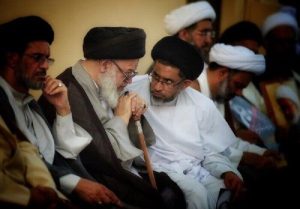
The statement reads: When oppression spreads, truth is violated, and scholars are targeted in their dignity and freedom, silence is no longer permissible for those who bear the responsibility for knowledge and religion. Rather, speaking out becomes a duty, and taking a stand is an obligation that brooks no compromise and allows for no delay.
Intense Clashes between Syrian Interim Government Security Forces and Gunmen in Northern Syria
An Arab media outlet has reported intense clashes between the security forces of the Syrian Interim Government and gunmen in the northern province of Aleppo.
According to Al-Araby TV, heavy fighting broke out between Syrian Interim Government security forces and gunmen in the city of Azaz, located in the northern province of Aleppo.
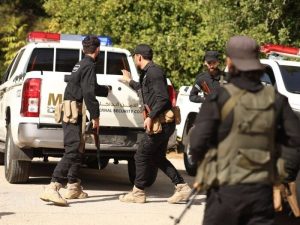
Al-Arabi Network, citing the Internal Security Directorate of the city of Azaz, reported that one of the directorate’s security patrols came under fire while intervening to halt an armed clash between several parties within the city.
The Internal Security Directorate of Azaz, located in northern Syria, stated that it has deployed additional security forces to the area, adding that special units are currently managing the situation on the ground to prevent the conflict from escalating and to protect civilians.
The Multi-Layered Messages of the Attack on the Al-Tanf Base for Washington, Damascus, and Amman
In an analysis regarding the attack on the US base at Al-Tanf in Syria, the Lebanese newspaper Al-Binaa wrote that this operation by Iran conveyed a series of strategic messages to the United States and its allies.
Al-Binaa reported that Syrian sources have confirmed the attack on the US base at Al-Tanf, whereas the US side has either ruled out casualties or stated that any potential losses were minimal.
The first message serves as a warning against any plans or calculations aimed at turning Syria into a launchpad for participation in any confrontation with Hezbollah.
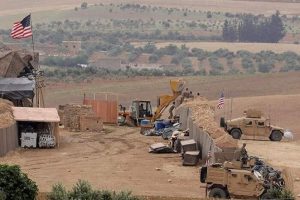
According to these experts, the attack on Al-Tanf has clearly defined the limits of any potential Syrian role in such a scenario.
The report indicates that the second message is directed at Jordan. This analysis suggests that should the conflict escalate, all U.S. military bases in the region—if utilized to support military operations—would become part of the battlefield.
The third message is also directed squarely at Washington. In this regard, Al-Binaa writes that Iran’s attack on Al-Tanf—located at the border junction of Syria, Jordan, and Iraq—demonstrates that should the war persist and escalate, the scope of the conflict could extend beyond the Persian Gulf and spread to all areas where U.S. forces are deployed in the region.