
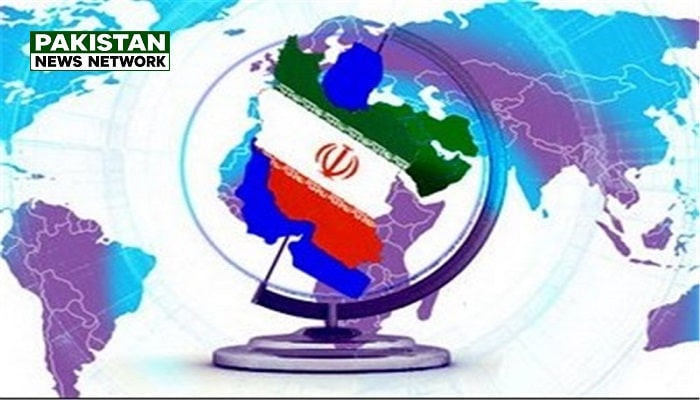
PNN – The emergence of an indigenous, counter-hegemonic order is the product of the Resistance network’s victory over the astronomical-budget war machine arrayed against Iran.
During the first two decades of the twenty-first century, the international order has entered one of the most complex and pivotal periods of its historical evolution. The world—which, following the collapse of the Soviet Union and the end of the Cold War, was largely dominated by a US-led liberal order—is now confronting a confluence of structural, ideological, technological, and geopolitical transformations that are increasingly challenging the foundations of the previous order. Under these circumstances, the question regarding the nature of the future global order is no longer merely a theoretical issue within the realm of international relations; rather, it has become a primary concern for policymakers, think tanks, governments, and international institutions, making the task of determining how to position oneself within that order a matter of urgent national priority.
Structural changes in the international order over the past three decades are the product of two simultaneous and intersecting trends. The first is a shift in the global center of gravity, manifested by China’s systematic rise and the erosion of the United States’ hegemonic position. This dynamic has destabilized the unipolar stability of the post-Cold War era, steering the global system toward a fundamental redefinition—whether in the form of bipolarity or multipolarity. The second trend is the normative decline of the liberal order—a process wherein established institutions and values have lost their legitimizing efficacy. Widening structural inequalities, identity-based divergences, and the resurgence of nationalist discourses—coupled with a crisis regarding the effectiveness of international institutions—collectively signal the gradual collapse of the existing order’s ideological foundations and the emergence of a normative vacuum in global politics.
Alongside these macro-structural transformations, one can identify another type of development—termed “intra-structural changes”—that has acted as a catalyst, accelerating the international system’s transition. These layered dynamics, unfolding within existing institutions and mechanisms, have not only facilitated the process of power redistribution amidst the gradual erosion of the established order’s efficacy but have also intensified it on a broader scale. The digital revolution, artificial intelligence, the race for advanced technologies, climate change, the rise of the Global South, global pandemics, cybersecurity, supply chain crises, efforts to establish parallel monetary and financial systems—as well as the initiation and intensification of de-dollarization efforts and the return of power politics to international relations—all indicate that the world is entering a phase characterized primarily by heightened uncertainty and reduced predictability.
This trend cannot be viewed merely as a reflection of the redistribution of material power in the international arena; rather, it must be regarded as a sign of the emergence of alternative narratives, models, and frameworks regarding development, governance, and global order. On the one hand, these emerging models challenge the West’s “epistemic monopoly” over the definition of concepts, norms, and legitimate patterns for organizing political and social life; on the other, by accelerating the structural reconfiguration of the global order, they pave the way for the transformation of the rules, institutions, and practices governing international relations.
One should not assume that the waves of these transformations will remain confined to the macro level of the international system; their consequences will inevitably spill over into regional levels and impact the foundations of established orders. Developments in West Asia—particularly following the Ramadan War (the Forty-Day War)—have made it evident that the region has entered a decisive phase of struggle over the shaping of the future order.
This struggle has manifested as escalating friction and a fundamental confrontation between two competing normative and conceptual orders: on the one hand, the “established US-centric order,” the reproduction of which relies on the continued presence of extra-regional powers, the security dependence of regional states, and the entrenchment of the existing hierarchy; and on the other, the “networked order of resistance centered on the Islamic Republic of Iran,” the logic of which is grounded in strategic independence, networked deterrence, the reduction of foreign hegemony, and the redefinition of power relations in the region.
Therefore, this confrontation cannot be reduced to a material struggle over territory, resources, or spheres of influence; rather, it must be understood as an “ontological” and order-defining conflict concerning the determination of legitimate rules of action, the distribution of status, the right to independence, and the recognition of indigenous identities and political wills.
In this sense, the unfolding situation in West Asia is not merely a competition within the existing order, but a battle over preserving or transforming the very foundations, rules, and architecture of the regional order itself. The previous regional order—predicated on a model of “top-down and external management”—has now lost its explanatory and operational efficacy in the face of emerging regional and international realities.
This order—which defined its nature by “securitizing” dissenting actors, artificially categorizing regional players into “responsible” and “disruptive” groups, continuously instilling “ontological insecurity” in target actors while casting them as the “Other,” and regarding the containment of indigenous, transformative regional dynamics as its ultimate goal—is today being challenged by the emergence of an alternative configuration known as the “networked order of resistance.”
Unlike the previous model, this emerging paradigm—grounded in the concept of “West Asia for West Asians”—is defined not by the outsourcing of security, but by the pursuit of an endogenous, indigenous, and counter-hegemonic order, centered on the core tenet of “active resistance.” The emergence of this order—which has approached strategic maturity alongside the “rise of the Iranian moment” following the Forty-Day War (the Ramadan War)—is neither a simple nor an accidental phenomenon; rather, it is the product of a bloody and profoundly asymmetrical conflict. It was a battle in which one side—backed by astronomical military budgets (nearly 160 times that of the Islamic Republic of Iran’s defense budget)—was ultimately defeated by the strategic will of the Resistance Network and has, to date, failed to achieve its objectives. This is a phenomenon referred to in some international relations literature as “hegemonic helplessness” or the “helpless hegemon.”
Overall, the contemporary international system is confronting two simultaneous, transformative fault lines. The first is the resurgence of China and its drive to secure a status commensurate with the aspiration of “restoring China’s greatness”; while this has fueled comprehensive strategic rivalry with the United States and altered the balance of power, it continues to unfold within the frameworks of “systemic competition” and conventional pathways of power. In contrast, the second transformation—unfolding at the regional level, particularly in West Asia, and having taken the form of a “hot war”—is a confrontation between the “rise of Iran’s moment” and the “emergence of a networked Resistance order” on one side, and the “exclusionary US-Israeli regional order” on the other. Undoubtedly, the trajectory and future of these two types of conflict, along with their outcomes, will decisively influence the macro-architecture of the international order and the rules governing future order-building.