
PNN – Foreign Affairs magazine has acknowledged Iran’s power in the political, economic, and military arenas while highlighting U.S. vulnerability.
According to the report of Pakistan News Network; an article in Foreign Affairs by Horviter—a former U.S. Deputy Assistant Secretary of Defense—acknowledges that although the United States and the Zionist regime have struck thousands of targets in Iran, the country’s ruling system has remained intact after more than six months. Furthermore, Iran has managed to close the Strait of Hormuz, a move that ultimately drove up energy prices and bolstered the country’s political influence.
Iran’s Power of Resistance
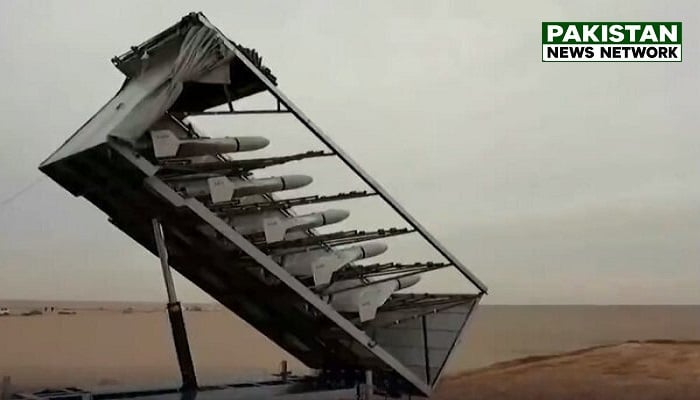
According to this report, Iran’s strength in terms of steadfastness and resistance stems from its readiness to confront a potential protracted war—including the ability to rebuild its governance structure and secure essential imports—and, above all, its vast stockpiles of low-cost drones and missiles. These weapons have enabled Iran to inflict heavy damage on U.S. bases and regional infrastructure, thereby raising the cost of warmongering.
Imposing a New Equation
This new equation has upended long-standing assumptions regarding military superiority: attacking has become less costly than defending. The Iranian Shahed-136 drone, manufactured at a cost of $35,000, can engage a U.S. Patriot missile costing $4 million. Consequently, it is becoming increasingly difficult for the world’s militaries to sustain a defense against this inexpensive weapon using costly systems.
The author of this article warned against the dangers of the US military’s over-reliance on artificial intelligence, noting that the primary issue facing the US is the volume of its weapons stockpiles. Technological superiority alone is insufficient if militaries fail to adapt their structures. While the US relies heavily on expensive weaponry and systems—such as Tomahawk missiles and F-35 fighter jets—countering massed, precision-guided munitions requires low-cost production and the ability to deploy assets more rapidly.
Nations Following Iran’s Lead
Iran has demonstrated that other countries cannot remain on the sidelines of military power rivalries; its underground missile networks and dispersed facilities make the complete destruction of its military capabilities a formidable challenge. Meanwhile, the United States has been compelled to expend vast quantities of its costly missiles.
Other nations are effectively taking a cue from Iran. North Korea is upgrading its low-cost drones, while Poland is boosting funding for drone production and air defense systems. European and Asian countries are likewise seeking to expand their offensive drone capabilities.
The Era of Mass-Produced Precision Weapons
We are witnessing a widening gap between the costs of offense and defense. The United States has expended vast quantities of its Patriot and THAAD missiles during the confrontation with Iran. This dynamic means that the balance of power is no longer measured simply by wealth, as many nations are now capable of producing large volumes of precision-guided weapons at a low cost.
The era of mass-produced precision weapons has arrived, and the United States must restructure its military capabilities based on this reality.