
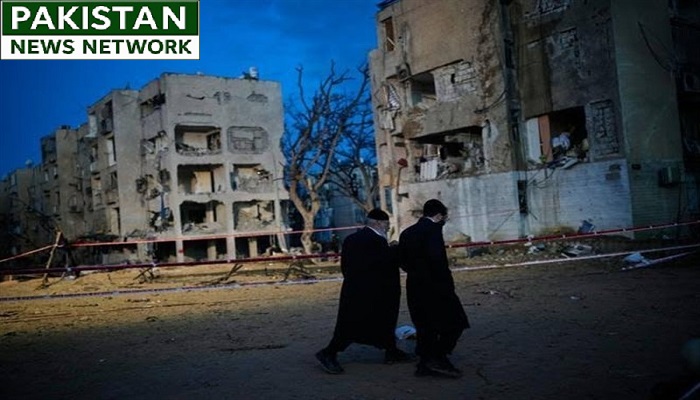
PNN – Exorbitant air defense costs have compelled Israeli military commanders to adopt a policy of selective defense against Iranian missile attacks.
According to the report of Pakistan News Network; following two military aggressions by the Zionist regime against Iran—which were met with a massive missile and drone response from the Islamic Republic—the regime’s own military reports now reveal, for the first time, a “strategic failure” regarding “military planning for interceptor stockpiles.” This failure necessitated “munitions conservation” during the interception of Iranian missiles and led to a deliberate decision not to attempt to intercept certain missiles.
Underlying these reports is the Israeli military’s first official admission of the significant operational and logistical challenge that became apparent during rounds of combat and direct exchanges of fire with Iran. The report reflects the complex dilemma of this campaign: contending with barrages of missiles that force the Israeli Air Force to exercise strict “munitions conservation” due to a shortage of costly interceptors—such as the Arrow 2 and Arrow 3—relative to the scale of the threats.
Iran’s missile arsenal—capable of delivering barrages of missiles—has become an existential threat to Israel. This is particularly true given the Islamic Republic of Iran’s shift toward using advanced ballistic missiles that release “mini-bombs” or multiple sub munitions at high altitudes.
Since the interceptor missiles of the “Arrow” systems are an expensive, limited resource with a low production rate, the Israeli military has been compelled to practice “munitions conservation” and risk management. Accordingly, the IDF’s new approach is to avoid expending interceptors on incoming threats that do not endanger strategic facilities or major population centers; in such instances, they deliberately allow the missiles to strike. These impacts are distinct from cases where Iranian missiles have successfully penetrated various air defense layers and damaged their intended targets.
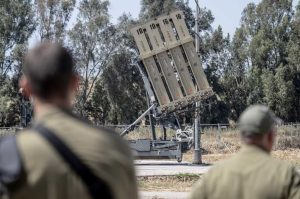
Thus, the “strategic failure” in question refers to a long-standing concept within the defense establishment. In the past, the assumption was that wars would be short, and therefore, existing stockpiles would suffice. Israeli military officials did not anticipate a scenario involving a prolonged, large-scale war of attrition against hundreds of heavy ballistic missiles from Iran—a conflict that would lead to the depletion and dangerously low levels of interceptor stocks in the regime’s arsenal. Consequently, following two direct confrontations with Iran, the Israelis faced a failure in their planning regarding interceptor inventories.
Such a defeat had consequences for Israel’s military structure:
A shift in the perception of air defense: Over the years, the Zionists had grown accustomed to expecting 100% effective defense and interception (via the Iron Dome). However, this report clarifies that defense against Iranian missiles will be selective. The Israeli military will prioritize the protection of vital assets; consequently, the home front and residents of the occupied territories will be forced to rely more heavily on protected areas for survival.
Erosion of the defensive advantage against attacks: Producing an Iranian ballistic missile (or a fission warhead) is significantly less expensive than producing an Israeli Arrow interceptor missile. Iran recognizes this and seeks to sustain a “war of interceptor attrition” to deplete the stockpiles of the Zionist regime’s military and its regional allies. This strategy will also impose a heavy financial burden on Israel.
Strategic and industrial shift: The long-term consequence of this planning failure is that Israel is now compelled to significantly expand its defense industry production lines, increase procurement budgets, and move as quickly as possible toward complementary, lower-cost technologies—such as laser-based interception systems. Adopting such a policy entails imposing additional military expenditures on Israel. This is while, prior to embarking on such programs, Tel Aviv had entered 2026 with a military budget of 144 billion shekels (approximately $38 billion)—equivalent to 7.8 percent of its GDP. However, following the conclusion of the second war with Iran, the Israeli military sought an additional 40 billion shekels ($13.22 billion) to address its shortfalls; the Ministry of Finance opposed this request, as allocating such a sum would have raised the budget deficit to 4.6 percent.
These differences of opinion intensified to such an extent that Netanyahu was compelled to intervene; it was subsequently decided that only 15 billion shekels (approximately $5 billion) of the requested amount would be transferred to the Ministry of Defense, while the remaining 25 billion shekels would be deposited into the ministry’s account by the end of the year on a “performance-based” basis—meaning the disbursement would be contingent upon the budget deficit situation.
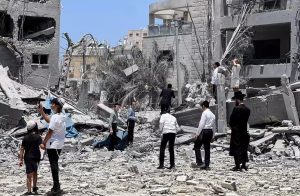
Under these circumstances, the additional requirement to produce more interceptors for the Arrow defense system could impose a heavier financial burden on the Netanyahu cabinet. According to a report by Israel’s Channel 12, the regime’s military budget over the coming decade will stand at approximately 120 billion shekels (over $35 billion) annually—a figure representing roughly 20 percent of the government’s total budget and approximately 6 percent of its GDP. It is important to note that the $35 billion figure does not include the budgets required for agencies such as Shin Bet, Mossad, the police force, and the Ministry of Public Security. Consequently, if the budgets of these Israeli security and intelligence agencies were also factored in, Israel’s security-related expenditures would rise even further. This comes despite the fact that the Bank of Israel had previously warned on several occasions about the risks associated with further increases in the military budget.
Furthermore, the $35 billion figure is double the military budget allocated to the Netanyahu cabinet’s Ministry of War prior to the October 7, 2023, conflict. According to Tel Aviv’s military officials, this amount represents the “minimum sum required” to continuously meet security needs, with each round of fighting necessitating further budget increases. Consequently, it is already evident that the defense budget for 2027 will exceed 120 billion shekels ($40 billion).[3] However, the immediate impact of this situation is the Zionist regime’s increased vulnerability to a missile response from Iran; this factor is cited as one of the reasons behind the US proposal for a ceasefire.