
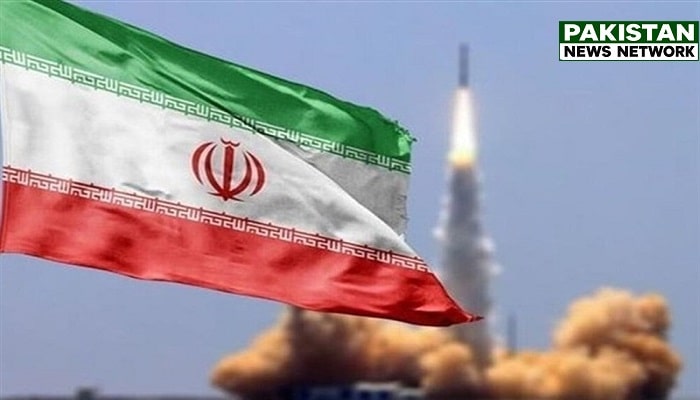
PNN – In responding to the Zionist regime, Tehran is guided solely by its own calculations and will regarding the choice of the arena.
According to the report of Pakistan News Network; a new narrative has gained prominence in recent weeks within think tanks and media outlets close to Tel Aviv; this narrative attempts to portray the continuation of Iranian attacks on U.S. forces and interests—contrasted with the absence of similar action against the Zionist regime—as a result of the regime’s deterrence and Tehran’s concern over the consequences of a response from Tel Aviv.
For instance, the Prime Minister of the Zionist regime recently stated that Iran prefers to attack U.S. bases or international shipping lanes because it has tangibly felt Israel’s deterrent power.
However, a deeper look at regional dynamics reveals that this effort to project fear of Iran is less a reflection of the reality on the ground and more part of a perception-management project designed to mask Israel’s fundamental challenges.
Such a claim rests on the fundamentally flawed assumption that the decision to avoid an all-out war at this juncture stems from weakness or fear. The fundamental reality—deliberately overlooked by Western and Israeli analysts—is that Iran itself determines the timing, geography, and nature of its actions. Tehran has never allowed, nor will it ever allow, Tel Aviv to dictate the timetable, the intensity of the conflict, or the rules of engagement.
Benjamin Netanyahu’s objective is to drag Iran into a hasty confrontation—at a time and on a battlefield of Israel’s choosing—to recalibrate its own domestic and regional equations; yet, by denying the enemy this initiative, Iran dictates the terms of the game according to its own strategic parameters.
An examination of Iran’s past conduct regarding the Zionist regime reveals that its responses have not been driven by impulsiveness or knee-jerk reactions; rather, they have been based precisely on an operational logic of its own choosing, executed at the opportune moment.
Killing two birds with one stone
On the other hand, focusing on U.S. interests and military bases in the region is not a sign of shying away from a confrontation with Israel; rather, it is part of Iran’s own “defining of the playing field.”
The US military presence in Iraq, Syria, and regional waters is not merely an independent deployment; rather, it constitutes the primary source of armaments and diplomatic backing—as well as a protective umbrella—for Israel. Targeting Washington’s interests amounts to directly striking the lifeline and principal supporter of Tel Aviv; this compels Washington to pay the price for its unconditional support of Israel’s adventurism and forces it into a role of containment. It is Iran that decides which point in the enemy’s security chain is to be pressured, and when.
Covering up the Collapse of the Myth of Israel’s Security Impregnability
Amidst this, the propaganda and psychological function of the “fear of Iran” narrative must not be overlooked. Following recent seismic events, the Zionist regime’s political and military establishment has faced a collapse in the perception of its own security impregnability and is in dire need of restoring its battered credibility.
Constructing the narrative that “the primary enemy fears us” serves as an immediate palliative for the regime’s domestic public opinion and military community. Simultaneously, by promoting the belief that Israel has successfully contained Iran, regime officials aim to persuade Washington to enter the final stage of confrontation—thereby shifting the burden of military costs more directly onto the United States.
However, the ultimate refutation of these fabrications lies in the tangible evidence on the ground and the shift in the balance of power demonstrated by Iran through the multi-wave “True Promise” operations.
The direct missile and drone strikes launched from Iranian soil provided structural proof that, should Iran decide to take direct action, it shatters the enemy’s red lines precisely when and how it deems appropriate. Those operations revealed the fragility of Tel Aviv’s vaunted deterrence and demonstrated that, in responding to the regime, Tehran is guided solely by its own calculations and will regarding the choice of the battlefield.
Ultimately, the narrative of “Iran’s fear of Israel” is nothing more than a psychological warfare tool and a media strategy intended to compensate for Tel Aviv’s strategic failures. Tehran holds the initiative in determining the timing and geography of the conflict, conducting its maneuvers not on a battlefield designed by the enemy, but rather based on patience, gradual attrition, and striking at a moment of its own choosing—a complex game in which refusing to engage in war at the time proposed by the enemy signifies not fear, but absolute command over the timing and arena of action.