
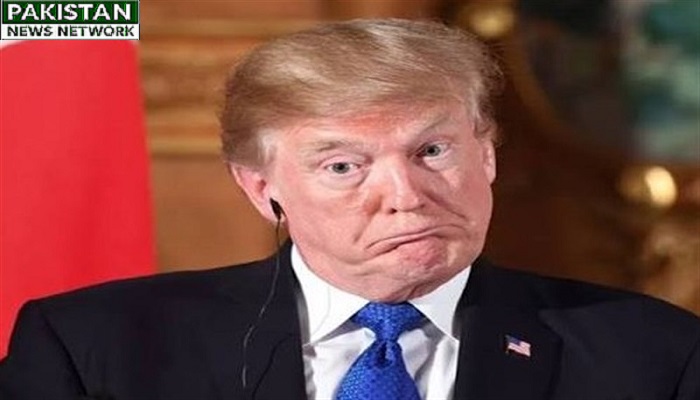
PNN – In an analysis of Donald Trump’s performance, The New Republic wrote that Trump’s delusion of victory is more dangerous than his lies.
According to the report of Pakistan News Network; The New Republic—in an analysis regarding the actions of Donald Trump, the head of the US terrorist administration—cited Washington’s new oil deal with Venezuela as yet another example of his exaggerated claims. The publication noted that Trump’s problem is not merely “lying,” but rather his entrapment in a “delusion” regarding his own capabilities as a leader.
According to the publication, Trump has claimed that the oil deal with Venezuela would significantly lower gasoline prices and entail no cost to American taxpayers.
However, Ricardo Hausmann—a professor of political economy at Harvard University and a former Venezuelan planning minister—has expressed skepticism regarding the deal, stating that neither Venezuelans nor major U.S. oil companies would take it seriously.
The New Republic also notes the initial stance taken by Florida Republican Representative María Elvira Salazar, who had dismissed the oil deal with Venezuela’s interim government as lacking a long-term outlook. Salazar shortly thereafter retracted those remarks and adopted a positive stance on the agreement—a shift that, according to the publication, reflects the pressure within the Republican Party to align with Trump.
The publication views the Venezuela deal as part of a broader pattern in Trump’s behavior: a pattern in which the U.S. President characterizes every action he takes as historic, unprecedented, and a major success.
The New Republic points to Trump’s promises regarding tariffs, the elimination of income tax, and a swift end to the war with Iran, noting that many of these pledges have been far removed from reality.
According to The New Republic, the fundamental difference between a lying politician and someone gripped by delusion lies in the possibility of changing course. The author argues that a person who merely lies can correct their path if their policies are exposed as failures, whereas someone who genuinely believes their own narrative cannot easily admit to being wrong. This analysis suggests that Trump, too, has surrounded himself with individuals whose primary role is to uphold that very narrative and validate him.
The publication also notes that, with the U.S. midterm elections approaching, Trump intends to personally anchor the Republican campaign message and tout his administration’s performance rather than adjust his policies. The New Republic attributes this approach to Trump’s inability to acknowledge the existing problems within the U.S. economy and political landscape.
In another part of this analysis, serious questions are raised regarding the oil agreement involving Venezuela. According to an Associated Press report cited in the article, the U.S. government and an unnamed private operator have formed a new company that will hold the rights to operate 17 oil fields for a period of 100 years. Furthermore, Venezuela’s oil infrastructure is severely dilapidated, and no significant increase in the country’s oil production is expected in the short term.
The New Republic adds that it remains unclear who will foot the bill for rebuilding this infrastructure, and that the U.S. oil industry may hesitate to invest in Venezuela due to the possibility of a future change in government and the potential cancellation of the agreement.
Ultimately, the publication predicts that it may eventually become clear that the promised investments never materialized, the plan came at a cost to American taxpayers, and U.S. oil companies showed no interest in participating—though the author emphasizes the hope that these predictions prove wrong.