
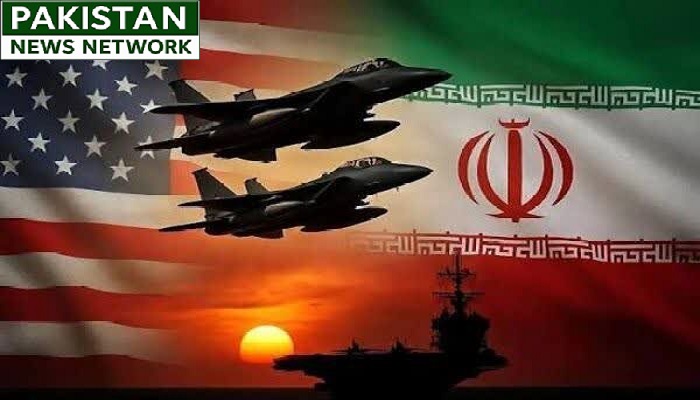
PNN – The New York Times reported that Trump’s return to sanctions signals his lack of desire to go to war with Iran.
According to the report of Pakistan News Network; a report by The New York Times states that Donald Trump’s recent threats regarding an “economic war” against Iran reflect a desire to avoid military escalation rather than a readiness for war; a stance that, according to analysts, has led Tehran to conclude that Washington’s capacity to escalate the conflict is constrained.
Some of the key points of the report are as follows:
1- “Economic War” Instead of Renewed Bombing
The Trump administration speaks of unprecedentedly intensifying economic pressure; at the same time, however, the U.S. Treasury Secretary has emphasized that this approach reduces the likelihood of renewed large-scale attacks.
2- Iran Has Received Washington’s Message
According to Dennis Ross, Tehran now views Trump as someone who does not wish to escalate military conflict—a perception that could encourage Iran to demonstrate its own capacity to ramp up military pressure.
3- Iran Endured Bombardment without Yielding
Despite withstanding extensive attacks by the US and Israel, Iran has remained steadfast and has imposed costs on the US by controlling the Strait of Hormuz.
4- The Cost of War Has Risen for the US
Gasoline prices in the US have risen by more than a dollar compared to pre-war levels, 18 US service members have been killed, US bases in the Persian Gulf have sustained damage, and ammunition stockpiles have been depleted.
5- China: The Limit of Trump’s Pressure
Effectively intensifying economic pressure on Iran requires targeting China—Iran’s largest oil buyer—yet Trump is simultaneously trying to maintain relations with Beijing and has no desire to launch a new economic war against China.
6- Washington Remains Uncertain About the Next Move
According to a former U.S. negotiator, the Trump administration has been more preoccupied with deciding on the “next move” during this crisis than with formulating a long-term strategy—a situation one expert described as “playing checkers instead of chess.”
7- Conclusion
The New York Times concludes that Trump is now caught between three options: re-escalating the conflict, accepting a deal that entails making concessions, or continuing economic pressure. None of these guarantees success and this very impasse makes Washington’s recent economic threats appear less like a display of absolute power and more like an attempt to exert pressure without returning to war.