
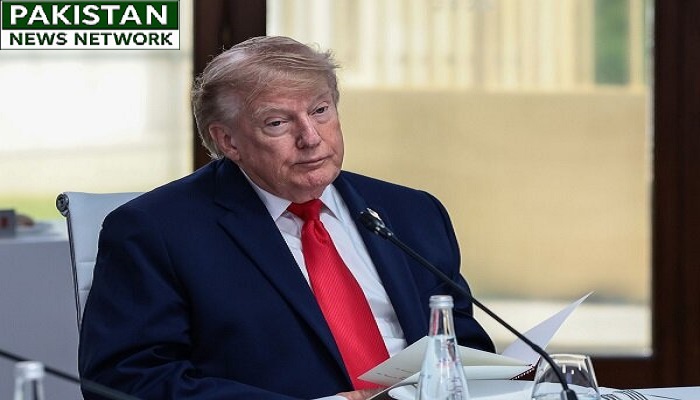
PNN – Reuters reported that the standoff regarding the conflict with Iran has become an electoral threat for Trump.
According to the report of Pakistan News Network; U.S. President Donald Trump is approaching the November midterm elections at a time when the conflict with Iran has reached a costly stalemate, and crises in Ukraine and Gaza remain unresolved—a situation that has posed a serious challenge to his foreign policy record.
According to a Reuters report, this situation is notable for Trump, who returned to the White House last year promising to act as a “peacemaker” and had placed the resolution of international conflicts at the heart of his second-term agenda. This week, he reacted sharply to reporters’ questions regarding foreign policy and the stances of U.S. allies, and once again threatened to bomb Oman—a country that is simultaneously negotiating with Iran to reopen the Strait of Hormuz.
As September 7 approaches—Labor Day in the U.S., typically considered the start of the more serious phase of election campaigns—Republicans face concerns that ongoing foreign crises and their domestic economic repercussions could weaken the party’s position in Congress.
Regarding Iran, after weeks of attempting to reach a diplomatic solution, Trump halted negotiations with Tehran and announced on Wednesday the launch of a new campaign of “economic warfare” against the country. This move comes as months of U.S. military aggression have failed to compel Tehran to accept the concessions Washington demands.
Meanwhile, persistent inflation and rising gasoline prices—driven by the conflict with Iran—have led to a decline in Trump’s popularity. According to the latest Reuters/Ipsos poll, only 33 percent of Americans approve of his performance, marking the lowest approval rating of his presidency.
Trump’s efforts to mediate other crises have also encountered serious obstacles. Jared Kushner, Trump’s negotiator and son-in-law, returned on Monday from talks aimed at advancing a Gaza peace deal without achieving a concrete outcome. Meanwhile, the anticipated trip to Kyiv by Kushner and Steve Witkoff—Trump’s envoy—to revive stalled negotiations over the war in Ukraine has yet to take place.
Asli Aydintasbas, a fellow at the Brookings Institution, stated that while Trump has succeeded in challenging the traditional foreign policy order in Washington, he has not yet managed to translate these changes into a strategy that yields tangible results for Americans.
The conflict with Iran has also placed significant pressure on Trump himself; according to one of his allies, there is no consensus within the White House on how to bring the confrontation to an end. Should the conflict drag on and investor anxiety rise, U.S. government borrowing costs could increase, further limiting Trump’s room to maneuver in implementing his domestic agenda.
In contrast, the White House has defended Trump’s performance. White House spokesperson Anna Kelly asserted that Trump has restored respect for the United States, citing the conclusion of nine wars, the release of hostages in Gaza, and new trade agreements as the administration’s achievements.
However, critics argue that Trump’s approach of using economic and military pressure to compel opposing sides to accede to Washington’s demands has yielded mixed results. In Ukraine, the war drags on despite Washington’s efforts to bring the parties to the negotiating table. Similarly, in Gaza, the escalation of Israeli attacks has hampered efforts to reach a peace agreement.
Regarding Iran, some analysts believe Trump has relied too heavily on pressure and coercion; meanwhile, despite economic pressures, Tehran shows little inclination to back down or reopen the Strait of Hormuz.