
PNN – Reuters, citing informed sources, reported that the U.S. military has exhausted nearly all of its long-range, precision-guided missiles in its aggressive attacks against Iran—a development that has raised concerns regarding future U.S. conflicts.
According to the report of Pakistan News Network; Reuters reported—citing three informed sources—that the U.S. military has depleted a significant portion of its stockpile of highly accurate, long-range missiles during the aggressive and illegal war against Iran, which has now entered its sixth month; this has sparked concerns about the country’s military readiness for future conflicts.
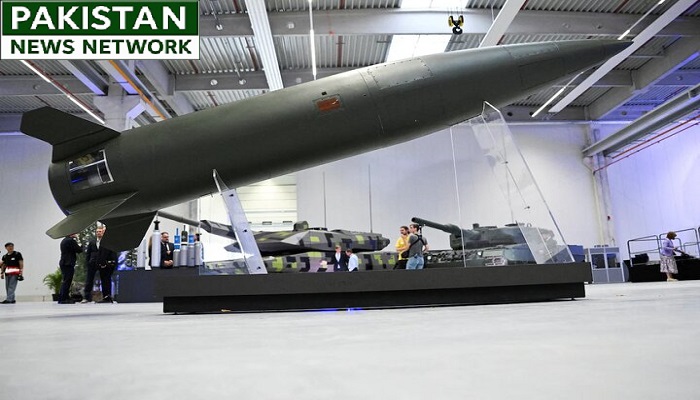
Reuters reported that these missiles are primarily Army surface-to-surface weapons known as the Army Tactical Missile System (ATACMS) and Precision Strike Missiles (PRSM).
According to two sources familiar with the matter, the United States has used “almost all” of these weapons.
Furthermore, according to media reports, the US military is facing a severe shortage of advanced air defense missiles following the interception of massive Iranian missile and drone attacks in the region—launched as a response to US-Zionist aggression—which targeted American interests and bases in regional countries as well as sites across the occupied territories. The Pentagon was planning to request additional funding from Congress to replenish these munitions.
This level of severe depletion in the Army’s stockpiles of ATACMS and PRSM missiles had not been previously reported. These long-range munitions constitute a vital part of the military’s arsenal, enabling precision strikes from a safe distance.
US-supplied ATACMS missiles have played a pivotal role in the war in Ukraine, allowing Ukrainian forces to strike targets deep within Russian territory. The PRSM—a newer, more advanced missile slated to replace the ATACMS—has a shorter range.
Experts state that these weapons, each costing over $1 million, would also be critical in any potential conflict with China. Sources declined to disclose the exact remaining quantities of either munition.
U.S. President Donald Trump had described this aggression against Iran as a brief excursion; however, as the conflict dragged on, three informed sources expressed concern that dwindling missile stockpiles could limit the U.S.’s ability to deter adversaries, including Russia and China.
Another informed source noted that while U.S. Central Command (CENTCOM)—which oversees American forces in West Asia—has exhausted nearly all the land-based missiles it held prior to the start of the conflict, it has managed to replenish supplies from Army stockpiles located elsewhere.
Reuters further reported that while experts agree certain munitions—including artillery shells and various types of missiles—are being produced at unprecedented rates, they have warned that supplies may fall far short of what is required for a prolonged war.
Sean Parnell, a senior Pentagon spokesperson, said in response to comments on the matter: The U.S. military is the most powerful military in the world and possesses everything needed to conduct operations at the time and place of the President’s choosing. We have executed numerous successful operations across various combatant commands while ensuring that the U.S. military maintains a deep arsenal of capabilities to protect our people and interests.
Experts state that because these weapons enable the U.S. Army to strike targets from long range, they will prove valuable in a conflict with an adversary possessing robust air defenses—such as China.
Additionally, according to a report by the Center for Strategic and International Studies (CSIS), stockpiles of PRSM missiles were initially low—as the munition is relatively new—but the U.S. Army has ordered a large number of them for 2027. The Army has indicated that the ATACMS is nearing retirement, with production shifting toward the newer PRSM missiles.